

Why How Often Should You Service Your HVAC System Matters More in Northern Nevada
How often should you service your HVAC system is one of the most important questions you can ask as a homeowner — and the answer directly affects your comfort, your energy bills, and how long your equipment lasts.
Here is the short answer:
| Situation | Recommended Service Frequency |
|---|---|
| Standard home, newer system (under 10 years) | Once per year (minimum) |
| Most homes — the gold standard | Twice per year (spring + fall) |
| Heat pump (runs year-round) | Every 6 months |
| Older system (10+ years) | Every 3-6 months |
| Homes with pets, allergies, or heavy use | More frequent filter changes + bi-annual service |
In Washoe Valley and the broader Northern Nevada region, this question carries extra weight. The high-desert climate here is brutal on HVAC equipment — summer temperatures push systems to their limits, winter cold snaps arrive fast and hard, and high-altitude winds drive fine dust and debris into outdoor units year-round. Skipping routine maintenance in this environment is not just inconvenient — it can mean a system failure on the coldest night of the year or a compressor burnout during a July heat wave, when technician availability is at its lowest and emergency repair costs are at their highest.
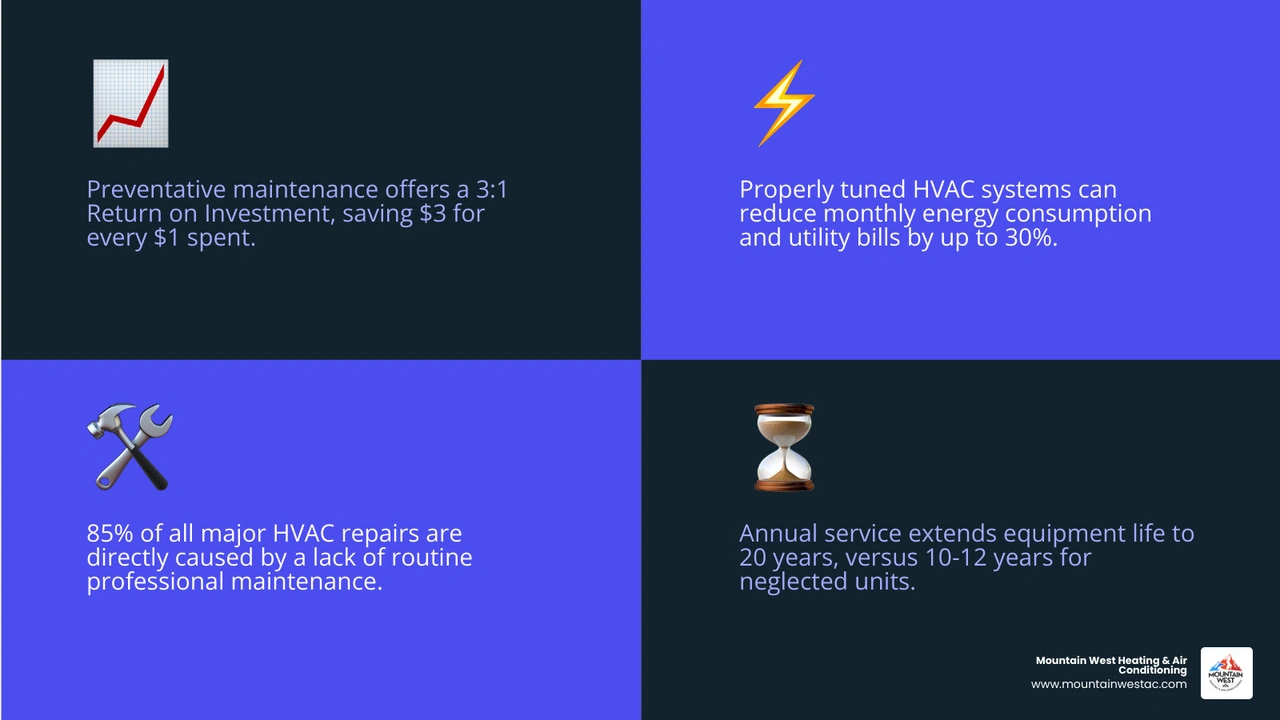
The research is clear: according to the U.S. Department of Energy, proper maintenance can reduce energy consumption by up to 30%, and industry data shows that 85% of HVAC repairs are directly tied to a lack of routine care. A well-maintained system can last 15 to 20 years, while a neglected one may give out in 10 to 12.
I'm Andrew Morrell, owner of Mountain West Heating & Air Conditioning, and with over a decade of hands-on experience in Northern Nevada's residential HVAC market, I've seen what skipping maintenance does to a system — and I've built my business around helping homeowners understand exactly how often you should service your HVAC system to stay ahead of costly breakdowns. In the sections below, I'll walk you through a practical, Nevada-specific maintenance schedule tailored to your system type, home, and the demands of our local climate.
Determining how often should you service your hvac system in Northern Nevada
When we talk about the "minimum" versus the "ideal," it helps to think of your HVAC system like a car. You wouldn't drive 20,000 miles across the Nevada desert without an oil change, and your heating and cooling system is no different. At an absolute bare minimum, you should have your system professionally serviced once per year. However, for most residents in areas like Reno, Sparks, and Carson City, the "gold standard" is bi-annual service—once in the spring for your air conditioner and once in the fall for your furnace.
This isn't just about comfort; it's often a legal or financial requirement. Most manufacturers require documented proof of annual professional maintenance to keep your equipment warranty valid. If a major component like a compressor or heat exchanger fails and you haven't had your annual check-up, the manufacturer may deny your claim. For a deeper dive into why these intervals matter, check out our How Often You Should Have an HVAC System Inspected: A Professional Maintenance Guide.
How often should you service your hvac system if you use a heat pump?
Heat pumps are unique because they don't get an "off-season." While a furnace rests in the summer and an AC rests in the winter, a heat pump works year-round to provide both heating and cooling. Because these systems accumulate twice the "mileage" of a standard split system, they require service every six months.
During these visits, we pay special attention to the defrost cycle and the reversing valve. In our Nevada winters, if your heat pump's defrost cycle isn't functioning correctly, the outdoor unit can turn into a block of ice, leaving you without heat when you need it most.
How often should you service your hvac system in older Washoe Valley homes?
If your system is over 10 or 12 years old, the rules change. Older units are more prone to "component fatigue"—metal expands and contracts over years of Nevada temperature swings, leading to cracks in heat exchangers or failing capacitors. For these "senior" systems, we often recommend quarterly inspections.
These frequent checks allow us to monitor small issues before they turn into catastrophic failures. It also gives us a chance to provide an honest evaluation for replacement, helping you plan for a new installation on your timeline rather than during a mid-winter emergency.
Seasonal Timing: When to Schedule Your Maintenance
Timing is everything. You don't want to find out your AC is broken on the first 90-degree day in June. The best strategy is to schedule your maintenance during the "shoulder seasons"—spring and fall. This ensures your system is ready for the peak demand of summer and winter and helps you avoid the long wait times that occur when everyone else’s system breaks down at once. Learn more about Why Now Is the Perfect Time to Service Your HVAC System: Spring Maintenance for Summer Efficiency.
Preparing for Summer Heat
Spring maintenance (typically March through May) is all about ensuring your air conditioner can handle the dry, intense heat of a Northern Nevada summer. A primary focus is cleaning the condenser coils. Dirty coils can reduce cooling efficiency by up to 40%. We also verify refrigerant levels; even a small leak can cause your system to use 10-20% more energy. You can follow our HVAC Maintenance: Essential Spring Checklist for Peak Performance to stay on track.
Preparing for Winter Freezes
Fall maintenance (September through November) is focused on safety and reliability. For gas furnaces, we perform a rigorous heat exchanger inspection to check for cracks that could leak carbon monoxide into your home. We also clean the burner assembly and calibrate the thermostat to ensure even heating. This is vital in the high desert, where temperatures can swing 40 degrees in a single day, putting immense thermal shock on your heating components.
Factors That Influence Service Frequency
While the bi-annual rule is a great baseline, several local factors might mean you need to see us more often.
- Pet Dander: If you have dogs or cats, their fur and dander will clog your filters and coat your evaporator coils much faster.
- Home Size: Larger homes with multiple zones or units naturally require more attention.
- Construction Dust: If you live in a developing area like Somersett or parts of Sparks, the constant dust from nearby construction can settle in your outdoor unit, requiring more frequent cleanings.
- Altitude: In high-altitude areas like Incline Village or VC Highlands, furnaces require specific combustion adjustments to account for the thinner air.
Air Filter Replacement Intervals
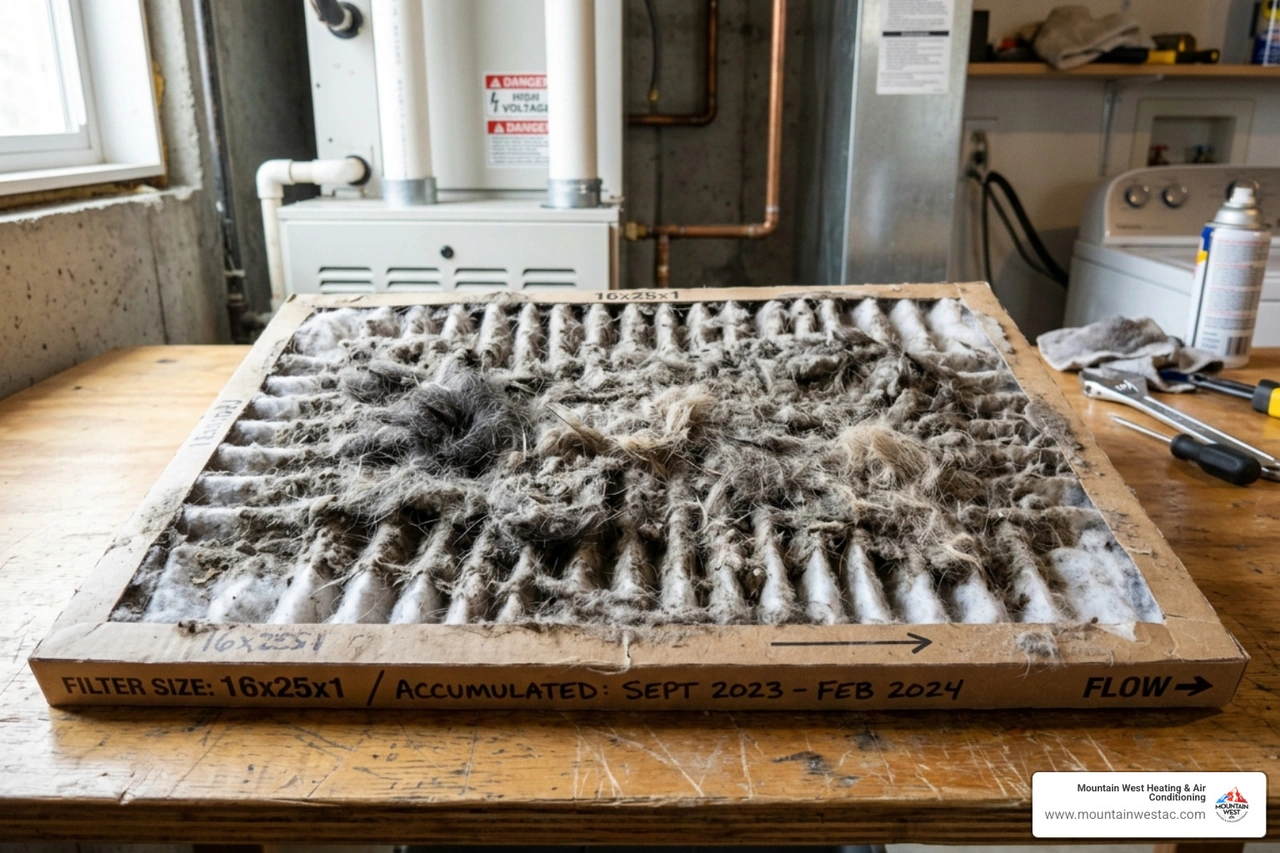
The most important DIY task is changing your air filter. While the standard rule is every 1-3 months, we recommend monthly checks for pet owners or those with allergies. A clogged filter is the leading cause of HVAC "suffocation," which can raise energy bills by 5-15% and eventually lead to a frozen evaporator coil or a blown blower motor.
Environmental Stressors in Washoe Valley
Our local environment presents unique challenges. High-desert winds carry fine silty dust that acts like sandpaper on moving parts. Additionally, we recommend maintaining at least two feet of clearance around your outdoor unit. Sagebrush, weeds, and debris can restrict airflow, forcing the system to work harder and hotter, which significantly shortens its lifespan.
What a Professional Maintenance Visit Includes
When we come to your home for a maintenance visit, we aren't just "looking" at the unit. It is a comprehensive technical overhaul designed to restore factory-spec efficiency. For a full breakdown, see What Does HVAC Maintenance Include: Essential Services for System Longevity.
Mechanical and Electrical Diagnostics
We start by tightening all electrical connections. Loose wires are a major fire hazard and can cause "ghost" failures where the system shuts down for no apparent reason. We also measure motor amp draws and test capacitors. Capacitors are like the "batteries" that start your motors; in the Nevada heat, they are often the first part to fail. Catching a weak capacitor in May prevents a total breakdown in July.
Cleaning and Performance Optimization
We deep-clean the evaporator and condenser coils and clear the condensate drain lines. In our low-humidity environment, dust can combine with the small amount of moisture in your system to create a "sludge" that clogs drains and causes water damage.
| Component | Impact of Neglect | Benefit of Maintenance |
|---|---|---|
| Coils | 15-25% efficiency loss | Up to 40% efficiency gain |
| Ducts | 20-30% air loss (leaks) | Improved airflow & comfort |
| Filters | High bills & motor strain | 5-15% lower energy costs |
| Refrigerant | Compressor damage | Extended system life (3-5 years) |
The Risks of Skipping Your Annual Tune-Up
The statistics are sobering: 85% of HVAC repairs are preventable with proper maintenance. Skipping your tune-up is a gamble where the stakes are your home's comfort and your bank account. Without regular care, your system can use up to 25% more energy just to provide the same amount of cooling. For more details on what we offer, visit our HVAC Services page.
Warranty and Legal Protection
If you plan on selling your home in Reno or Carson City, having a documented history of professional HVAC maintenance is a huge asset. It proves to potential buyers (and their home inspectors) that the most expensive appliance in the house has been cared for. Conversely, a lack of records can be a major red flag during a real estate transaction.
Energy Efficiency and Lower Utility Bills
A well-tuned system uses 10-30% less energy. By optimizing airflow and ensuring all mechanical parts are lubricated and calibrated, we reduce the "drag" on your system. This means it runs for shorter cycles to achieve the same temperature, which lowers your utility bills and reduces the wear and tear that leads to premature replacement.
Frequently Asked Questions about HVAC Maintenance
Can I perform HVAC maintenance myself?
You can and should handle basic tasks like changing air filters, clearing debris from around the outdoor unit, and keeping your indoor vents clear of furniture. However, technical tasks like checking refrigerant levels, testing high-voltage electrical components, and inspecting gas burner assemblies require specialized tools and licensing. For safety and warranty reasons, these should always be left to the pros.
What are the signs my system needs immediate service?
Don't wait for your scheduled visit if you notice:
- Short-cycling: The system turns on and off every few minutes.
- Unusual Noises: Banging, squealing, or rattling.
- Yellow Burner Flames: This indicates incomplete combustion and a potential carbon monoxide risk (flames should be blue).
- Uneven Temperatures: Some rooms are freezing while others are boiling.
How long does a professional service visit take?
A thorough maintenance visit typically takes between 60 and 90 minutes. This gives us enough time to run through our multi-point inspection, clean the necessary components, and provide you with a full performance report on the health of your system.
Conclusion
In Northern Nevada, your HVAC system isn't just a luxury—it's a vital part of your home's safety and comfort. Whether you're in Washoe Valley, Reno, or the heights of Virginia Foothills, understanding how often should you service your hvac system is the key to avoiding the "July breakdown" or the "January freeze."
At Mountain West Heating & Air Conditioning, we pride ourselves on providing dependable, local expertise. We know the specific challenges that high-desert dust and extreme temperature swings pose to your equipment. Don't wait for a breakdown to give us a call—stay ahead of the weather with proactive care.
If you’re ready to ensure your home stays comfortable year-round, schedule your HVAC services with us today. We serve communities across Northern Nevada, from Incline Village to Dayton, with the fast response times and knowledgeable service you deserve.