

Why Wildfire Smoke Is a Serious Threat to Your HVAC System
How wildfire smoke affects your HVAC system is something every homeowner in Northern Nevada needs to understand — especially as wildfire seasons grow longer and more intense with each passing year. Here is a quick summary:
Wildfire smoke harms your HVAC system in these key ways:
- Clogs filters rapidly — PM2.5 particles can overwhelm a standard filter in days instead of months
- Coats evaporator and condenser coils with soot, reducing heat transfer and efficiency
- Overloads blower motors by forcing them to push air through clogged, restricted filters
- Contaminates ductwork with fine particles, ash, and VOCs that linger long after smoke clears
- Bypasses standard filters entirely — PM2.5 particles are up to 30 times smaller than a human hair
- Degrades indoor air quality by recirculating smoke particles through your living spaces
- Increases energy consumption as the system works harder to maintain airflow and temperature
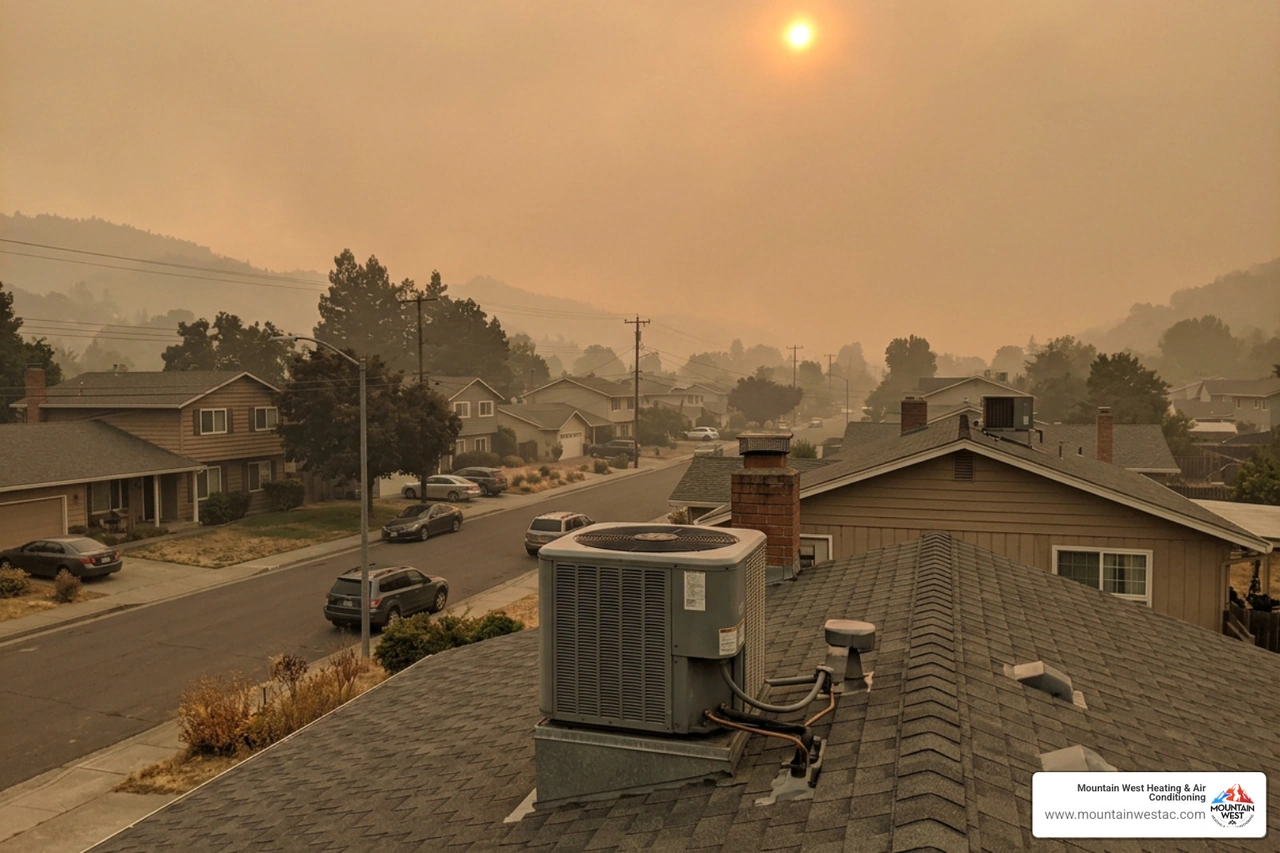
Washoe Valley sits at the edge of the Sierra Nevada, surrounded by dry high-desert terrain that makes it especially vulnerable to wildfire smoke — both from local fires and from smoke drifting in from fires hundreds of miles away. When smoke rolls in, it does not just stay outside. It finds its way into your home through gaps, vents, and your HVAC system itself, quietly degrading the air your family breathes and putting real mechanical stress on equipment you depend on for comfort and safety. In June 2026, with fire season already underway across the region, the threat to indoor air quality is not a distant concern — it is a present one.
I'm Andrew Morrell, owner of Mountain West Heating & Air Conditioning, and with over a decade of hands-on experience servicing residential HVAC systems in Northern Nevada, I have seen how wildfire smoke affects your HVAC system — from filters choked black with soot to coils coated in fine ash residue. In this guide, I will walk you through exactly what smoke does to your system and what you can do about it.

How Wildfire Smoke Affects Your HVAC System and Indoor Air Quality

To protect your home, we first have to look at what wildfire smoke actually is. It is not just simple wood ash; it is a complex, toxic cocktail of fine particulate matter, carbon monoxide, carbon dioxide, volatile organic compounds (VOCs), formaldehyde, and polycyclic aromatic hydrocarbons (PAHs). If the fire has burned structures, the smoke can even carry trace amounts of heavy metals like lead from melted paints and building materials.
The primary public health and mechanical threat is PM2.5—particulate matter that is 2.5 micrometers or smaller. To put that in perspective, a single human hair is about 50 to 70 micrometers in diameter. PM2.5 particles are roughly 30 times smaller than a human hair. They are so microscopic that they act more like a gas than a physical dust particle, allowing them to easily bypass standard filtration and penetrate deep into our lungs and bloodstream.
When these particles blanket areas like Reno, Sparks, and Carson City, they don't stop at your front door. Wildfire smoke infiltrates your home through three main pathways:
- Natural Ventilation: Air flowing through open doors and windows.
- Mechanical Ventilation: HVAC systems and exhaust fans pulling outdoor air inside.
- Infiltration: Outdoor air leaking through small cracks, joints, and gaps in your home's building envelope.
If your home's building envelope is leaky, smoke will seep inside even when all your doors and windows are tightly shut. This is why addressing envelope leaks is a critical first step. For a deeper look at how to seal these pathways, check out our guide on The Benefits of Sealing Air Leaks: How to Improve Energy Efficiency in Your Home. Furthermore, maintaining proper insulation helps stabilize your indoor climate, preventing your HVAC system from short cycling while trying to combat both smoke and summer heat. Learn more about this in our article on How Proper Insulation Can Save on Your Heating and Cooling Bill: A Cost-Effective Energy Solution.
The Physical Entry Pathways of Smoke Into Your Home
When we perform indoor air quality assessments in homes across Incline Village, Glenbrook, and Washoe Valley, we often find that smoke enters through pathways homeowners completely overlook.
While you might remember to close your windows, smoke continues to bypass your defenses through:
- Unsealed Attic Penetrations: Recessed lighting, plumbing stacks, and attic hatches act like chimneys, pulling smoky air down into your living spaces.
- Garage-to-Home Leakage: Garages are rarely sealed properly. Smoke settles in your garage and slips through the door threshold or drywall gaps into your home.
- Unsealed Return Ducts: If your return ductwork runs through an unconditioned attic or crawlspace and has leaks, it will draw smoky, ash-filled air directly from those spaces and blow it throughout your house.
- Negative Pressure: When you run kitchen exhaust hoods, bathroom fans, or clothes dryers, they exhaust air outside. This creates negative pressure inside your home, which actively sucks smoky outdoor air through every tiny crack in your walls and windows.
Health Risks of Inhaling Recirculated PM2.5 Particles
Once PM2.5 particles enter your home, your HVAC system recirculates them five to seven times a day. Inhaling these microscopic particles triggers immediate respiratory irritation, causing coughing, wheezing, scratchy throats, and sinus pain.
For vulnerable populations—including children, seniors, pregnant individuals, and those with pre-existing conditions like asthma or COPD—the risks are far more severe. PM2.5 particles can trigger acute asthma attacks, worsen chronic lung diseases, and place immense cardiovascular strain on the body, increasing the risk of heart attacks and stroke. Even our pets are highly vulnerable; cats, in particular, are incredibly sensitive to airborne smoke pollutants.
Safeguarding your home's air during these events is vital. To explore professional solutions for purifying your living spaces, read our comprehensive guide on Indoor Air Quality Services: How to Improve the Air You Breathe at Home.
Vulnerable HVAC Components Damaged by Wildfire Smoke
Many homeowners think of wildfire smoke as strictly an air quality issue, but it is also a severe mechanical threat. The particulate matter in smoke behaves like a physical abrasive and chemical corrosive when it settles on sensitive HVAC components. If your system is left to run unprotected during heavy smoke events, you risk causing serious damage that can lead to expensive breakdowns. To prevent these issues, it is crucial to understand the importance of timely intervention, which we detail in The Importance of Prompt HVAC Repairs to Avoid Further Damage: Protecting Your System and Your Wallet.
How Wildfire Smoke Affects Your HVAC System Filters and Airflow
Your air filter is your system's first line of defense, but wildfire smoke can trigger what we call the "48-hour clog." During intense smoke events in areas like Dayton or South Reno, a filter that normally lasts three months can become completely choked with soot and ash in just a few days.
As the filter becomes compacted with fine particles, it creates a massive restriction in airflow. This restriction leads to several compounding problems:
- Short Cycling: The system struggles to draw air, overheats (or freezes), and shuts down prematurely, only to turn back on minutes later. This constant on-and-off cycling doubles or triples mechanical wear in a single week.
- Filter Bypass: When a filter becomes completely clogged, the high static pressure can bend the filter frame or suck it out of its slot, allowing dirty, smoky air to bypass the filter entirely and flood your HVAC equipment and ductwork.
- Energy Efficiency Loss: Your system has to run significantly longer and work much harder to move air, causing your utility bills to spike.
Understanding How Wildfire Smoke Affects Your HVAC System Performance
When smoke particles bypass a clogged filter, they settle directly on your indoor evaporator coil. The moisture on the cooling coil captures the fine soot and ash, turning it into a sticky, insulating grey sludge. This sludge prevents the refrigerant inside the coil from absorbing heat from your indoor air, which can cause your indoor coils to freeze solid into a block of ice.
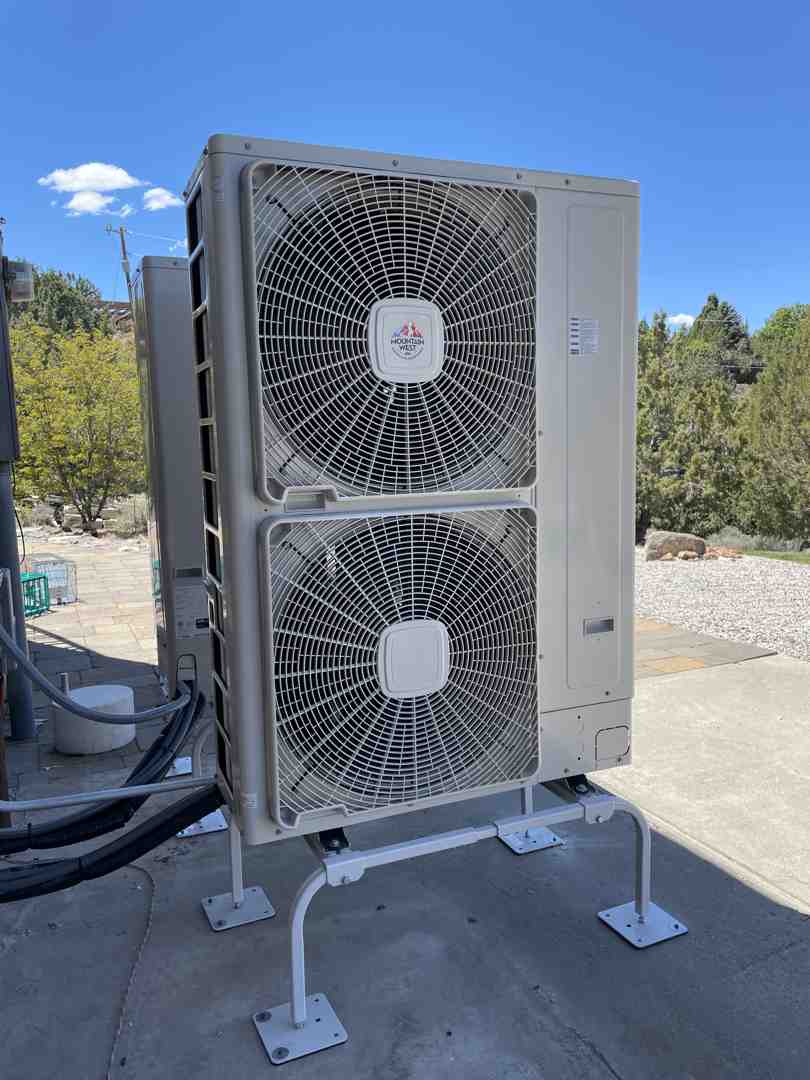
At the same time, your blower motor has to work twice as hard to pull air through the restricted system. This constant strain causes the motor to pull high electrical currents, leading to overheating and premature electrical failure. Outdoors, heavy falling ash can coat the condenser coils on your outdoor unit, blocking heat release and putting immense strain on your compressor.
Maintaining your system's cleanliness and mechanical health is essential for surviving the summer heat. We share practical advice on keeping your cooling system in top shape in our article on AC Essential Maintenance Tips for Optimal Cooling Performance During the Summer Heat.
Immediate Actions to Take During an Active Smoke Event
When a wildfire smoke event hits Washoe Valley, VC Highlands, or Northwest Reno, you need to act quickly to protect both your health and your heating and cooling equipment.
Adjusting Thermostat Settings to Keep Smoke Out
Your first move should be adjusting your thermostat settings to prevent your system from pulling in smoky air.
- Switch the Fan to "On" (Not "Auto"): While we typically recommend "Auto" mode to save energy, active smoke events require continuous filtration. Setting your fan to "On" keeps air moving through your filter constantly, scrubbing particles out of your indoor air even when the system isn't actively heating or cooling.
- Disable Fresh Air Intakes and Economizers: Many modern HVAC systems have a fresh air intake damper that pulls in outdoor air to improve ventilation. During a wildfire, this damper must be closed. If you have a commercial system or a home with an economizer, override it to prevent it from bringing in toxic outdoor air.
- Activate Recirculation Mode: If your system has a dedicated recirculate option, turn it on to ensure you are only conditioning and filtering the air already inside your home.
| HVAC Setting | Recirculation / "On" Mode | Fresh Air / "Auto" Ventilation |
|---|---|---|
| Air Source | Recirculates indoor air only | Pulls air from the smoky outdoors |
| Filtration Level | Continuous, high-frequency passes | Intermittent, low-frequency passes |
| Smoke Infiltration | Minimal to none | High risk of pulling in PM2.5 |
| System Strain | Moderate (requires clean filters) | High (rapidly clogs with outdoor ash) |
Supplemental Filtration and Portable Air Cleaners
While your central HVAC system works hard, supplemental filtration can make a massive difference. Running portable HEPA air purifiers alongside your HVAC system can reduce airborne particle levels by up to 45% during smoke events.
When choosing or using portable purifiers:
- Check the CADR (Clean Air Delivery Rate): Ensure the unit is rated appropriately for your room size. During smoke events, we recommend sizing up or running units on their highest speed.
- Create a "Clean Room": Designate a central room in your home (like a master bedroom) with minimal windows. Seal any visible gaps with blue painter's tape, place a portable HEPA filter inside, and run it continuously on high.
- DIY Corsi-Rosenthal Boxes: If commercial purifiers are sold out, you can build a highly effective DIY air cleaner by taping four high-quality MERV 13 filters to a standard 20-inch box fan. This setup can achieve over 600 CFM of clean airflow, performing similarly to expensive commercial units.
Long-Term HVAC Protection and Post-Smoke Recovery
Once the skies clear and the air quality index (AQI) returns to safe levels, your work isn't quite done. The ash and soot that settled on your home and system during the fire must be cleared away to prevent long-term damage and lingering odors. To understand the full scope of what post-smoke recovery and preventative maintenance entail, check out our guide on What Does HVAC Maintenance Include? Essential Services for System Longevity.
Upgrading to MERV 13 Filtration for Wildfire Season
One of the most effective upgrades you can make before or after a smoke event is switching to a high-efficiency MERV 13 filter. MERV (Minimum Efficiency Reporting Value) ratings scale from 1 to 16. Standard fiberglass filters (MERV 1–4) only catch large particles like carpet fibers and pet hair; they do absolutely nothing to stop PM2.5 smoke.
MERV 13 filters are the EPA-recommended minimum for wildfire smoke because they can capture up to 90% of fine particulate matter. However, higher-efficiency filters are thicker and create more resistance to airflow (known as pressure drop). Before upgrading to a MERV 13 or 14, it is highly recommended to have a professional technician verify that your system's blower motor can handle the increased static pressure without overheating.
Professional Ductwork Remediation and Cleaning
Even with a great filter, fine ash and soot can settle inside your air ducts, turning your ductwork into a long-term reservoir for smoke odors and microscopic pollutants. Every time your system turns on, it can kick up these settled particles, causing dusty air and persistent smoky smells months after the wildfires are gone.
If you notice a lingering smoky odor, see dark soot marks around your supply registers, or find that your home feels unusually dusty, professional duct cleaning is highly recommended. To understand why this process is so critical for your home’s health, read Why Air Duct Cleaning is Essential for Maintaining Indoor Air Quality in 2025. Furthermore, if you are wondering whether dirty ducts are currently straining your system, check out Is Your Air Feeling Dusty? Professional Duct Cleaning Services Can Improve Indoor Air Quality and HVAC Efficiency.
Frequently Asked Questions About Wildfire Smoke and HVAC Systems
Can I run my air conditioner when it is smoky outside?
Yes, you can and should run your air conditioner to keep your home cool and safe. However, you must ensure your system is set to recirculate indoor air and that any fresh air intake dampers are closed. Running your AC in recirculation mode filters your indoor air without drawing in the heavy smoke from outside. Additionally, make sure to check your filter frequently, as it will clog much faster under smoky conditions.
How often should I change my HVAC filter during a wildfire?
During an active wildfire smoke event, you should visually inspect your air filter every 48 hours. If the filter material has turned grey or black, or if you notice a reduction in airflow from your vents, replace the filter immediately. Under heavy smoke conditions, filters can become completely compacted in one to three weeks, compared to their normal three-month lifespan. Always keep a stock of two to three spare high-quality filters on hand before fire season begins.
Is professional duct cleaning necessary after a wildfire smoke event?
Duct cleaning is not automatically required after every minor smoke event, but it is highly recommended if you have experienced heavy, prolonged smoke exposure, if a structure burned within a couple of miles of your home, or if you notice a persistent smoke odor that won't go away. A professional cleaning adhering to NADCA standards will remove settled soot, ash, and chemical residues from your ductwork, preventing them from recirculating through your home.
Conclusion
Living in Northern Nevada—whether you are in Reno, Sparks, Carson City, or Washoe Valley—means accepting that wildfire smoke is a regular part of our climate. Protecting your home from the physical and mechanical damage caused by wildfire smoke requires a proactive approach. By upgrading your filtration, sealing air leaks, adjusting your system settings during active fires, and scheduling professional maintenance afterward, you can keep your home's air clean and extend the lifespan of your heating and cooling equipment.
At Mountain West Heating & Air Conditioning, we are proud to provide dependable comfort and local expertise to our neighbors across the region. If you want to ensure your home is fully prepared for wildfire season, or if you need a post-smoke system recovery inspection, we are here to help.