

What Fire Season Power Shutoffs Actually Do to Your Home
How power shutoffs during fire season affect your home is something every Northern Nevada homeowner needs to understand before the next Red Flag Warning hits — not after.
Here is a quick breakdown of the most common impacts:
| Area of Your Home | What Happens During a Shutoff |
|---|---|
| HVAC system | Shuts off completely; indoor temps can spike or drop rapidly |
| Air quality | Filtration stops; smoke can infiltrate without a running system |
| Food storage | Refrigerators stay safe for about 4 hours; full freezers up to 48 hours |
| Well water | Electric pumps fail; no running water if you are on a private well |
| Medical devices | CPAP machines, refrigerated medication, and other equipment lose power |
| Garage doors | Electric openers stop working without a manual override |
| Sensitive electronics | Risk of damage from power surges when electricity is restored |
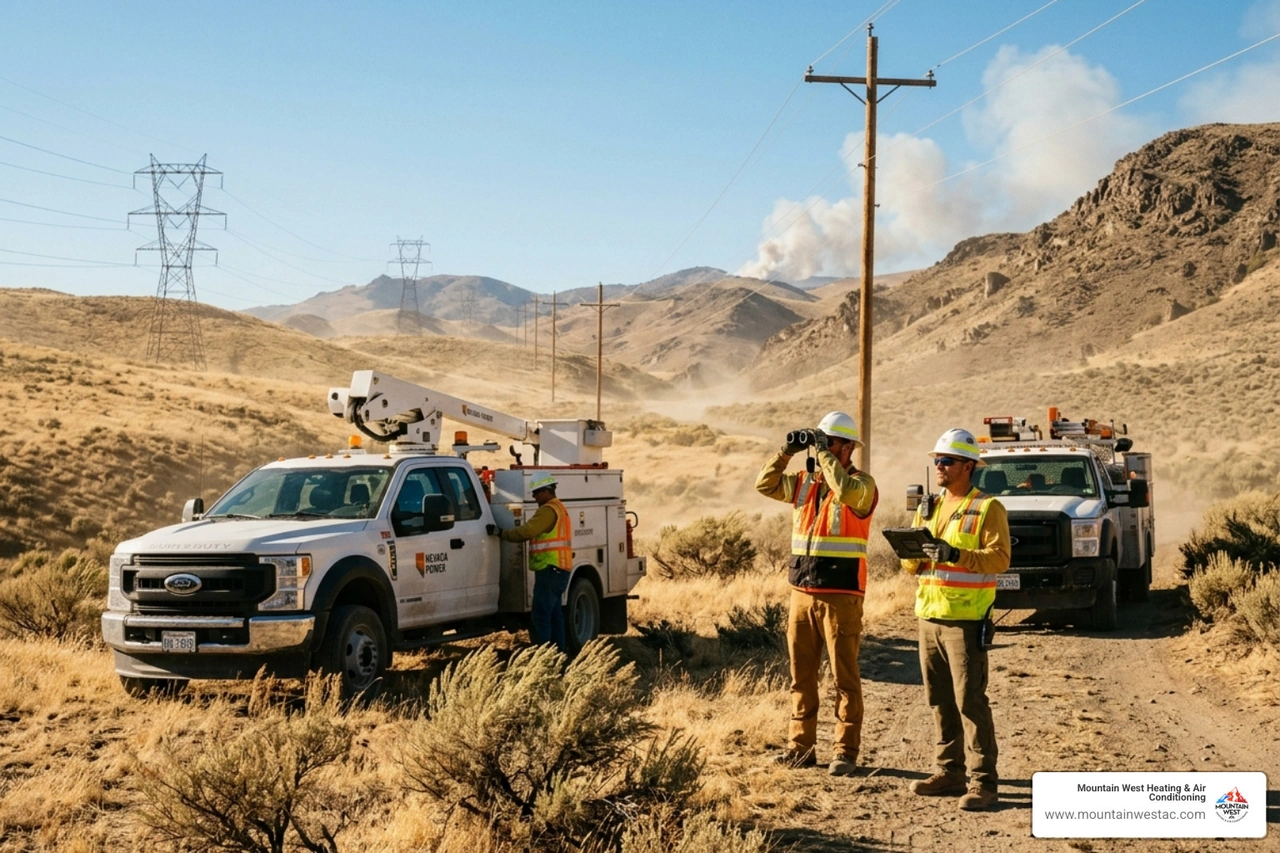
Power utilities like NV Energy can shut off electricity to entire neighborhoods during periods of high wind, low humidity, and dry vegetation — even if the fire risk at your specific address seems low. These planned outages, known as Public Safety Power Shutoffs (PSPS), are triggered when weather conditions create a serious risk that utility equipment could spark a wildfire. They can last anywhere from a few hours to several days, and the process of restoring power does not begin until crews have physically inspected every mile of affected line in daylight.
For homeowners in Washoe Valley and surrounding areas, that means your heating or cooling system — along with nearly every comfort and safety feature in your home — can go offline with as little as 24 to 48 hours of advance notice.
I'm Andrew Morrell, owner of Mountain West Heating and Air Conditioning, and after more than a decade serving Northern Nevada homes, I have seen how how power shutoffs during fire season affect your home goes well beyond inconvenience — especially when your HVAC system is caught in the middle. In this guide, I will walk you through exactly what to expect and how to protect your home before the next shutoff happens.
Understanding Public Safety Power Shutoffs (PSPS) in Northern Nevada
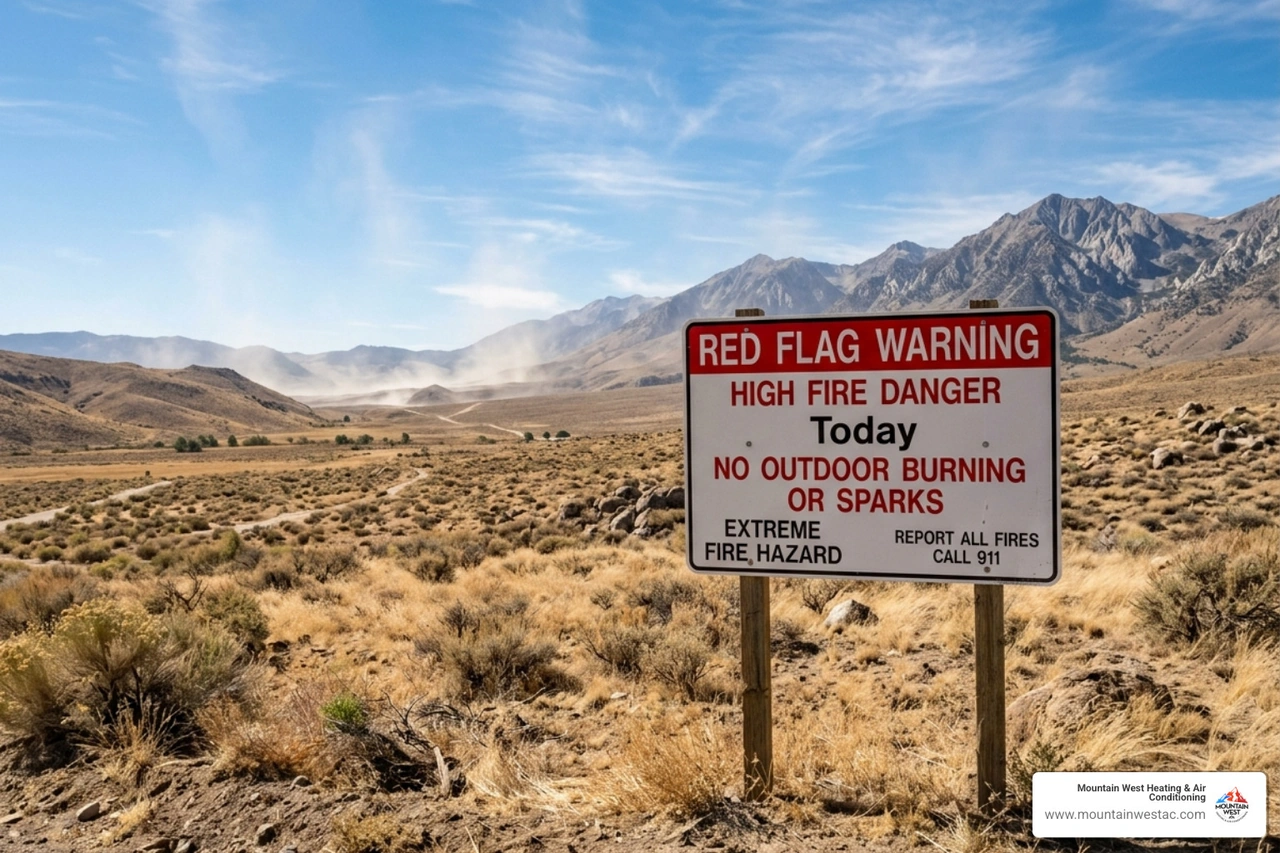
In Northern Nevada, particularly in areas like Washoe Valley, Reno, and Sparks, we live in a high-desert environment that becomes a tinderbox during the summer months. Public Safety Power Shutoffs (PSPS) are a proactive measure used by utilities to prevent their equipment from becoming an ignition source during extreme weather.
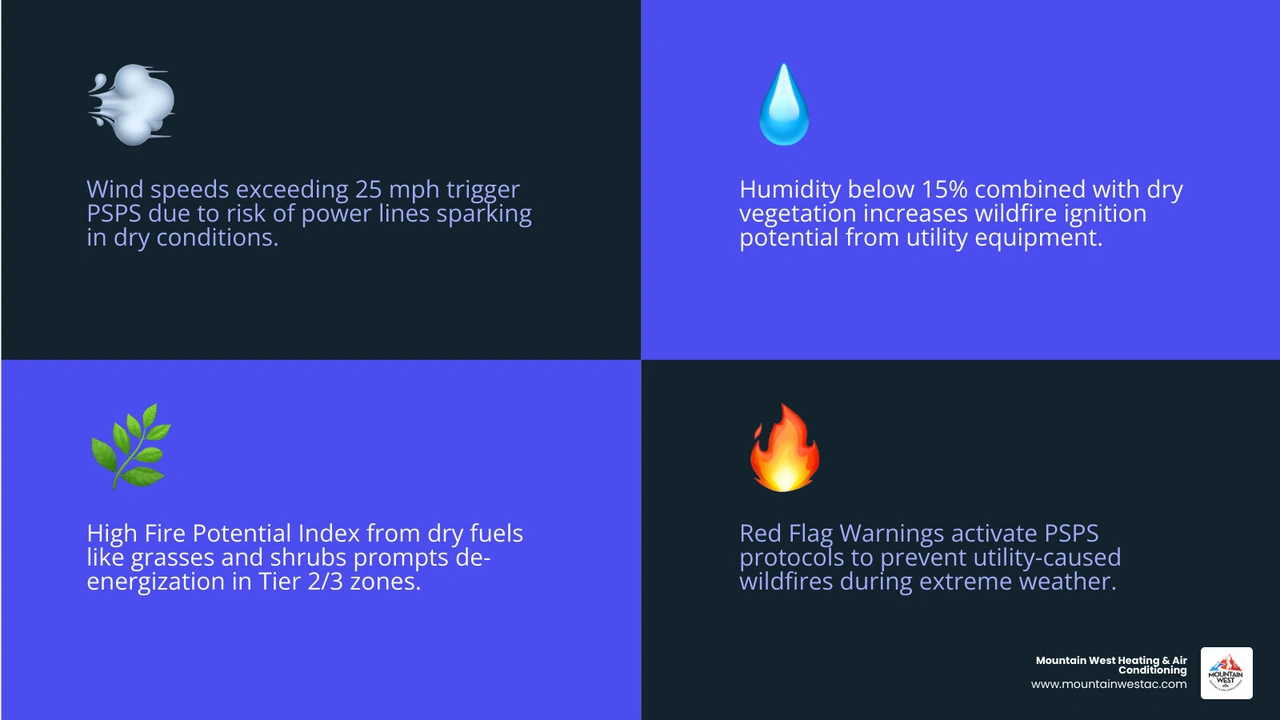
The decision to cut power isn't made lightly. Utilities use a complex Fire Potential Index (FPI) and monitor several key triggers:
- Low Humidity: Usually when humidity levels drop below 30%, making vegetation extremely easy to ignite.
- High Winds: Sustained wind speeds over 19 MPH or gusts reaching 25–40 MPH can cause lines to slap together or knock branches into live wires.
- Dry Fuel: The "fuel moisture" level of dead grass and brush is tracked; when it hits critical lows, the risk of a fast-moving fire skyrockets.
- Red Flag Warnings: These are issued by the National Weather Service and often coincide with PSPS events.
The California Public Utilities Commission (CPUC) has established risk tiers that many regional utilities follow. Tier 2 represents "elevated" risk, while Tier 3 represents "extreme" risk. If your home in Somersett or Verdi is in one of these zones, you are statistically more likely to experience a shutoff.
However, even if you aren't in a high-risk zone, you could still lose power. If the main transmission line that feeds your neighborhood passes through a high-risk canyon or forest, the utility may de-energize that line for safety, leaving your home in the dark. If you find yourself in a situation where the lights go out unexpectedly, knowing what to do when you need emergency generator repair can save your appliances from a long-term outage.
How Power Shutoffs During Fire Season Affect Your Home and HVAC Systems
When the power is cut, your HVAC system is usually the first thing you’ll notice. In the middle of a May 2026 heatwave, the temperature inside a home in Dayton or Carson City can climb 10 to 15 degrees in just a few hours without active cooling.
Beyond just the heat, how power shutoffs during fire season affect your home involves several technical risks to your equipment:
- System Surge Risks: When power is restored, a massive "inrush" of electricity can hit your air conditioner’s compressor or the furnace's control board. Without proper protection, this can fry sensitive circuits.
- Humidity Control Loss: Without your AC or heat pump running, humidity levels can rise indoors, which is particularly problematic for homes with hardwood floors or musical instruments.
- Stagnant Air: Air circulation stops, which can lead to a "stuffy" feeling and allow allergens to settle on surfaces.
In some cases, utilities use Enhanced Powerline Safety Settings (EPSS). Unlike a planned PSPS, EPSS is like a "fast-acting circuit breaker" for the grid. If a bird or a branch touches a wire, the power shuts off in one-tenth of a second. These outages are instantaneous and come with no warning. If your system fails to kick back on after one of these events, you may need 24/7 emergency HVAC services to diagnose a blown capacitor or control board.
How power shutoffs during fire season affect your home air quality
One of the most overlooked aspects of a power shutoff is the impact on the air you breathe. Fire season usually means smoke is in the air. Normally, your HVAC system’s high-efficiency filters (like MERV 13 filters) scrub that smoke out as air circulates.
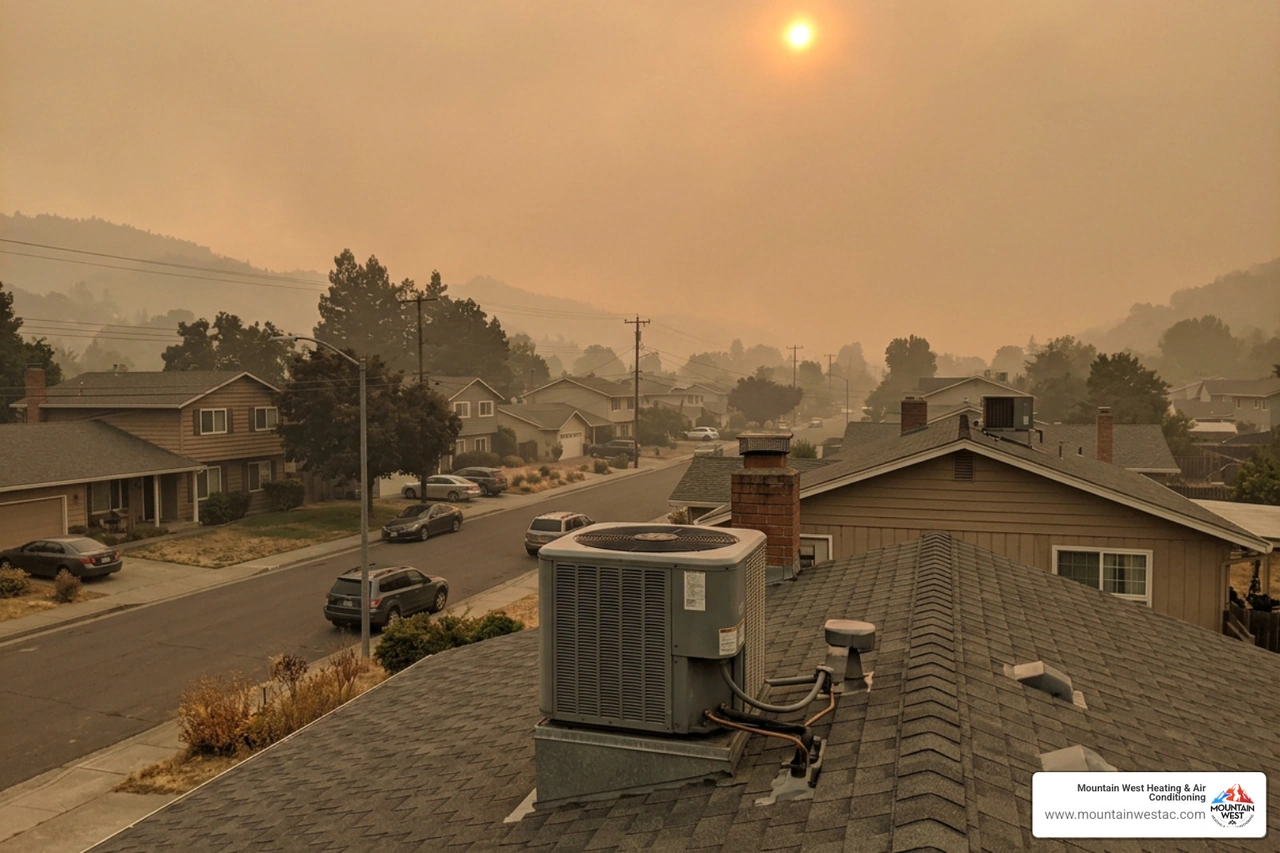
When the power goes out, that filtration stops. Smoke particles are microscopic and can easily infiltrate through gaps in windows and doors. Without the positive pressure of a running blower motor, your indoor air quality can quickly mirror the hazardous conditions outside. For residents in Washoe Valley, where smoke often settles in the basin, this can be a significant health concern.
How power shutoffs during fire season affect your home safety protocols
Safety isn't just about temperature; it's about the systems we rely on every day.
- Medical Baseline Needs: If you or a loved one relies on a CPAP machine, oxygen concentrator, or refrigerated medication like insulin, a shutoff is a medical emergency.
- Well Pump Failure: Many homes in the Virginia Foothills or VC Highlands rely on electric well pumps. No power means no running water for drinking, toilets, or fire defense.
- Electric Garage Doors: If you need to evacuate quickly due to a nearby fire, an unpowered garage door can trap your vehicle inside. Always ensure every family member knows how to pull the manual release cord.
- Communication Outages: Cordless home phones won't work without power, and local cell towers may become congested or lose their own backup power during extended events.
Essential Preparation Steps for Washoe Valley Residents
Preparation is the only way to mitigate the stress of a PSPS. We recommend starting with a "Go-Bag" for your home’s electrical needs. Ensure your utility provider has your current cell phone number and email address to receive "Watch" and "Warning" alerts.
- Emergency Kits: Keep plenty of fresh batteries, solar-powered lanterns (which are safer than candles during fire season), and a hand-crank radio.
- Surge Protection: Install high-quality surge protectors for computers and TVs. Better yet, consider a whole-home surge protector installed at your main electrical panel to protect your HVAC system and large appliances.
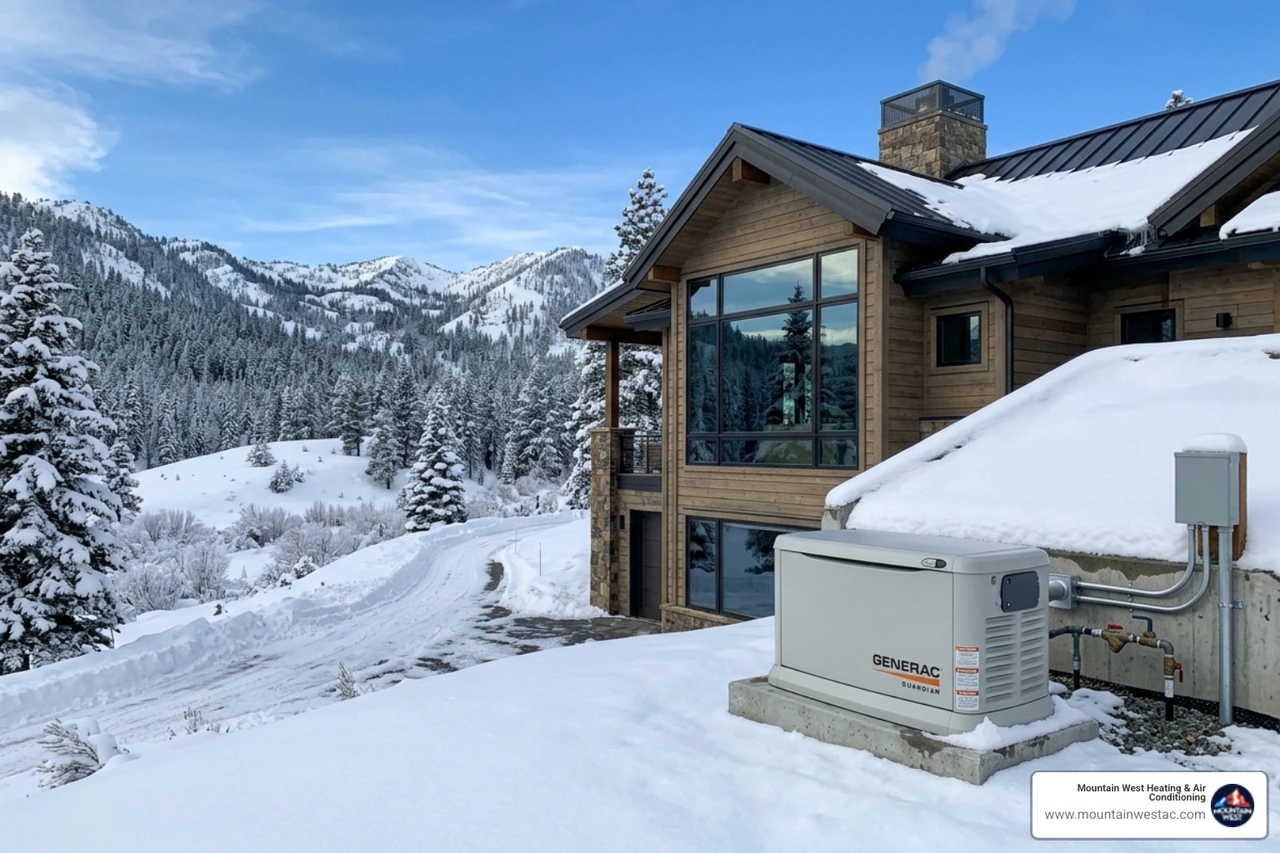
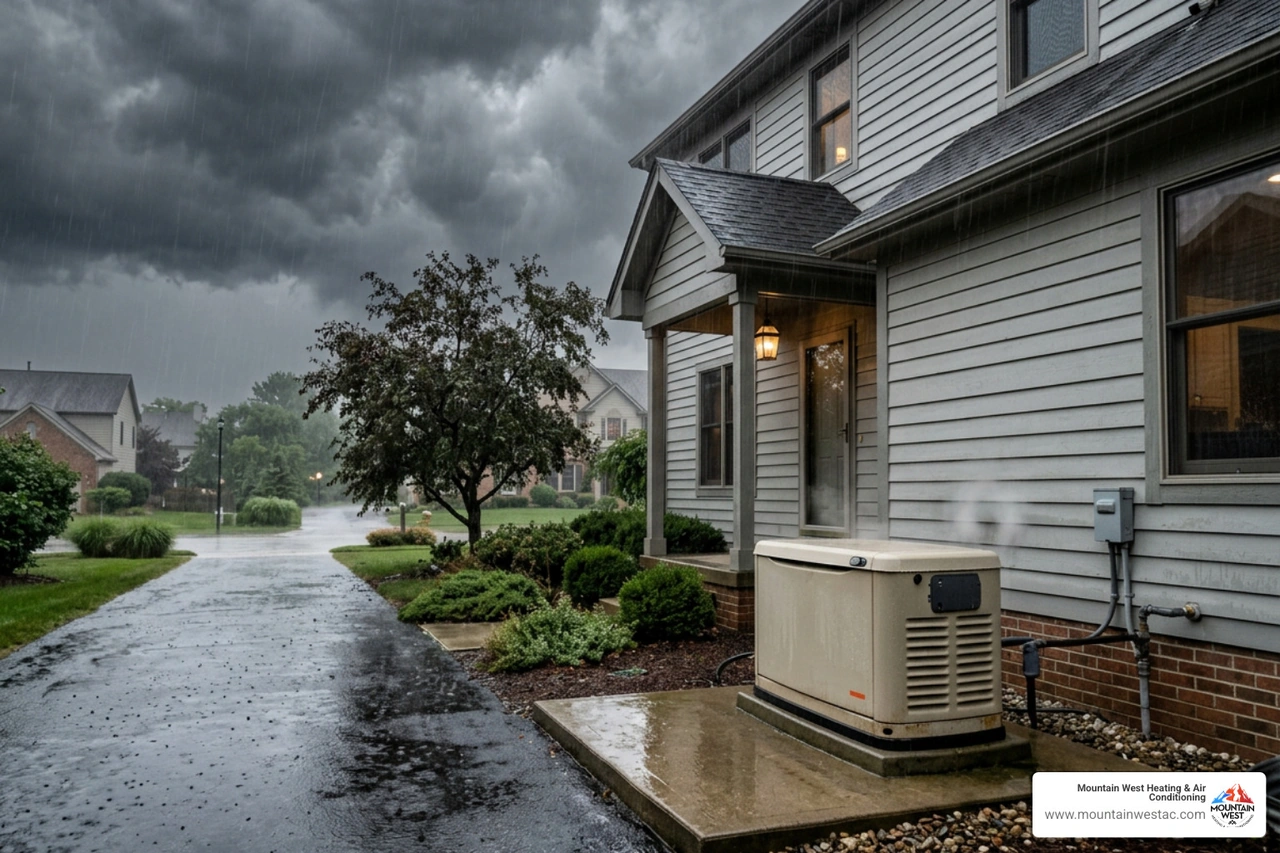
- Generator Readiness: If you have a portable or whole-home generator, don't wait for the lights to flicker to see if it works. Understanding why generator load testing matters is critical; it ensures the unit can actually handle the "load" of your refrigerator and lights when called upon.
Managing how power shutoffs during fire season affect your home appliances
Your kitchen is a major "risk zone" during a shutoff. To prevent food spoilage, remember the 4-hour rule: a refrigerator will keep food safe for about 4 hours if the door stays closed. A full freezer can last 48 hours.
Pro-tip: Freeze plastic containers of water or gel packs ahead of time. If a shutoff is announced, move them to the fridge to act as "ice blocks" to extend that 4-hour window.
Also, be sure to unplug sensitive electronics. When the grid is re-energized, the initial "spike" can be damaging. Leave one lamp turned on so you know when the power has returned, but keep the expensive OLED TV and the computer unplugged until the power is stable.
Backup Power Options and the Restoration Process
When it comes to backup power, you have several options, but each has its limitations.
- Portable Generators: Great for keeping the fridge and a few lights on. However, they must never be used indoors due to carbon monoxide risk.
- Battery Storage: Systems like the Tesla Powerwall can provide seamless power. A single battery typically powers priority items for 24 to 48 hours.
- Solar "Islanding": Many homeowners are surprised to learn that their solar panels won't work during a blackout. Most systems are designed to shut down to prevent "back-feeding" power into the grid, which could injure utility workers. You need a specific "islanding" inverter or a battery pairing to use solar during a shutoff.
The restoration process is often what frustrates homeowners the most. You might see the wind stop at 2:00 PM, but the power doesn't come back until the next day. This is because utilities must perform Daylight Inspections. Crews have to physically patrol every mile of the line—sometimes by foot, truck, or helicopter—to ensure no branches are resting on wires. Only after the "All-Clear" is given can the lines be re-energized. To ensure your backup system is ready for these long hauls, make sure you know how to ensure your system handles the power load through regular testing.
Frequently Asked Questions about Fire Season Outages
Why is my power off if it isn't windy at my house?
This is a common source of frustration in places like Northwest Reno or Caughlin Ranch. Your local weather might be perfectly calm, but the high-voltage transmission lines that bring power to your neighborhood might pass through a "high-wind" zone 20 miles away. If the utility de-energizes those "upstream" lines for safety, everyone "downstream" loses power too.
How long do PSPS events typically last in Northern Nevada?
While utilities aim to restore power within 24 hours of the weather clearing, the total duration depends on the "weather window." If a high-wind event lasts for two days, the clock for restoration doesn't even start until the winds die down and the sun comes up for inspections. It is best to prepare for a 48-to-72-hour outage just in case.
Can I use my electric vehicle to power my home during a shutoff?
As of May 2026, many EVs are beginning to offer bidirectional charging (V2H - Vehicle to Home), but it usually requires a specialized home charging station. Be careful, as using your car to power your home can sometimes impact your battery warranty. Also, if you use your car's battery to run your AC, you might not have enough "juice" left to evacuate if a fire approaches.
Conclusion
Living in the beautiful landscape of Washoe Valley and Northern Nevada comes with the responsibility of fire season readiness. Understanding how power shutoffs during fire season affect your home is the first step in keeping your family comfortable and safe. From protecting your HVAC system against surges to ensuring your backup power is load-tested and ready, a little preparation goes a long way.
At Mountain West Heating & Air Conditioning, we are committed to helping our neighbors in Reno, Sparks, and across the valley stay cool and safe. Whether you need a seasonal tune-up to ensure your system is running efficiently before the heat hits, or you're interested in more info about electrical services to protect your home's infrastructure, we're here to help. Stay safe this fire season, and don't hesitate to reach out to us for all your home comfort needs.