

Why Summer Energy Efficiency in the Sierra Region Matters More Than Ever
If you're looking for summer energy efficiency tips for the sierra region, here's a quick overview of the most effective strategies:
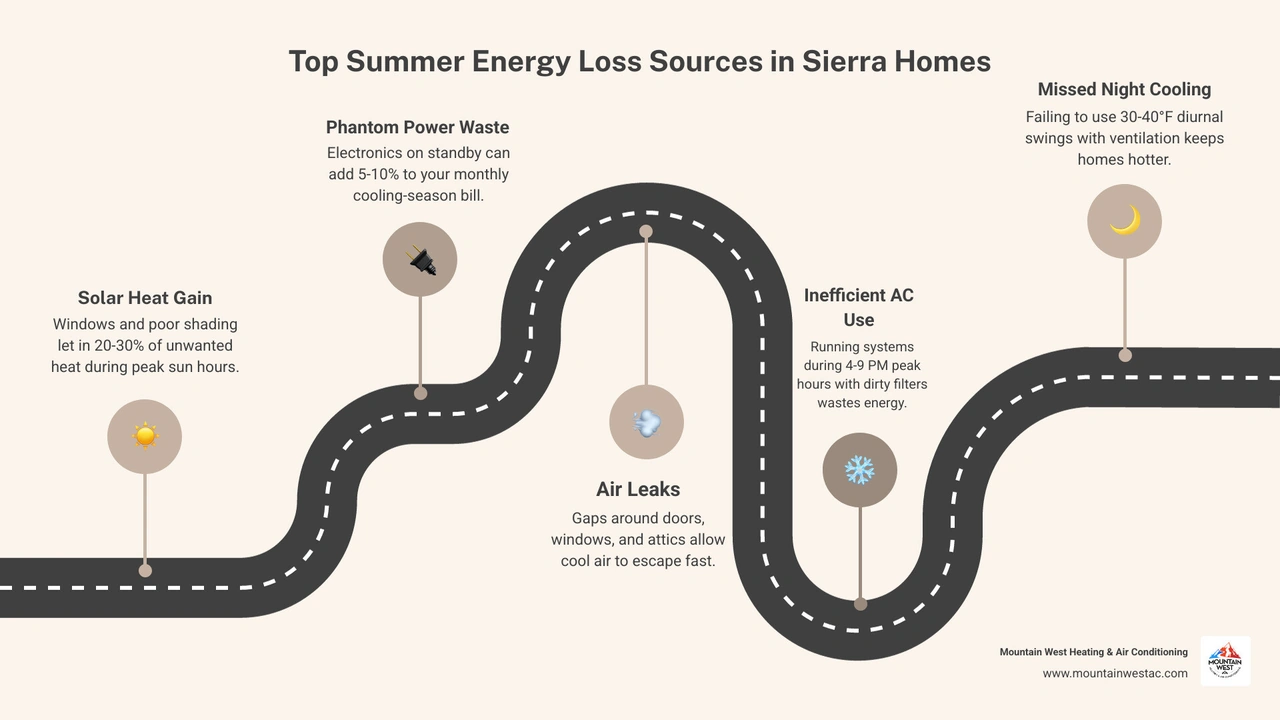
- Adjust your thermostat — Set it to 78°F when home and raise it 7–10 degrees when away to save up to 10% on cooling costs
- Avoid peak hours (4–9 PM) — Run major appliances like dishwashers and washing machines during off-peak hours instead
- Block solar heat gain — Keep blinds and curtains closed during the hottest parts of the day; windows account for 20–30% of heat gain
- Eliminate phantom power — Unplug devices and use smart power strips to cut standby energy waste
- Schedule AC maintenance — Clean or replace filters, check coils, and have your system professionally inspected before peak summer heat
- Use ceiling fans wisely — They use about one-tenth the electricity of a central AC unit, but only help when you're in the room
- Seal air leaks — Caulk and weatherstrip windows and doors to stop cool air from escaping
- Take advantage of rebates — Local utility programs and federal incentives can offset the cost of efficiency upgrades
Living in the Sierra Nevada means dealing with a climate that doesn't play by average rules. Elevations around 4,500 feet and higher, intense dry heat, dramatic daily temperature swings of 30–40 degrees, and wildfire smoke events all create unique demands on your home's cooling systems. On top of that, residential electricity rates in Northern California and Northern Nevada are among the highest in the country — with some California customers seeing costs rise over 60% since 2020. That combination makes smart energy management not just a nice-to-have, but a real financial priority every summer.
I'm Andrew Morrell, owner of Mountain West Heating & Air Conditioning, and with over a decade of hands-on residential HVAC experience in Northern Nevada's high-desert climate, I've seen how the right summer energy efficiency tips for the sierra region can make a meaningful difference in both comfort and monthly bills. Whether your home relies on a central system, a ductless mini-split, or you're still running an older unit, the tips in this guide are built for the specific challenges you face here.
Smart Behavioral Summer Energy Efficiency Tips for the Sierra Region
When it comes to slashing your summer utility bills, some of the most powerful changes don't cost a single dime. By simply altering how and when we use electricity in our Northern Nevada homes, we can keep our living spaces comfortable while easing the burden on our wallets and the electrical grid.
To start, let’s talk about your thermostat. Many homeowners in Reno, Sparks, and Carson City are tempted to crank the AC down to 70°F or lower the second a warm afternoon hits. However, the energy math is clear: you can save roughly 3% on your cooling costs for every single degree you raise your thermostat in the summer.
By aiming for 78°F when you are home and active, you strike an ideal balance between comfort and conservation. If that sounds a bit warm, ceiling fans can make a room feel up to four degrees cooler through the wind-chill effect—allowing you to stay comfortable at a higher thermostat setting. When you leave the house or head to bed on cooler nights, raising your thermostat by 7 to 10 degrees can save you up to 10% on your monthly cooling bill. For a deeper dive into managing your system's settings, check out our guide on The Best AC Settings for Comfort and Savings.
Shifting Energy Use to Avoid Peak Rates
In Northern Nevada, our electrical utilities use time-of-use (TOU) rate structures. Under these plans, the cost of electricity changes depending on the time of day and the overall demand on the grid. During hot summer afternoons, demand skyrockets as thousands of air conditioners turn on simultaneously.
To discourage excessive strain, utilities charge significantly higher rates during "peak" hours—typically from 4:00 PM to 9:00 PM on weekdays. Conversely, "off-peak" hours (late nights, early mornings, and weekends) offer much cheaper rates.
By strategically shifting your high-energy household chores to these off-peak windows, you can dramatically lower your energy bills. We recommend running your dishwasher, washing machine, and clothes dryer early in the morning or after 9:00 PM. Not only does this save you money on rates, but it also prevents these heat-generating appliances from warming up your home during the hottest parts of the day. For more localized advice on managing your cooling habits during peak Nevada heat, read our article on how to Beat the Heat: AC Energy Saving Tips for Hot Nevada Days.
Eliminating Phantom Power and Standby Waste
Did you know that many of the electronics in your home consume electricity even when they are turned off? This is known as "phantom power" or standby energy waste, and it can account for 5% to 10% of an average household’s monthly electric bill—translating to $50 to $150 in wasted money every year. In fact, phantom power can represent up to 40% of a single appliance's total annual energy use.
Common culprits of phantom power in Sierra homes include:
- Television sets, sound systems, and video game consoles
- Desktop computers, monitors, and printers
- Microwaves, coffee makers, and small kitchen appliances
- Phone, tablet, and laptop chargers left plugged into the wall
To combat this standby waste, make it a habit to unplug devices you aren't actively using. Because unplugging dozens of individual cords every day can be a hassle, we highly recommend using advanced power strips. These strips allow you to cut power to multiple devices with a single flip of a switch, and some smart models will automatically cut power to accessory devices (like a DVD player or gaming system) when the main device (the TV) is turned off.
Optimizing Home Insulation, Ventilation, and Shading
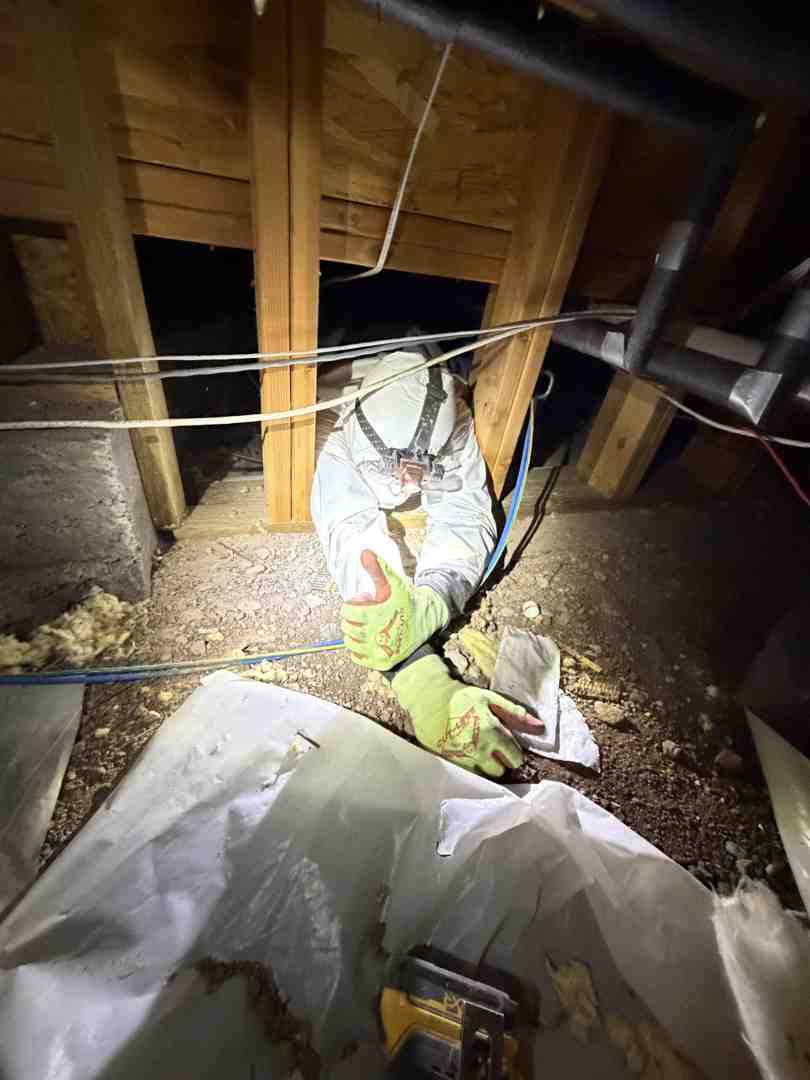
Even the most efficient air conditioner in the world will struggle to keep your home cool if your attic, walls, and windows are letting the high-desert heat seep inside. Improving your home’s thermal envelope is one of the most effective long-term summer energy efficiency tips for the sierra region. By adding insulation and reducing air leaks, the average homeowner can reduce their heating and cooling costs by an average of 20%.
Your attic is the primary battleground for heat transfer. On a 95°F day in Washoe Valley, attic temperatures can easily climb past 130°F. If your attic is under-insulated—which is true for roughly 90% of homes in the United States—that intense heat will radiate directly through your ceiling and into your living spaces. Upgrading your attic insulation acts as a protective barrier, keeping the heat out and the cool air in. To understand how this investment pays off year-round, check out our article on How Proper Insulation Can Save on Your Heating and Cooling Bill: A Cost-Effective Energy Solution.
Beyond insulation, air leaks around windows, doors, and plumbing penetrations act like small, open drafts draining your air conditioning. Grab a tube of high-quality exterior caulk and some weatherstripping to seal up these gaps. Pay special attention to double-hung windows and the threshold of your exterior doors.
Implementing Summer Energy Efficiency Tips for the Sierra Region Through Window Shading
Windows are beautiful for letting in the Sierra sunshine, but they are also responsible for 20% to 30% of your home's total summer heat gain. In fact, about 76% of the sunlight that falls on a conventional double-pane window enters your home to become heat.
To minimize this solar heat gain, we need to block the sun before it has a chance to warm up your indoor air:
- Close the Blinds: Simply keeping your blinds, curtains, or shades closed on south- and west-facing windows during the day can reduce solar heat gain by up to 77%.
- Solar Control Films: Applying reflective solar films to your existing windows blocks ultraviolet rays and reduces glare without sacrificing your mountain views.
- Exterior Shading: Awnings, exterior solar screens, and large patio umbrellas are incredibly effective because they block the sun's rays before they ever touch the glass.
High-Altitude Ventilation and Natural Cooling
One of the greatest natural advantages of living in the Sierra region—whether you are in Carson City, Reno, or Incline Village—is our dramatic diurnal temperature swing. Even after a scorching 95°F summer afternoon, our high-desert air cools down rapidly once the sun sets, often dropping by 30 to 40 degrees.
We can use this natural cycle to cool our homes for free. By opening your windows late at night and early in the morning, you can flush out the warm air and pre-cool your home's thermal mass with crisp, mountain air. As soon as the outdoor temperature matches your indoor temperature in the morning, shut the windows and draw the blinds to trap that cool air inside.
To maximize this strategy, consider how different cooling options compare in terms of energy consumption:
| Cooling Option | Average Wattage | Energy Use Relative to AC | Best Regional Use Case |
|---|---|---|---|
| Central Air Conditioner | 3,500 Watts | 100% (Baseline) | High-heat days, wildfire smoke events |
| Ductless Mini-Split | 1,500 - 2,000 Watts | 40% - 60% | Zoned cooling, high-efficiency additions |
| Whole-House Fan | 200 - 400 Watts | 10% | Rapid evening cooling using outdoor air |
| Ceiling Fan | 60 Watts | 1.7% | Individual room comfort (when occupied) |
Note: While ceiling fans are incredibly efficient, they cool people, not rooms. Turn them off when you leave the room to avoid wasting electricity.
HVAC Maintenance and Upgrades for High-Desert Summers
Our unique high-altitude climate is notoriously tough on air conditioning systems. Because the air is less dense at 4,500 feet and above, your AC unit has to work significantly harder to transfer heat out of your home compared to a system running at sea level. Additionally, our dry, dusty summers put extra strain on moving parts and electrical components.
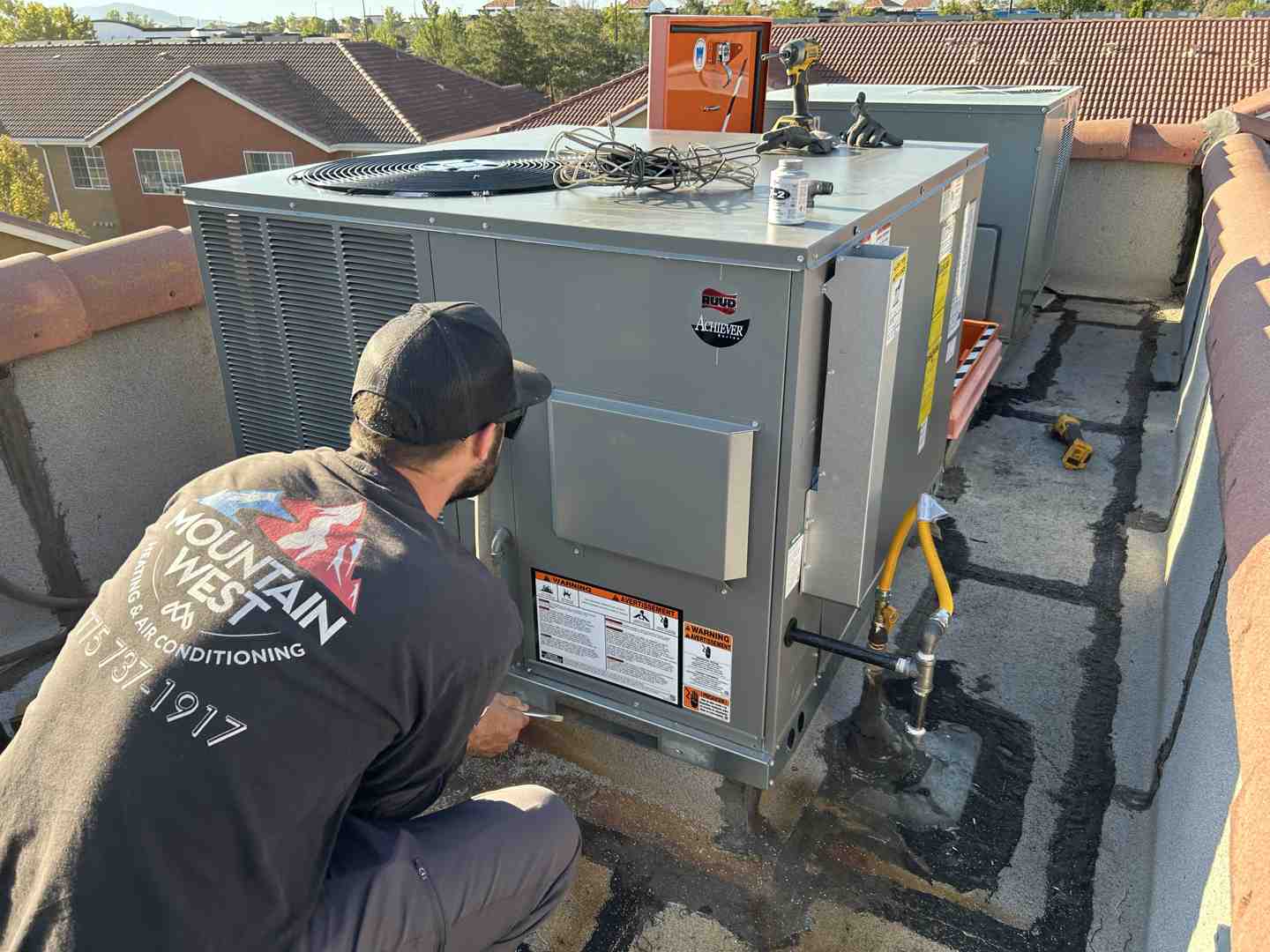
To keep your system running efficiently and avoid catastrophic breakdowns on hot July afternoons, routine professional maintenance is absolutely essential. For a closer look at why spring and early summer are the best times to schedule this service, read our post on Why Now Is the Perfect Time to Service Your HVAC System: Spring Maintenance for Summer Efficiency.
If your air conditioner is more than 12 to 15 years old, is requiring frequent repairs, or is driving your energy bills sky-high, it may be time to consider an upgrade. Modern high-efficiency cooling systems use a fraction of the electricity of older units. For example, upgrading to a modern heat pump can reduce your heating and cooling electricity use dramatically. If you're wondering whether it's time to make the switch, check out our guide on how to Boost Your Summer Comfort with an AC System Upgrade: Essential Tips for a Cooler Home This Season.
Applying Summer Energy Efficiency Tips for the Sierra Region to Your AC Unit
While professional tune-ups are vital, there are several key maintenance steps you can handle yourself to keep your system in peak condition. Regular attention to airflow and system cleanliness can prevent your AC from overworking and slash your energy costs. To help you stay on track, we’ve put together a comprehensive resource: Your Easy-to-Follow Air Conditioning Maintenance Checklist for Summer 2026.
Here is a quick DIY maintenance checklist to get you started:
- Replace Air Filters Monthly: A dirty, clogged filter restricts airflow, forcing your system to run longer and consume 5% to 15% more energy. Check your filter every 30 days during the summer.
- Clear Debris Around the Condenser: Your outdoor condenser unit needs room to breathe. Keep weeds, shrubs, leaves, and toys at least two feet away from the unit to ensure proper airflow.
- Inspect the Condensate Drain: Ensure the drain line is flowing freely. A clogged drain can cause water damage and force your system to shut down.
- Keep Vents Unobstructed: Make sure furniture, rugs, and drapes aren't blocking your indoor supply and return vents.
For a deeper dive into maximizing your system's performance, read our expert advice on Summer AC Tune-Up: Essential Maintenance Tips to Maximize Cooling Efficiency and Slash Energy Costs.
Managing Wildfire Smoke and Indoor Air Quality
In recent years, late summer in the Sierra region has unfortunately become synonymous with wildfire smoke. During active smoke events, opening windows for natural evening cooling is no longer a safe option.
When you must keep your home sealed tight to protect your health, managing indoor air quality and temperature simultaneously requires a careful strategy:
- Run Your AC on Recirculate: Make sure your HVAC system is set to "recirculate" indoor air rather than pulling in smoky air from the outside.
- Upgrade to a High-MERV Filter: Use a filter with a MERV 13 rating or higher if your system can accommodate it. These filters are dense enough to trap fine wildfire smoke particles (PM2.5).
- Avoid Heat-Generating Activities: Since you can't open windows to vent heat, avoid using your conventional oven or clothes dryer on smoky days. Use your microwave instead, which uses 70% to 80% less electricity and generates minimal indoor heat.
- Use Portable Air Purifiers: Place HEPA-rated air purifiers in high-traffic rooms to assist your HVAC system in cleaning the air.
Frequently Asked Questions
How do time-of-use rates work in Northern Nevada?
Under NV Energy's Time-of-Use (TOU) plans, the price you pay for electricity varies depending on the time of day and the season. During the summer, the most expensive "peak" hours run from 1:00 PM to 6:00 PM or 4:00 PM to 9:00 PM on weekdays (depending on your specific plan). By programming your smart thermostat to pre-cool your home before these hours begin, and then raising the temperature slightly during peak times, you can keep your energy bills low.
Can I use a swamp cooler or whole-house fan in the Sierra region?
Yes! Because our high-desert climate in Reno, Sparks, and Carson City is incredibly dry, evaporative coolers (swamp coolers) can be highly effective and use up to 75% less electricity than traditional air conditioners. However, they do require a constant supply of water and do not function well on humid days or during wildfire smoke events. Whole-house fans are also excellent for our region, as they can rapidly pull cool evening air into your home and push hot air out of your attic, though they must also be turned off when outdoor air quality is poor.
What rebates are available for energy efficiency upgrades?
Homeowners in Northern Nevada can take advantage of several financial incentives. NV Energy offers rebates for smart thermostats and high-efficiency AC tune-ups. Additionally, federal tax credits through the Inflation Reduction Act can cover up to 30% of the cost of qualified insulation upgrades, energy-efficient windows, and high-efficiency heat pump installations, making home comfort upgrades more accessible than ever.
Conclusion
Implementing these summer energy efficiency tips for the sierra region is a powerful way to protect your budget, improve your indoor comfort, and extend the lifespan of your home's cooling systems. From simple behavioral shifts like avoiding peak-hour appliance use to sealing up air leaks and keeping your system well-maintained, every small step contributes to lower utility bills.
At Mountain West Heating & Air Conditioning, we are proud to serve our neighbors throughout Washoe Valley, Reno, Sparks, Carson City, Incline Village, and the surrounding areas. Our team of experienced, knowledgeable technicians is dedicated to providing prompt, reliable, and code-compliant HVAC solutions tailored to our unique high-desert climate.
If you want to ensure your system is operating at peak efficiency before the summer heat hits, contact us today to schedule our professional air conditioning services. We are here to keep your home comfortable all season long!