

How to Know When to Upgrade from Portable to Whole Home Generator in Washoe Valley, NV
Knowing when to upgrade from portable to whole home generator is one of the most important decisions a homeowner can make — especially in a region like Washoe Valley, where winter storms, high winds, and extreme temperatures can knock out power for hours or even days at a time. A portable generator might have served you well for the occasional short outage, but there comes a point where manually hauling it out, refueling every few hours, and running extension cords across your home simply isn't enough.
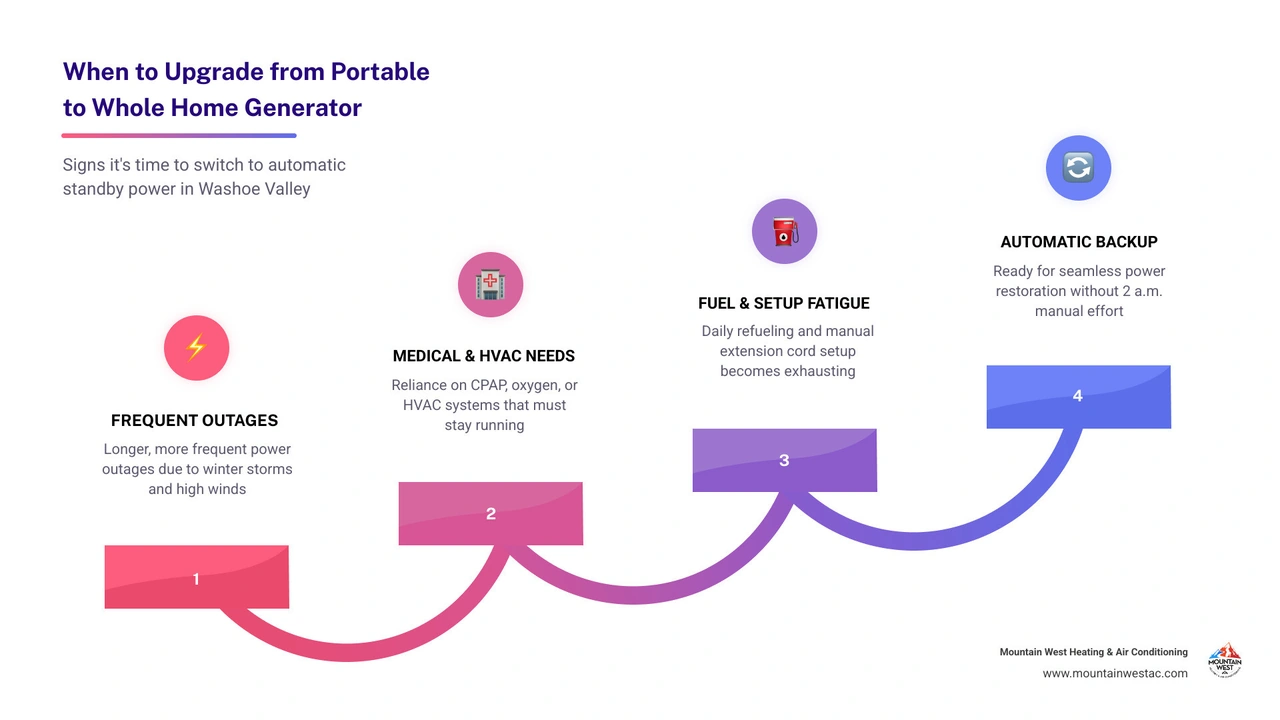
Here are the clearest signs it's time to upgrade:
- Outages are becoming longer or more frequent in your area
- You rely on medical equipment like a CPAP machine or home oxygen system
- Your HVAC system needs to stay running to protect against pipe freezing or dangerous heat
- You're burning through gasoline daily and struggling to keep up with fuel demands
- Your household has grown and essential loads now exceed what your portable unit can handle
- You want automatic power restoration without manual setup at 2 a.m. in a snowstorm
- You're planning to stay in your home long-term and want a permanent, value-adding solution
I'm Andrew Morrell, owner of Mountain West Heating & Air Conditioning, and with over a decade of experience helping Northern Nevada homeowners keep their systems running through every season, I've seen how the decision of when to upgrade from portable to whole home generator can mean the difference between comfort and a genuine safety risk. Let's walk through exactly what to look for so you can make the right call for your home.
Comparing Portable and Whole-House Standby Generators
Before diving into the specific timing of your upgrade, it is helpful to look at the fundamental differences between these two systems. While both are designed to keep your lights on when the local electrical grid fails, they operate on entirely different scales of power, convenience, and technology.
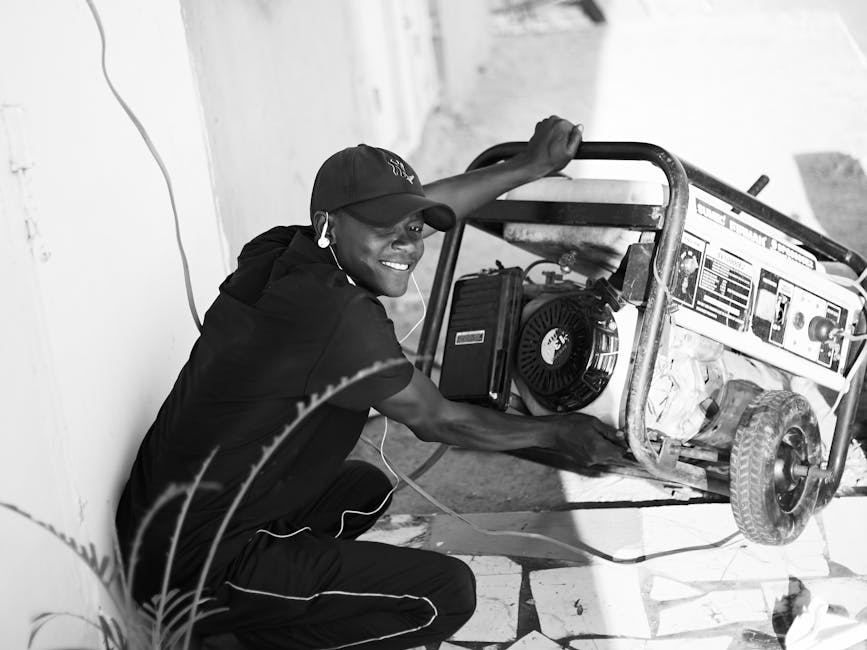
Portable generators are temporary, manual solutions. They typically offer a power output ranging from 2,500 to 10,000 running watts, though some exceptionally large models can reach higher capacities. They must be manually retrieved from storage, positioned a safe distance from the home, fueled with gasoline or liquid propane, and manually started. To get power into your home, you must either run heavy-duty extension cords directly to your appliances or connect the unit to a manual transfer switch.
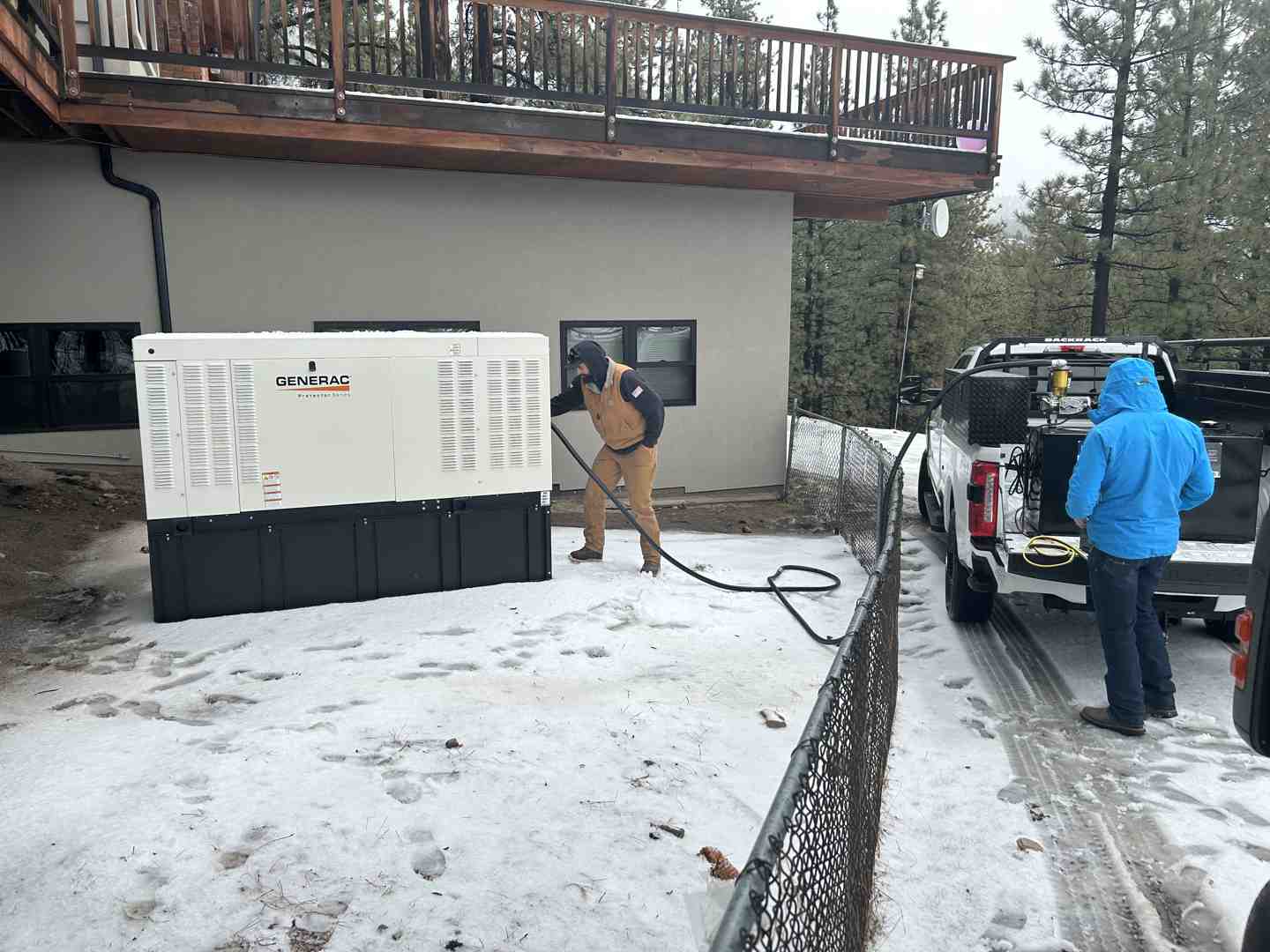
Whole-house standby generators, on the other hand, are permanent fixtures that are professionally installed on concrete or gravel pads outside your home. These units range from 8 kW to 48 kW or more for residential applications. They are wired directly into your home's electrical panel via an automatic transfer switch (ATS) and connected permanently to your local natural gas line or a large on-site propane tank.
For a deep dive into how these two systems stack up side-by-side, check out our guide on Portable vs Standby Generator: Essential Factors to Consider for Reliable Home Backup Power.
The primary difference between the two systems boils down to automation, capacity, and fuel logistics. To understand what a permanent system can bring to your household, read more about What is a Whole House Generator: Essential Backup Power Solution for Homeowners.
| Feature | Portable Generator | Whole-House Standby Generator |
|---|---|---|
| Power Output | 2,500W to 10,000W (typical) | 8 kW to 48 kW+ |
| Startup Mechanism | Manual (pull-start or electric button) | Automatic (within 10–15 seconds of outage) |
| Fuel Source | Gasoline or portable propane cylinders | Natural gas or large, dedicated propane tanks |
| Runtime | Limited by fuel tank capacity (requires manual refueling) | Continuous (runs indefinitely on natural gas utility lines) |
| Appliance Capacity | Essential circuits only (fridge, lights, small electronics) | Entire home (including central HVAC, well pumps, ovens) |
| Safety Profile | Higher risk of carbon monoxide if placed incorrectly | Extremely safe, permanent outdoor installation |
| Maintenance | Manual (regular oil changes, fresh fuel rotation) | Automated self-testing cycles and professional service |
Key Indicators of When to Upgrade from Portable to Whole Home Generator
While a portable generator is an excellent entry-level backup option, it often becomes a source of stress rather than relief as your household needs evolve. Recognizing when to upgrade from portable to whole home generator requires evaluating how your family interacts with your electrical system during an outage.
For many families, the transition point arrives when they realize that their current portable unit simply cannot keep up with the demands of modern appliances. Modern homes feature smart appliances, electric heat pumps, and sensitive electronics that require clean, stable power. Portable generators often produce "dirty" power with higher total harmonic distortion (THD), which can damage sensitive microprocessors in computers, smart TVs, and modern HVAC control boards.
If you are experiencing frequent weather disruptions, understanding Why Residents in Nevada Might Need a Whole House Generator: Protecting Against Power Outages in Extreme Weather will help put your regional risks into perspective. To prepare yourself for the transition, we also recommend reviewing What to Know Before Investing in Residential Generator Systems to ensure you have a clear picture of what ownership entails.
How Outage Frequency Dictates When to Upgrade from Portable to Whole Home Generator
In Northern Nevada, weather patterns can be highly unpredictable. High-wind events, heavy Sierra snowpacks, and summer wildfires can threaten grid stability. If your neighborhood experiences multiple outages a year, or if those outages regularly stretch past the 12-hour mark, a portable generator quickly reveals its limitations.
Manual setup fatigue is a very real phenomenon. Dragging a heavy, metal machine out of a garage at 2 a.m. in the middle of a freezing Washoe Valley snowstorm is not only exhausting—it can be dangerous. Slippery conditions, heavy winds, and sub-freezing temperatures make refueling a hot generator with highly flammable gasoline a recipe for disaster.
Furthermore, during extended grid failures, local gas stations may lose power as well. If you are relying on a portable generator that burns 12 to 20 gallons of gasoline per day, you may find yourself hunting for fuel miles away. A standby generator running on natural gas or a large propane tank completely eliminates this fuel anxiety, providing continuous power without a single trip to the gas pump.
Why Medical and Household Needs Signal When to Upgrade from Portable to Whole Home Generator
For some households, backup power is not a matter of convenience; it is a matter of life and safety. If you or a loved one relies on in-home medical equipment such as oxygen concentrators, dialysis machines, or CPAP devices, a sudden loss of power is an immediate emergency. A portable generator that requires 15 to 30 minutes of manual setup cannot provide the seamless transition that a standby system offers. Standby generators detect grid failure and restore power automatically in under 15 seconds, keeping critical life-support systems running without interruption.
Your home's heating and cooling systems also play a major role in this decision. In Washoe Valley, winter temperatures routinely drop below freezing. Without your heating system running, your home's internal temperature will plummet, putting your plumbing at risk of freezing and bursting. Most portable generators do not have the power capacity—or the proper electrical connection—to run a central heating system or a large air conditioner.
To determine exactly how much power your household requires to run these heavy loads, consult our Simple Guide to Generator kW Sizing for Your Home.
Additionally, if you work from home, a power outage means lost productivity and missed deadlines. A standby generator ensures your home office, internet router, and security systems remain fully operational, allowing you to maintain your routine regardless of external grid conditions.
Safety, Maintenance, and Installation Factors to Consider
Upgrading to a whole-house generator involves more than just purchasing a larger machine. It requires a permanent integration into your home’s electrical and fuel infrastructure, which brings several safety and regulatory factors into play.
Safety is perhaps the most compelling reason to transition to a standby system. According to the Consumer Product Safety Commission, carbon monoxide (CO) poisoning from portable generators is a leading cause of non-fire generator-related deaths. Portable units must be kept at least 20 feet away from any window, door, or vent, with the exhaust pointed away from the structure. During severe rain or snow, keeping a portable unit dry while maintaining this distance can be incredibly difficult. Standby generators are permanently installed in weatherproof enclosures designed to safely vent exhaust gases away from your living spaces.
Noise is another major factor. Standard open-frame portable generators can be incredibly loud, often exceeding 70 to 80 decibels at a distance of 7 meters. This can disrupt your sleep and strain relationships with your neighbors. Standby generators are housed in sound-attenuated enclosures, allowing them to operate quietly—often below 65 decibels—which easily complies with local noise ordinances.
Before embarking on this upgrade, it is crucial to understand the steps involved. Take a look at our comprehensive guide on Getting a Home Generator Installation: Essential Steps for Reliable Backup Power to see what the process looks like from start to finish. You should also review Where Should Your Generator Go: Smart Placement Tips for Maximum Safety and Efficiency to understand how local setbacks, window clearances, and utility meters dictate the ideal location on your property.
Professional Installation and Compliance
Installing a home standby generator is not a do-it-yourself project. It requires a sophisticated understanding of electrical theory, local building codes, plumbing (for natural gas or propane connections), and permitting.
In Northern Nevada, local building departments require permits and inspections for permanent generator installations. This ensures that the unit is placed a safe distance from property lines and structures, that the gas lines are properly sized and pressure-tested, and that the electrical connections comply with the National Electrical Code (NEC).
Working with certified professionals guarantees that your system is installed safely and legally. To understand why this is so critical, read Why Hiring a Licensed Generator Installer is Worth Every Penny. Additionally, when you are ready to move forward, our guide on How to Choose the Right Standby Generator Installer for Your Home will help you vet potential contractors to ensure you receive top-tier service.
Frequently Asked Questions About Generator Upgrades
Can a portable generator safely power a whole house?
While a high-capacity portable generator (such as a 10,000-watt unit) can power a significant portion of your home, it cannot safely power an entire modern house without careful load management. To connect a portable generator to your home's electrical panel, you must use a professionally installed manual transfer switch or an interlock kit. This prevents "backfeeding," a highly dangerous scenario where electricity from your generator flows back into the utility lines, risking the lives of utility workers trying to restore power.
Even with a proper transfer switch, you will have to manually choose which circuits to run. You cannot run your central heating, water heater, electric oven, and refrigerator all at the same time on a portable unit without overloading the system and tripping the generator's breaker.
How long can a whole home standby generator run continuously?
A standby generator is designed for heavy-duty, long-term operation. If your system is connected to a natural gas utility line, it can theoretically run indefinitely, as long as the utility company maintains gas pressure. If your system runs on liquid propane, your runtime is limited only by the size of your propane tank.
However, during extremely long outages (stretching over several days), you should temporarily shut down the generator every 24 to 48 hours. This allows you to check the oil levels, inspect the air filter, and perform basic maintenance to ensure the engine remains in peak operating condition.
Do standby generators increase home resale value?
Yes, a professionally installed standby generator is considered a permanent home improvement and a highly desirable asset. Prospective homebuyers—especially those looking at properties in regions prone to wild weather or rural areas with less stable grids—view a standby generator as a premium safety feature. It provides immediate peace of mind, knowing that the home is fully protected against future power disruptions, which can make your property stand out in a competitive real estate market.
Conclusion
Deciding when to upgrade from portable to whole home generator is ultimately about moving from a state of temporary survival during an outage to a state of complete, uninterrupted home comfort. At Mountain West Heating & Air Conditioning, we specialize in providing homeowners in Washoe Valley, Reno, Sparks, Carson City, and the surrounding communities with the reliable, code-compliant backup power solutions they need to withstand Northern Nevada’s toughest weather.
We understand that a standby generator is a significant investment in your home's safety and comfort. To help make this transition as smooth as possible, we offer convenient financing options. Learn more about how we can help by visiting our guide on Generator Installation Financing Options in Nevada with Easy Approval.
If you are ready to leave the hassle of extension cords, heavy gas cans, and manual cold-starts behind, our team is here to help you design and install the perfect standby power system for your household. Contact us today to explore our Generator Installation Services and schedule your personalized home assessment.