

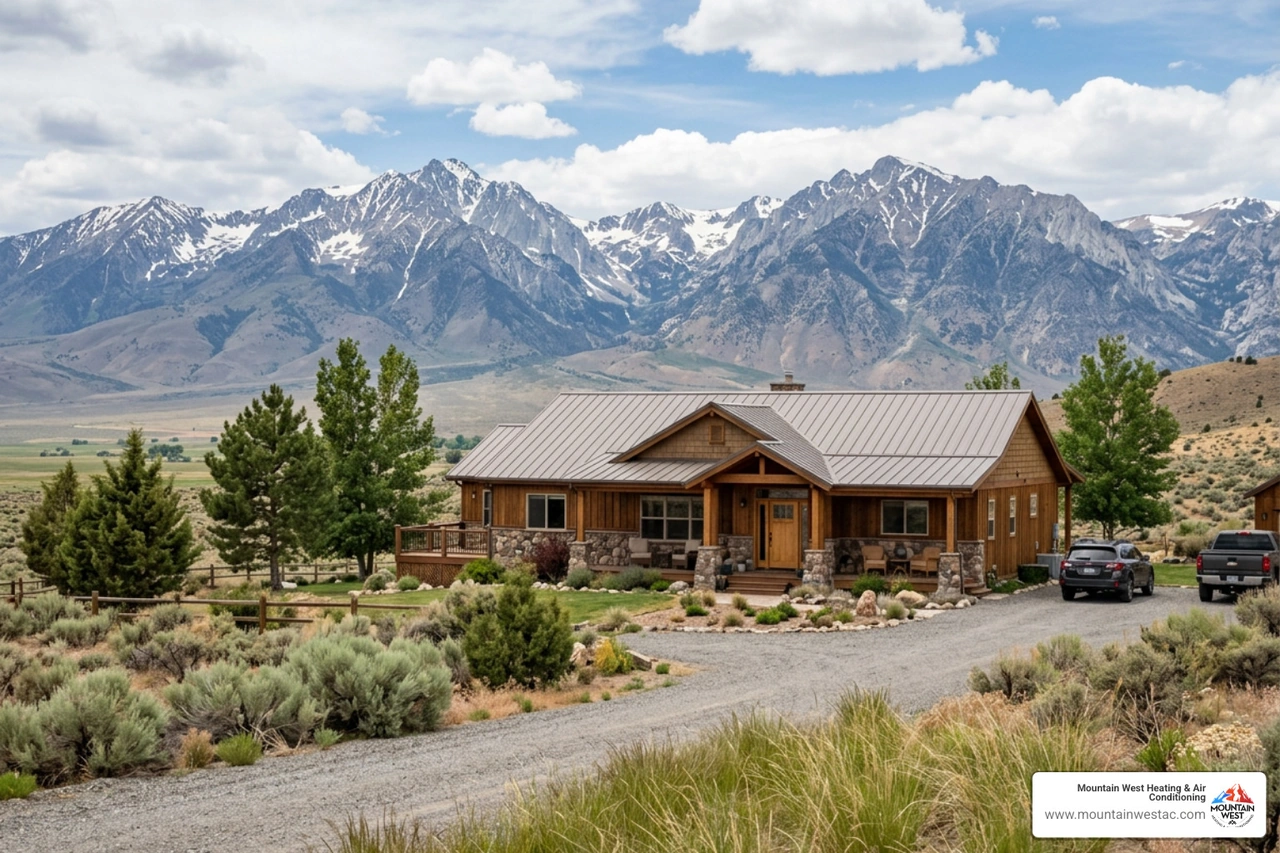
Why Northern Nevada Climate Affects Your HVAC System More Than You Might Expect
How northern Nevada climate affects your HVAC system is one of the most important things to understand as a homeowner in the Washoe Valley area. The short answer: this region puts more stress on heating and cooling equipment than almost anywhere else in the country.
Here's a quick overview of the key climate factors at work:
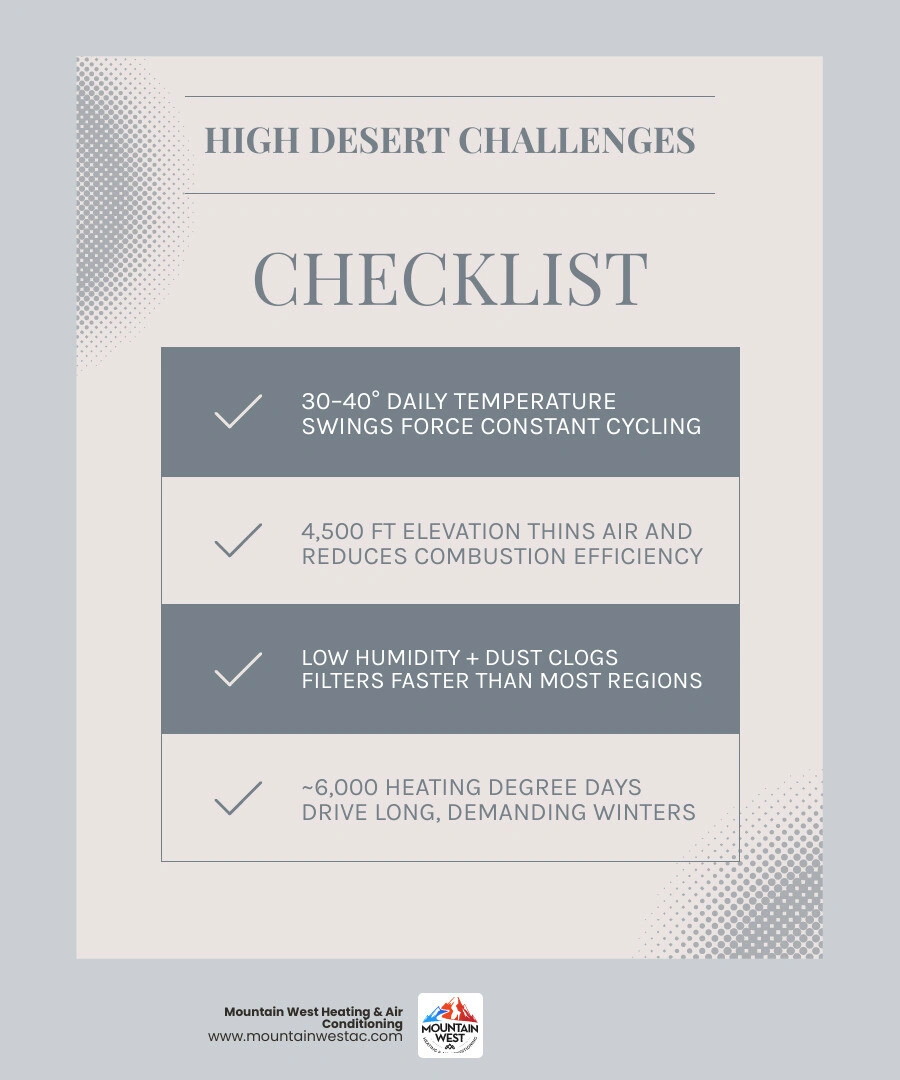
- Extreme daily temperature swings - Temperatures can shift 30–40 degrees between morning and afternoon, forcing your system to constantly switch gears
- High desert elevation - At nearly 4,500 feet, thinner air reduces combustion efficiency and affects how well your AC moves and cools air
- Long cooling seasons - Summer heat can stretch from late May through September, meaning your AC runs hard for months
- Dry, dusty air - Low humidity and wind-blown dust clog filters faster and wear down components more quickly
- Cold winters - Reno averages around 6,000 heating degree days per year, with lows regularly dropping below 20°F
- Wildfire smoke - Seasonal smoke events add extra particulate load to filters and ductwork
- Climate change trends - Eight of the ten warmest years in Nevada since 1895 have occurred since 2000, and heat waves are expected to grow more frequent and intense
All of these factors combine to shorten equipment lifespans, drive up energy bills, and create comfort challenges that homeowners in milder climates simply don't face.
I'm Andrew Morrell, owner of Mountain West Heating & Air Conditioning, and after more than a decade of hands-on HVAC work across Northern Nevada, I've seen how northern Nevada's climate affects your HVAC system in ways that demand region-specific solutions — not one-size-fits-all advice. In the sections below, I'll walk you through exactly what's happening to your equipment and what you can do about it.
High Desert Extremes: How Northern Nevada Climate Affects Your HVAC System
Living in the high desert means experiencing a semi-arid climate characterized by intense seasonal contrasts and dramatic daily shifts. In places like Washoe Valley, Reno, Sparks, and Carson City, our weather doesn't do "moderate." Instead, we navigate freezing winters and scorching summers, often with very little transition time in between.
One of the most physically demanding aspects of this climate is the diurnal temperature swing. It is completely normal in our region to experience daily temperature shifts of 30 to 40 degrees. You might wake up to a crisp 45°F morning that requires turning on the heat, only to find yourself switching over to air conditioning by 3:00 PM when the high desert sun pushes the outdoor temperature past 85°F.
This constant oscillation puts an immense mechanical strain on your heating and cooling equipment. Standard systems are engineered for climates where temperatures rise and fall gradually. When a system is forced to cycle rapidly between heating and cooling modes, or run at maximum capacity for a few hours and then sit idle, its internal components experience rapid thermal expansion and contraction. Over time, this accelerated wear and tear can lead to premature component failure, electrical issues, and refrigerant leaks. To understand what happens when these forces take their toll, you can read about What Are the Most Common HVAC System Issues.
Thinner Air and High Altitude Challenges
When we design and install heating and cooling systems in areas like Incline Village, Arrowcreek, or VC Highlands, we have to look closely at the altimeter. At nearly 4,500 feet of elevation in the valley floors—and well over 6,000 feet up in our mountain communities—the air is significantly thinner and less dense than it is at sea level.
Thinner air directly impacts HVAC performance in two major ways:
- Reduced Airflow and Heat Transfer: Because the air is less dense, it contains fewer molecules per cubic foot. This means your air conditioner blower fan has to work harder to move the same mass of air. It also means the air running across your indoor evaporator coil cannot absorb or release heat as efficiently. Standard air conditioning systems installed straight out of the box without altitude adjustments will often experience a drop in cooling capacity.
- Combustion Efficiency in Furnaces: Gas furnaces rely on a precise mixture of fuel (natural gas or propane) and oxygen to burn cleanly and safely. Because there is less oxygen in high-altitude air, standard furnace burners will burn "rich" if left unadjusted. This incomplete combustion can lead to soot buildup, carbon monoxide hazards, and cracked heat exchangers.
To counteract these high-altitude effects, we must perform altitude derating and install specialized high-altitude burner kits. For a deeper look into this scientific phenomenon, check out our guide on How Does Altitude Affect Your HVAC System.
Intense Dry Heat, Dust, and Low Humidity
Northern Nevada’s humidity levels regularly drop below 15% during the summer months. While this "dry heat" makes hot afternoons feel more comfortable to us, it presents distinct challenges for indoor air quality and mechanical longevity.
Without moisture in the air, dust, sagebrush pollen, and fine desert particulates remain suspended in the atmosphere much longer than they would in humid climates where rain washes the air. When the afternoon Washoe Zephyr winds kick up, this airborne debris is directed straight toward your home.
Your outdoor air conditioning condenser coil acts like a giant vacuum cleaner, pulling in outdoor air to release heat. In our dry, dusty climate, these coils quickly become packed with dirt, sagebrush debris, and cottonwood fluff. A dirty condenser coil acts like an insulating blanket, trapping heat inside the system and forcing the compressor to run hotter and longer, which rapidly shortens its lifespan.
Indoors, the lack of humidity causes static electricity buildup and dries out wooden furniture, flooring, and our respiratory tracts. When you combine this dry air with heavy seasonal pollen, indoor comfort can deteriorate quickly. To combat these high-desert air quality and moisture issues, we recommend looking into specialized Indoor Air Quality Services to keep your indoor air clean and balanced.
Regional Differences: Washoe Valley vs. Southern Nevada HVAC Needs
It’s common for national publications or statewide guides to lump all of Nevada into a single "desert climate" category. However, anyone who has spent a winter in Reno or Carson City knows that our climate is worlds apart from Las Vegas.
Southern Nevada falls into IECC Climate Zone 2B, which is characterized by extreme, prolonged summer heat and very mild winters. In contrast, Northern Nevada spans IECC Climate Zones 3B (in our lower valleys) and 5B (in high-elevation areas like Incline Village).
While Las Vegas homes focus almost entirely on massive cooling capacity and can often get by with minimal heating systems, Northern Nevada requires a truly balanced HVAC strategy. We experience approximately 6,000 heating degree days (HDD) annually. This means our heating systems run just as much—if not more—than our cooling systems.
| Climate & HVAC Metric | Northern Nevada (Washoe Valley, Reno, Sparks) | Southern Nevada (Las Vegas, Henderson) |
|---|---|---|
| IECC Climate Zone | Zone 3B / Zone 5B (High Desert / Mountain) | Zone 2B (Subtropical Hot Desert) |
| Elevation Range | 4,500 to 6,500+ feet | 2,000 feet |
| Annual Heating Demand | High (~6,000 Heating Degree Days) | Very Low (~2,000 Heating Degree Days) |
| Winter Design Temp | Regularly drops below 20°F (can reach 1°F in cold snaps) | Rarely drops below 35°F |
| Summer Monsoonal Humidity | Low (Occasional brief summer spikes) | Moderate (Higher July-August monsoon impact) |
| Primary Heating Fuel | Natural Gas, Propane, or Cold-Climate Heat Pumps | Electric Resistance or Standard Heat Pumps |
Evaporative Cooling vs. Refrigerant AC in Washoe Valley
Because our early summers (late May through June) are incredibly dry, many older homes in Washoe Valley, Dayton, and historic parts of Carson City have historically relied on evaporative coolers (often called "swamp coolers").
Evaporative cooling works by passing hot, dry outdoor air through water-saturated pads, causing the water to evaporate and naturally lower the air temperature by 20 to 30 degrees. This process is highly energy-efficient and works beautifully when the outdoor relative humidity remains below 15%.
However, evaporative cooling has a major limitation in Northern Nevada: the late-summer monsoon pattern. During July and August, moisture-laden air occasionally sweeps up from the south, pushing our relative humidity levels above 30%. When this happens, the air is already too saturated to absorb more water vapor, and evaporative coolers lose their cooling power, leaving homes feeling warm and sticky.
For reliable, summer-long comfort, a traditional refrigerant-based central air conditioner or a modern heat pump is highly recommended. These systems cool the air while simultaneously removing excess moisture, ensuring your home remains comfortable regardless of outdoor humidity spikes.
Choosing the Right System: Heat Pumps, Furnaces, and Dual-Fuel Options
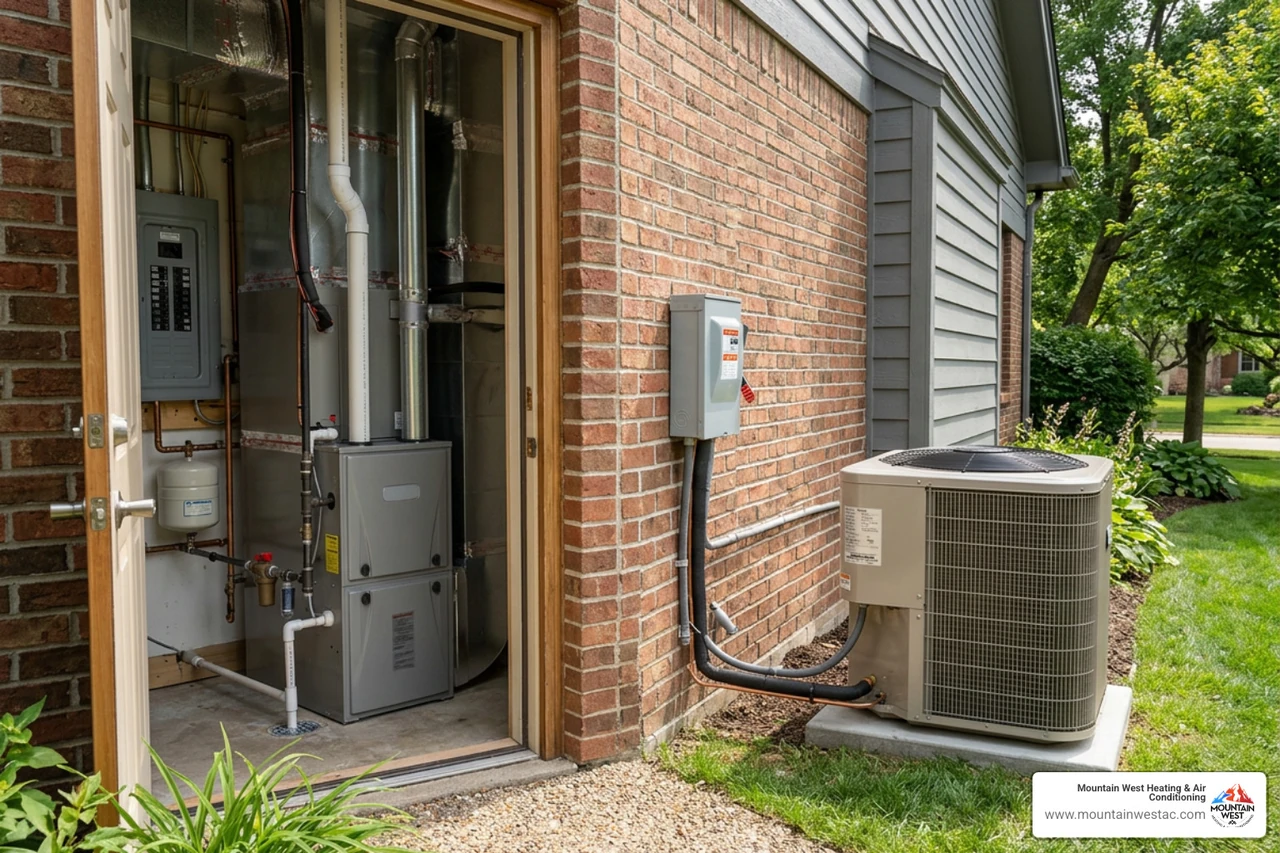
Given our region's unique blend of long, hot summers and freezing winters, selecting the right heating and cooling system is a critical decision. In the past, the standard configuration for a Northern Nevada home was a split system consisting of a gas furnace paired with a separate central air conditioner.
Today, advanced technology has made electric heat pumps an incredibly attractive option. A heat pump doesn't actually create heat; instead, it moves heat from one place to another. In the summer, it acts exactly like an air conditioner, extracting heat from inside your home and dumping it outside. In the winter, the process reverses: the system extracts heat from the outdoor air and brings it inside. To understand how these systems deliver year-round comfort, you can read our detailed breakdown: What Is a Heat Pump.
How Northern Nevada Climate Affects Your HVAC System Selection
Because winter temperatures in Washoe Valley, Verdi, and VC Highlands regularly drop below freezing, standard heat pumps can sometimes struggle to keep up on the coldest nights of the year. As the outdoor temperature drops toward 30°F, standard heat pumps lose efficiency and may require backup electric resistance heat, which can be expensive to run.
To solve this high-desert dilemma, we highly recommend two advanced options:
- Dual-Fuel (Hybrid) Systems: This setup pairs an electric heat pump with a high-efficiency gas furnace. During the mild spring and autumn months, and even most winter days when temperatures are in the 40s, the heat pump handles the heating efficiently. When a true winter cold snap hits and temperatures drop below freezing, the system automatically switches over to the gas furnace, utilizing the raw heating power of natural gas or propane.
- Cold-Climate Heat Pumps (ccASHP): Modern cold-climate heat pumps utilize inverter-driven compressors and advanced defrost cycles to maintain high efficiency even when outdoor temperatures drop below 5°F. These systems are excellent all-electric solutions for high-elevation areas like Incline Village or places without natural gas access.
Additionally, under the latest federal Department of Energy standards, all new cooling systems installed in Nevada must meet updated SEER2 (Seasonal Energy Efficiency Ratio 2) standards, which require higher minimum efficiencies. Upgrading to a modern, SEER2-compliant system ensures lower operating costs during our long summer cooling seasons.
Code Compliance and Sizing Standards in Washoe County
Installing an HVAC system in Northern Nevada requires strict adherence to local building codes and engineering standards. Because our climate is so unique, we cannot use generic rules of thumb—like "one ton of cooling per 500 square feet"—to size a system. Doing so almost always results in an oversized air conditioner or an undersized heater.
In Washoe County, Carson City, and Douglas County, building departments require official ACCA Manual J Load Calculations for all new installations and major replacements. A Manual J calculation analyzes your home’s exact thermal boundaries, including:
- Local elevation-adjusted climate data
- The direction your windows face (south- and west-facing glass adds massive heat loads in the summer)
- Insulation R-values in your walls and attic
- Air infiltration rates
Sizing is a delicate balance. If an air conditioner is oversized, it will "short-cycle," turning on and off rapidly. This prevents the system from running long enough to properly dehumidify the air and places extreme wear on the compressor. If a furnace is undersized, it will run continuously on freezing winter nights, failing to keep your family warm and driving up your utility bills.
Furthermore, because of our elevation, gas furnaces must be fitted with certified high-altitude burner kits and adjusted for proper manifold gas pressure. This ensures clean combustion, prevents soot accumulation, and keeps your system compliant with the International Mechanical Code (IMC) and local energy standards.
Maximizing Efficiency and Lowering Energy Bills in the Sierra Region
High desert utility bills can spike dramatically during our peak summer and winter seasons. Fortunately, there are several practical steps you can take to keep your home comfortable without breaking the bank.
One of the most effective strategies is smart thermostat management. During the summer, we recommend keeping your thermostat set to 78°F when you are home. Local energy studies show that once you start setting your air conditioner below 78°F, your power bill begins to increase exponentially.
For more actionable advice on keeping your summer cooling bills under control, take a look at our Summer Energy Efficiency Tips for the Sierra Region.
Sealing and Insulation Strategies for High Desert Homes
No matter how efficient your heating and cooling system is, it cannot do its job properly if your home is constantly losing conditioned air. In Northern Nevada, summer attic temperatures can easily climb to 150°F to 160°F. If your attic is poorly insulated, that heat radiates directly through your drywall and into your living spaces.
Furthermore, if your ductwork is located in an unconditioned attic or crawl space, duct leakage and conduction losses can account for 20% to 40% of your system's total cooling capacity. This means you could be paying to cool your attic rather than your home.
To maximize your system's efficiency, we recommend:
- Upgrading attic insulation to at least R-49 to block radiant heat transfer.
- Sealing air leaks around windows, doors, and plumbing penetrations to prevent drafts.
- Having your ductwork professionally inspected, sealed, and insulated.
To learn more about how these passive home improvements directly impact your utility costs, read our articles on How Proper Insulation Can Save on Your Heating and Cooling Bill and The Benefits of Sealing Air Leaks.
Essential Maintenance for High Desert HVAC Longevity
A high-quality heating and cooling system is a major investment. While most modern air conditioners and furnaces are designed to last 12 to 15 years, that lifespan is entirely dependent on regular, climate-specific maintenance. In a harsh high desert environment, a neglected system can easily burn out years ahead of its time.
The single most important maintenance task a homeowner can perform is changing the air filter. In our dusty, windy climate, standard 1-inch filters can clog in as little as 30 days during peak pollen or wildfire seasons. A clogged filter restricts airflow, forcing your blower motor to run hotter and work harder, which can cause the system to overheat and shut down.
To understand what a comprehensive professional service entails, you can read our guide on What Does HVAC Maintenance Include. Additionally, if you are wondering how to structure your long-term home maintenance plans, check out How Often You Should Have an HVAC System Inspected.
How Northern Nevada Climate Affects Your HVAC System Maintenance Schedule
Because our seasons shift so dramatically, we recommend a bi-annual professional maintenance schedule:
- Spring Tune-Up (Before Summer): We focus on your cooling system. This includes washing out the outdoor condenser coil to remove winter dust and sagebrush debris, checking refrigerant levels, testing electrical connections, and ensuring the blower motor is drawing the correct amperage.
- Fall Tune-Up (Before Winter): We focus on your heating system. This includes a thorough cleaning of the furnace burners, inspecting the heat exchanger for dangerous cracks, checking the ignition system, and verifying proper combustion venting.
If you have upgraded to an energy-efficient heat pump system, its maintenance needs are slightly different because the system runs year-round to provide both heating and cooling. You can learn how to keep these versatile systems operating smoothly by reading our guide on Heat Pump Maintenance for Homeowners.
Frequently Asked Questions about Northern Nevada HVAC
Why does my AC struggle on hot summer afternoons in Reno-Sparks?
Your air conditioner cools your home by absorbing indoor heat and releasing it through the outdoor condenser coil. When outdoor temperatures climb past 95°F on hot summer afternoons, the temperature difference between your refrigerant and the outdoor air shrinks. This makes it much harder for the system to shed heat. If your outdoor coil is dirty, or if your system is slightly low on refrigerant, it will struggle to maintain your desired indoor temperature during the hottest hours of the day.
Can I rely solely on a heat pump for heating in Washoe Valley?
Yes, but you must choose the right technology. Standard heat pumps lose capacity as temperatures drop below freezing. However, modern cold-climate heat pumps are specifically engineered to deliver reliable, efficient heat even when outdoor temperatures drop below zero. Alternatively, a dual-fuel system that pairs a heat pump with a gas furnace backup provides the ultimate peace of mind for our coldest winter nights.
How often should I change my air filters in a dusty desert climate?
While standard guidelines recommend changing filters every 90 days, our high desert climate demands more frequent attention. We recommend checking your air filter every 30 days during the peak summer cooling and winter heating seasons. If you live in a particularly dusty area, have pets, or during active wildfire seasons, you should replace your filters every 30 to 45 days to maintain healthy airflow and protect your equipment.
Conclusion
Navigating the unique climate of Northern Nevada requires local expertise and specialized HVAC solutions. From the high-altitude, thin air of Incline Village and VC Highlands to the hot, dusty summer afternoons of Reno, Sparks, and Carson City, our weather demands systems that are properly sized, meticulously installed, and regularly maintained.
At Mountain West Heating & Air Conditioning, we are proud to call Washoe Valley home. We understand the physical and mechanical toll that our semi-arid climate takes on your heating and cooling equipment. Whether you need a seasonal tune-up, a high-altitude furnace adjustment, or a complete system replacement, our team is committed to providing honest, reliable, and code-compliant services to keep your home comfortable all year long.
If you are ready to optimize your home's comfort and energy efficiency, contact us today to schedule your next service or consultation at Mountain West Heating & Air Conditioning Services.