

Why Storm Preparedness Tips for Northern Nevada Homeowners Matter More Than You Think
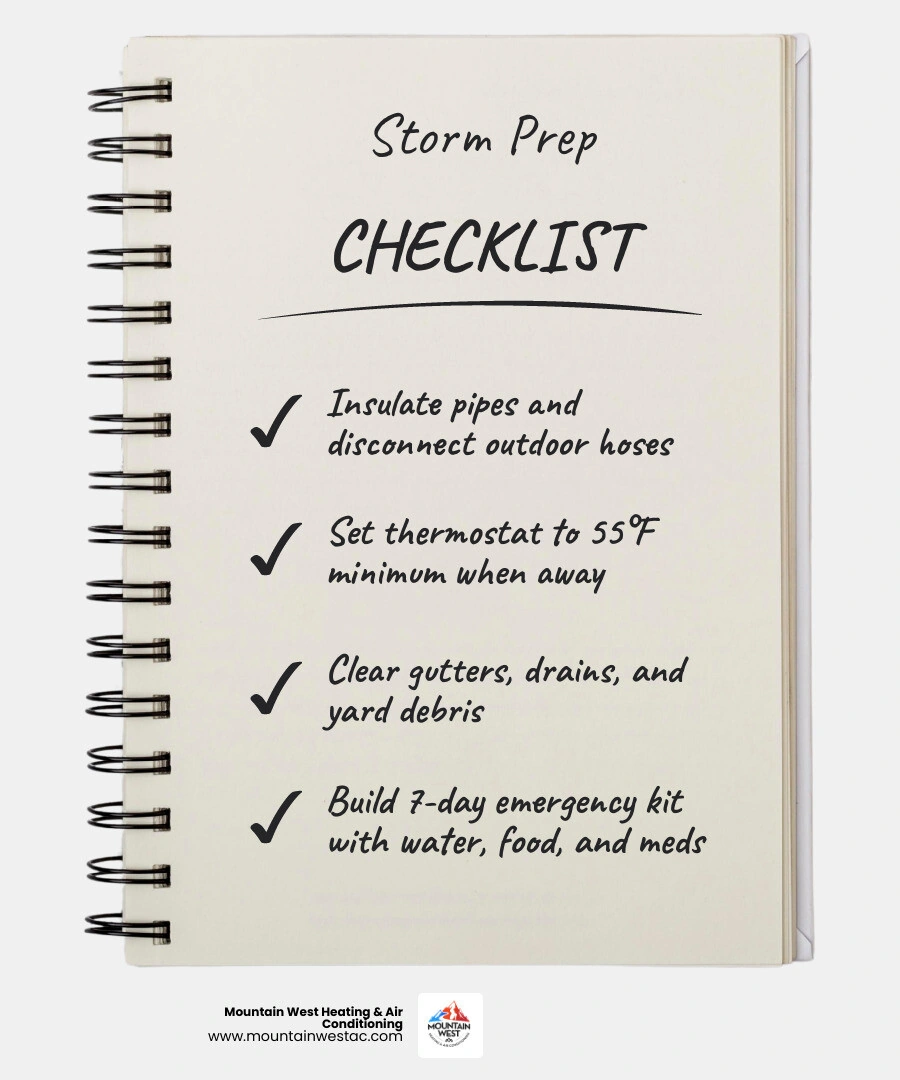
If you're looking for storm preparedness tips for northern nevada homeowners, here's a quick-start checklist to get you ready before the next storm hits:
- Winterize your plumbing - Insulate pipes, disconnect hoses, and drain your irrigation system
- Protect your HVAC system - Keep outdoor units clear of snow and debris; set your thermostat to at least 55°F when away
- Clear drains and gutters - Remove leaves and debris to reduce flood risk
- Seal your home - Close foundation vents and seal gaps to block pests and cold air
- Build an emergency kit - Stock at least seven days of water (one gallon per person per day), non-perishable food, medications, flashlights, and a battery-powered radio
- Plan for power outages - Know your backup heating options and generator safety rules
- Create a household emergency plan - Choose two meeting places, designate an out-of-state contact, and know your evacuation routes
- Review your insurance - Standard homeowner policies don't cover flooding; a flood insurance policy can take up to 30 days to go into effect
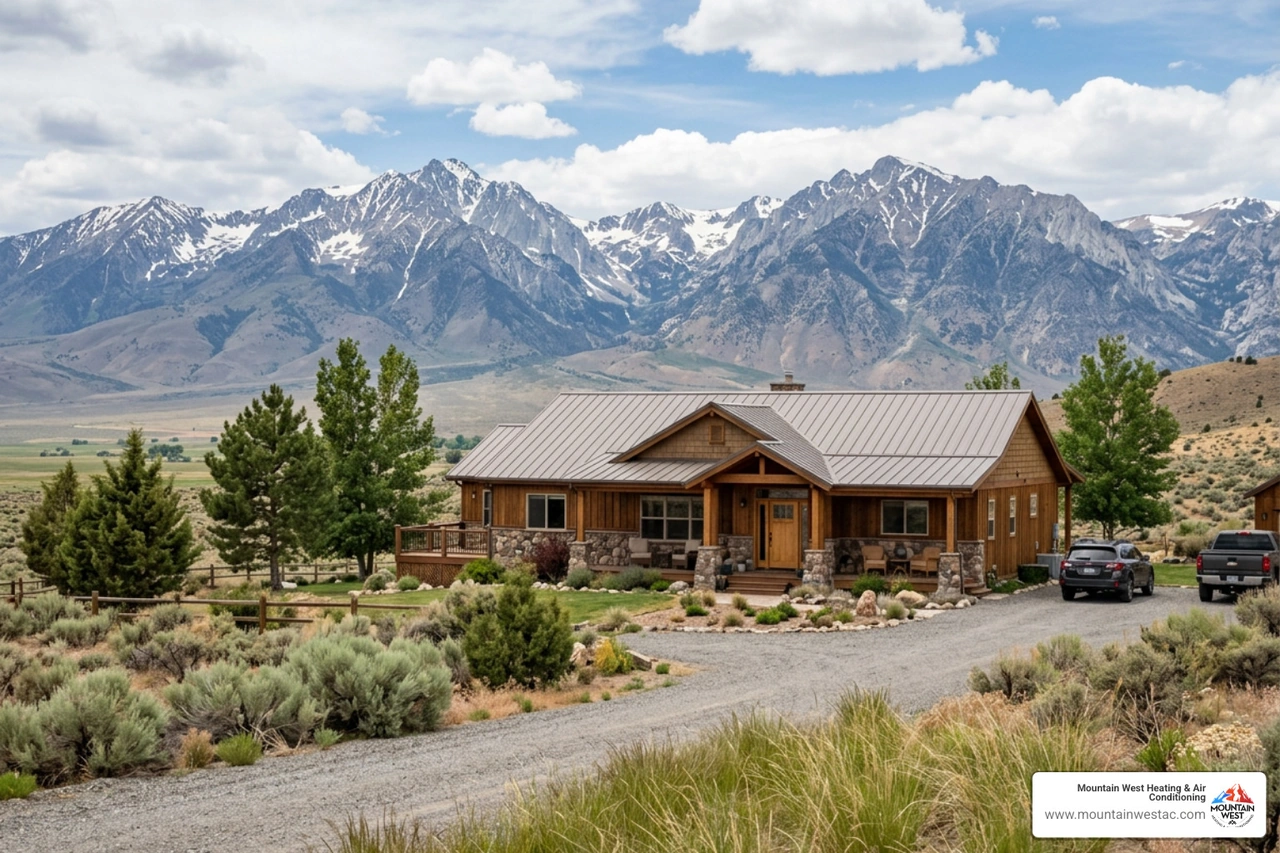
Northern Nevada can feel like a place where serious weather shouldn't be a big concern. After all, Nevada receives less annual precipitation than any other state in the country. But that reputation is misleading — and sometimes dangerous. Despite the dry climate, the region experiences frequent and significant flooding, brutal winter storms, high winds capable of tearing roofs from homes, and extended power outages that can push heating systems to their limits. In Washoe Valley and the surrounding communities, seasonal weather swings quickly from manageable to serious, and homes that aren't prepared often pay the price.
The challenge is that storm damage here rarely looks the way people expect. It's not always a dramatic blizzard. More often, it's a burst pipe from a single hard freeze, a flooded yard from a fast-moving rain-on-snow event, a power outage that knocks out your furnace on the coldest night of the year, or a rodent problem that sneaks in after a mild fall. These are the kinds of situations where preparation makes the difference between a minor inconvenience and a costly repair — or worse.
I'm Andrew Morrell, owner of Mountain West Heating & Air Conditioning, and after more than a decade of servicing residential heating and cooling systems across Northern Nevada, I've seen what storm season does to unprepared homes. The storm preparedness tips for northern nevada homeowners in this guide are built around the real challenges our region faces — from HVAC protection and backup power to flooding and emergency planning.
Understanding Northern Nevada Winter Storm and Flooding Risks
To truly protect your home, you have to understand the specific environmental forces at play in our corner of the state. Northern Nevada’s high-desert climate, combined with the dramatic topography of the Sierra Nevada mountains, creates a unique set of weather hazards that can catch even long-term residents off guard.
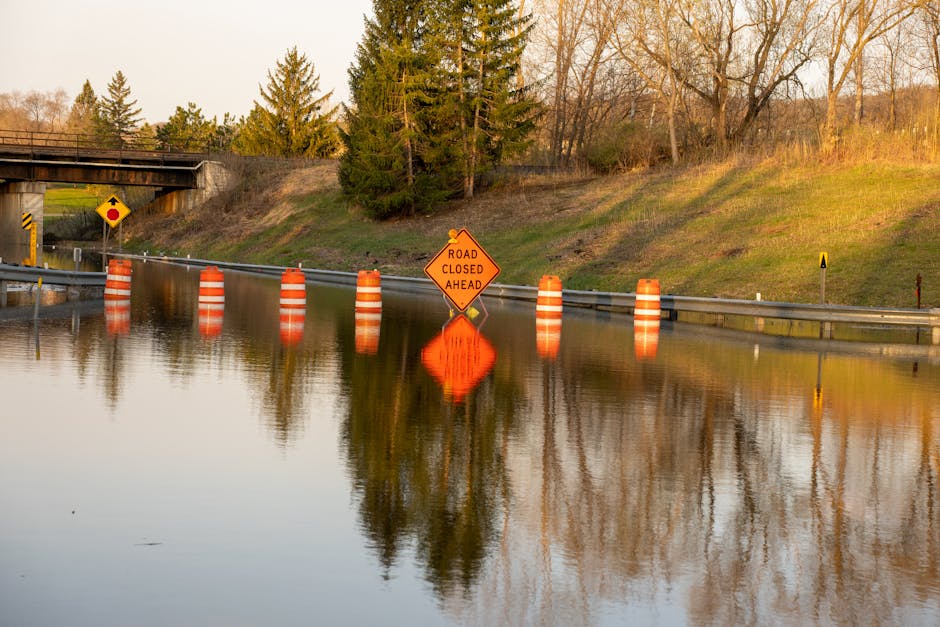
A major paradox of living here is our precipitation. While Nevada receives the lowest annual amount of precipitation of any state in the U.S., we experience frequent, severe, and localized flooding. This often happens because our dry, hard-packed soils don't absorb water quickly. When a sudden storm hits Reno, Sparks, or Carson City, the water has nowhere to go but over the surface, rapidly overwhelming local drainage systems.
Furthermore, Washoe County is geographically diverse, divided into nine distinct sectors for emergency planning—stretching from the alpine heights of Incline Village down to the flat valley floors of Washoe Valley and Dayton. Each sector faces slightly different risks. While a homeowner in VC Highlands or Arrowcreek might deal with heavy snow loads and freezing winds, a family in the lower-lying areas of Northwest Reno or Hidden Valley might be far more vulnerable to rapid runoff and flash flooding.
High Winds, Heavy Snow, and Flash Floods in Washoe Valley
In Washoe Valley, Verdi, and the surrounding areas, winter storms are frequently preceded or accompanied by severe windstorms. It’s not uncommon to experience downslope windstorms with gusts exceeding 100 mph. Winds of this magnitude do far more than blow over trash cans; they can overturn mobile homes, tear shingles and entire roofs off houses, topple mature trees, snap utility poles, and shatter windows.
When these high winds combine with heavy snow, we get full blizzard conditions. Sierra Nevada winter weather can dump feet of snow in a matter of hours, creating near-zero visibility. If you are caught in a blizzard, the safest action is to stay indoors until the snow and wind subside. Traveling during these events is incredibly hazardous, often leading to long delays, highway closures (like I-80 and Mt. Rose Highway), and stranded vehicles.
The transition from winter to spring brings another major risk: rain-on-snow events. When warm, tropical atmospheric rivers dump heavy rain on top of an existing Sierra snowpack, the snow melts rapidly. This sudden volume of water rushes down the canyons, causing flash floods in the valleys below. Knowing how quickly these waters rise is crucial for personal safety. Just six inches of moving water can knock an adult off their feet, and only one foot of moving water is strong enough to sweep a vehicle off the road.
Essential Storm Preparedness Tips for Northern Nevada Homeowners
Preparing your property for extreme weather is all about taking proactive steps before the clouds roll in. In Northern Nevada, home mitigation requires a dual focus: protecting your structure from freezing temperatures and ensuring your property can handle sudden water runoff.
Additionally, before winter arrives, it is wise to review your homeowner's insurance policy. Many residents don't realize that standard policies do not cover flood damage. If you live in a flood-prone area of Reno, Sparks, or Dayton, purchasing a separate flood insurance policy through the National Flood Insurance Program is highly recommended. That these policies typically take up to 30 days to go into effect, so you cannot wait until a storm warning is issued to buy coverage.
Winterizing Your HVAC System and Home Plumbing
Your home’s heating and plumbing systems are its lifelines during a freezing Northern Nevada winter. To prevent catastrophic pipe bursts and heating failures, we recommend taking these essential steps every autumn:
- Insulate Pipes and Faucets: Wrap exposed water pipes in unheated areas—such as crawlspaces, basements, and attics—with foam insulation sleeves. Disconnect all outdoor hoses, shut off the indoor valves leading to outdoor spigots, and drain the remaining water.
- Drain Irrigation Systems: Completely blow out and drain your sprinkler and drip systems before the first hard freeze. Standing water in underground lines will freeze, expand, and shatter the plastic valves.
- Set Your Thermostat Wisely: If you plan to travel during the winter, never turn your heating system completely off. Set your thermostat to a minimum of 55°F. This keeps the interior of your walls warm enough to prevent hidden plumbing from freezing. Additionally, open cupboard doors under sinks in your kitchen and bathrooms to allow warm room air to circulate around the pipes.
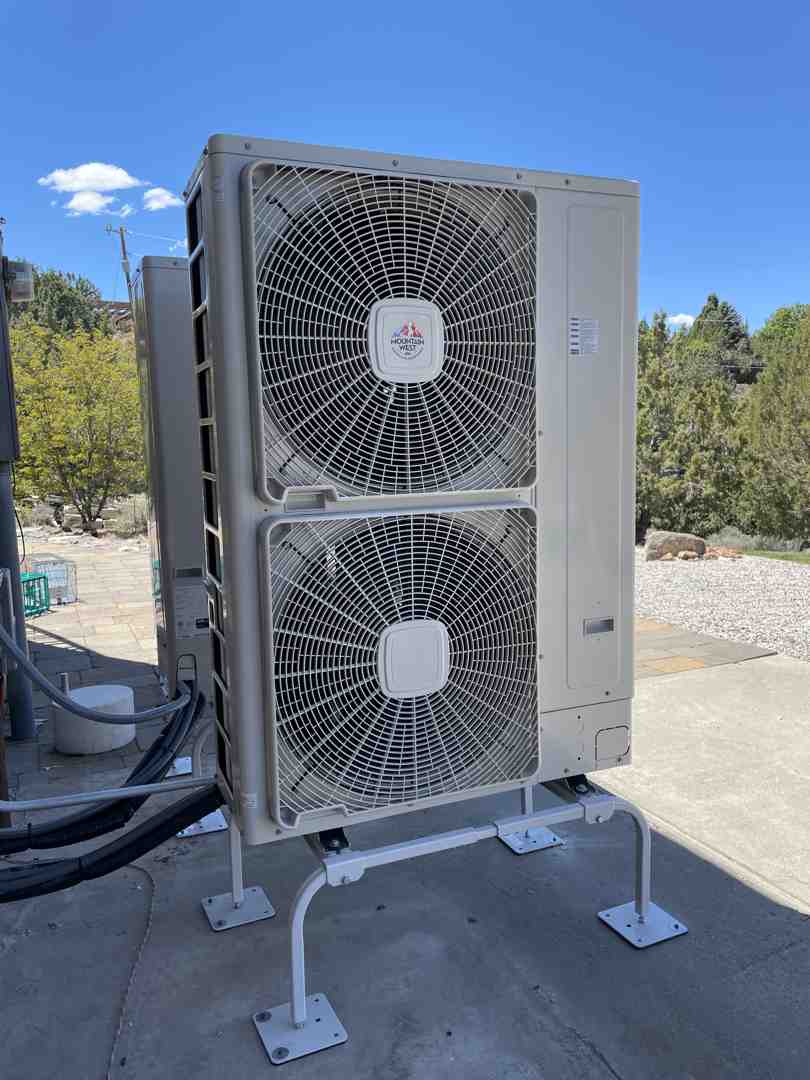
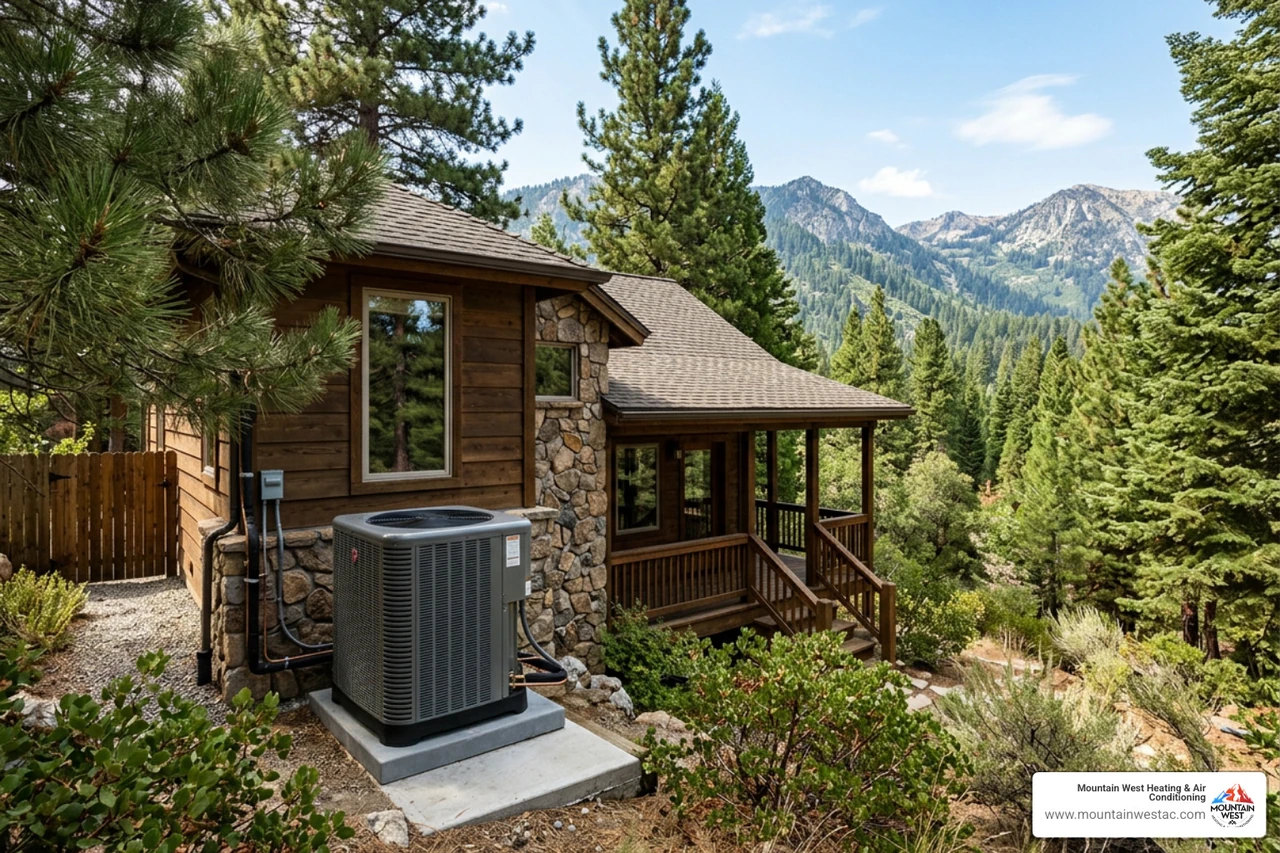
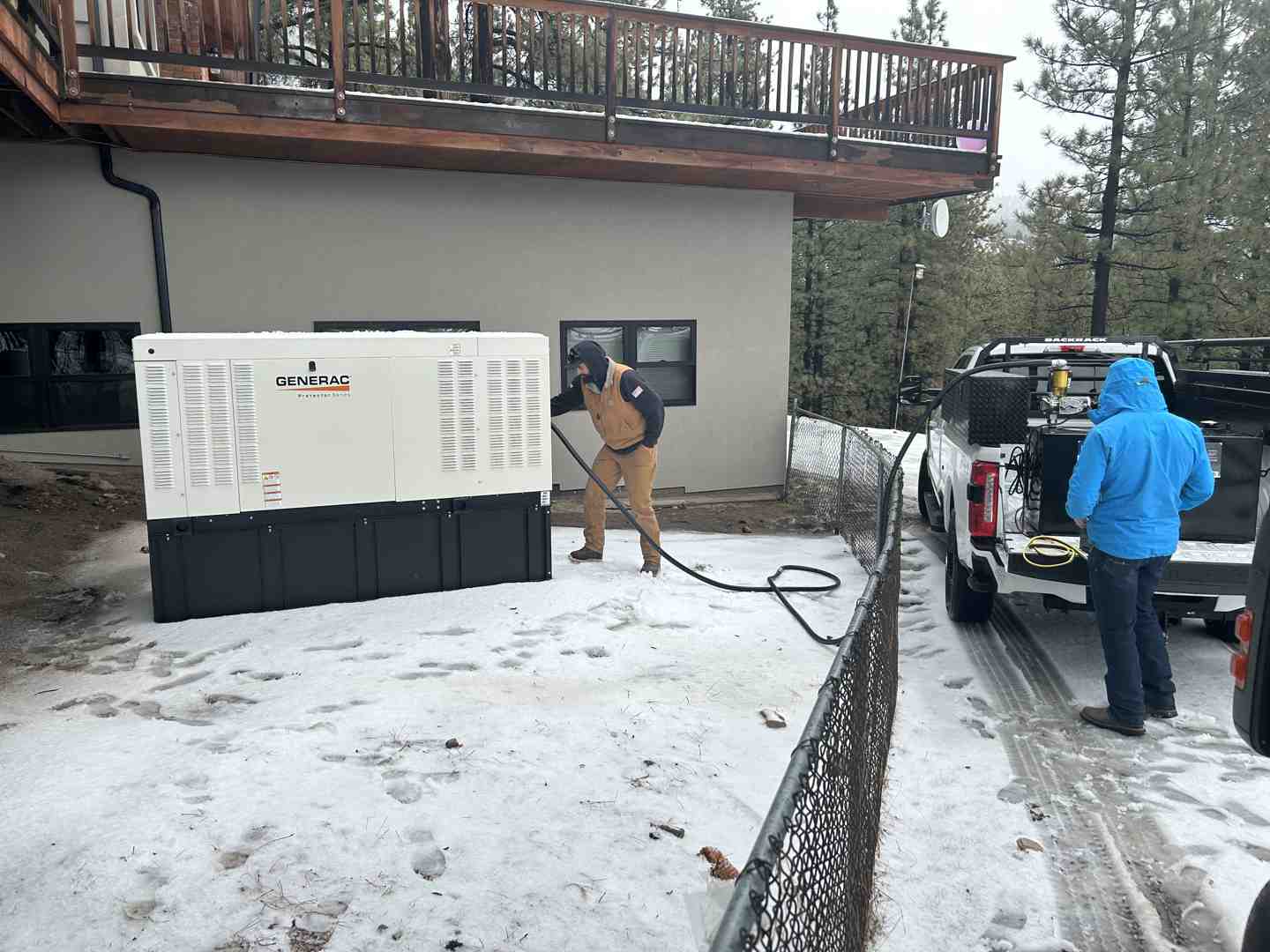
- Protect Your Heating and Standby Systems: Keep the outdoor area around your heat pump or furnace vents clear of drifting snow and falling ice. If you rely on a backup generator to keep your home warm during outages, you must ensure it is ready to handle freezing temperatures. Learn how to protect your generator from freezing this winter to ensure it starts when you need it most.
Clearing Drainage and Reducing Flood Risks
To prevent water from entering your home during heavy rains or rapid snowmelt, you must maintain clear pathways for runoff.
- Clean Gutters and Downspouts: Clear away leaves, pine needles, and debris from your gutters before the winter freeze. Blocked gutters cause water to back up, freeze into heavy ice dams, and damage your roof or leak into your eaves.
- Check Yard Drainage: Walk your property and clear any leaves, dirt, or trash away from yard drains, swales, and culverts. If your street has storm drains, clear away accumulated debris from the grates to prevent localized street flooding.
- Utilize Sandbags: If your property sits in a low-lying area vulnerable to runoff, keep sandbags on hand. Washoe County and local fire stations set up free sand and bag stations ahead of major storm events.
- Pest Prevention and Sealing: Mild summer and fall seasons in Northern Nevada can lead to a significant surge in rodent populations due to increased food availability. As the weather turns cold, rats and mice actively seek warm shelter. Because rats can squeeze through openings as small as a quarter, it is vital to inspect and seal your home. Close your foundation and exterior vents for the winter. Use metal flashing, hardware cloth, or steel wool combined with high-quality caulk to block gaps in your foundation, walls, eaves, and around utility penetrations. Keep outdoor garbage cans tightly sealed, remove fallen fruit from trees, and clear away dense groundcover or woodpiles near your home's exterior walls.
Protecting Your Home's Power and Heating Systems During Outages
Power outages are a common side effect of Northern Nevada’s high winds and heavy winter snows. When utility lines go down, homes can lose power for hours—or even days—in freezing temperatures. Managing an outage safely requires a combination of electrical system awareness and a reliable backup power strategy.
When the lights go out, the first step is to determine if the outage is isolated to your home or widespread. Check your electrical panel for any tripped main breakers, and look outside to see if your neighbors' homes or nearby streetlights are also dark. If it's a utility outage, report it immediately to NV Energy.
To protect your home's sensitive electronics and appliances from damage when the power is restored, unplug computers, televisions, microwave ovens, and any high-wattage equipment. Power restoration often comes with sudden voltage surges that can easily fry delicate control boards. Using point-of-use surge strips helps, but having a professional install a panel-mounted whole-home surge protection system provides far superior defense.
To keep your family safe and comfortable, investing in a robust backup power solution is one of the smartest decisions you can make. Explore reliable backup power systems essential solutions for continuous energy in 2026 to understand how these systems protect your household.
Why Backup Power is Crucial for Heating Systems in 2026
Many homeowners assume that because they have a natural gas furnace, they don't need electricity to keep their home warm during a power outage. This is a common misconception. While gas provides the thermal energy, your furnace still requires electricity to run the electronic ignition, safety sensors, control board, and—most importantly—the heavy blower fan that pushes warm air through your ductwork. Without electrical power, your gas furnace cannot run.
In the sub-freezing temperatures of a Northern Nevada winter storm, a home can lose heat rapidly. Within a few hours, indoor temperatures can plummet, putting vulnerable family members at risk and threatening to freeze your plumbing. Having a reliable backup power source ensures your heating system continues to operate, keeping your home safe and warm.
Additionally, backup power protects your food supply. A full freezer can keep food safe for about 48 hours, and a closed refrigerator will hold safe temperatures for about 24 hours, but only if you keep the doors closed. Having a generator allows you to keep these essential appliances running continuously. To learn more about how a whole-home system keeps your critical systems online, read about why residents in Nevada might need a whole house generator protecting against power outages in extreme weather.
Choosing the Right Generator for Extreme Weather
When selecting a backup power system, homeowners generally choose between portable generators and permanently installed standby generators.
| Feature | Portable Generators | Standby Generators |
|---|---|---|
| Power Output | Typically 2,000 to 10,000 watts | 10,000 to 26,000+ watts |
| Fuel Source | Gasoline, diesel, or propane (manual refill) | Natural gas or liquid propane (continuous line) |
| Activation | Manual setup, pull-start, extension cords | Automatic transfer switch (starts in seconds) |
| Capacity | Powers select appliances (fridge, lights, small heaters) | Can power entire home, including HVAC systems |
If you choose a portable generator, safety is paramount. Never operate a generator indoors, in a garage, or near open windows. Carbon monoxide is an odorless, colorless, and deadly gas. Always run the generator outside, at least 20 feet away from your home. Additionally, never wire a portable generator directly into your home's breaker box using a homemade double-male cord (a highly dangerous practice known as "backfeeding"). This can send high-voltage electricity back down the utility lines, risking the lives of utility workers trying to restore power. Instead, use heavy-duty, outdoor-rated extension cords plugged directly into the generator, or have a licensed professional install a dedicated manual transfer switch.
For seamless protection, a standby generator is the gold standard. These units are permanently installed outside your home, connect directly to your natural gas or liquid propane supply, and turn on automatically within seconds of a power failure. If you are considering this path, read our guide on emergency backup generator installation essential steps for home preparedness to understand the process.
Creating a Household Emergency and Evacuation Plan
When severe storms threaten Northern Nevada, having a well-thought-out household emergency plan can save lives. Some disasters, like rapidly rising flash floods or fast-moving wildland fires driven by high winds, allow absolutely no time to gather necessities. Your family must know exactly what to do and where to go before an emergency strikes.
Start by holding a family meeting to discuss potential hazards and map out your emergency strategy.
- Establish Meeting Places: Identify two distinct meeting spots. The first should be right outside your home (like a specific neighbor's driveway) in case of a sudden fire. The second should be outside your immediate neighborhood (such as a local school or park) in case you cannot return home or are forced to evacuate separately.
- Designate an Out-of-State Contact: During local disasters, local phone lines are often jammed or down, but long-distance networks may still work. Designate an out-of-state relative or friend as your family's central point of contact. Instruct everyone to call or text this person to report their safety if separated.
- Prepare Go-Bags: Every family member should have a lightweight, easily accessible "go-bag" packed with essentials. This should include a three-day supply of water, non-perishable food, a first-aid kit, a flashlight, spare batteries, a portable phone charger, sturdy shoes, a change of clothes, and copies of important documents (like insurance policies and IDs) stored in a waterproof container.
- Plan Your Evacuation Routes: Know multiple ways out of your neighborhood. If you are ordered to evacuate, leave early, use recommended emergency routes, and plan to take only one vehicle per household to prevent traffic congestion on local roads.
Special Medical Needs and Accessibility Preparations
For homeowners with disabilities, mobility challenges, or special medical needs, emergency planning requires extra steps. If you or a loved one relies on electricity-dependent medical equipment—such as oxygen concentrators, home dialysis machines, or power wheelchairs—you must have a detailed plan for power outages.
- Create a Support Network: Identify at least two people in your immediate neighborhood, apartment building, or HOA who can check on you during an emergency and assist with evacuation if needed.
- Backup Power for Medical Devices: Ensure you have backup batteries or a generator capable of running your medical equipment. Keep a written list of your specific medical devices, model numbers, and power requirements. If you use a power wheelchair or scooter, keep a spare car battery or manual backup option on hand.
- Keep Medications Stocked: Maintain at least a 30-day supply of all vital prescription medications. For medications that require refrigeration, keep a small cooler and chemical ice packs ready.
- Register with Emergency Services: Many local fire departments and county emergency management offices maintain a confidential registry of residents with special needs. Registering allows first responders to prioritize your home for wellness checks during widespread outages or evacuations.
- Utilize Text-to-911: If you are deaf, hard of hearing, or speech-impaired, know that Text-to-911 is fully operational in Washoe County. While a voice call is always preferred if possible, you can send a text message to 911 in an emergency if you cannot speak safely.
Community Resources and Local Emergency Contacts
Staying informed is one of your best defenses during a storm. Northern Nevada residents have access to several excellent local resources designed to keep the community safe and connected.
- Washoe311: For non-emergency questions about county services, road conditions, sandbag locations, or local warming shelters, dial 3-1-1 or email
washoe311@washoecounty.gov. - Emergency Alerts: Sign up for regional emergency alerts at ReadyWashoe.com. This system sends real-time evacuation notices and safety warnings directly to your mobile phone.
- Warming Centers: During periods of extreme cold and extended power outages, local agencies coordinate temporary warming centers. While Washoe County does not run permanent warming shelters, emergency shelter and resources are accessible through the Nevada Cares Campus and local senior centers.
- Emergency Broadcasts: Keep a battery-powered or hand-crank radio in your emergency kit. Tune to local Emergency Alert System (EAS) stations, such as KKOH 780 AM or KUNR 88.9 FM, for official emergency updates and instructions when internet and cellular networks are down.
Frequently Asked Questions About Storm Preparedness in Northern Nevada
How do I protect my HVAC system during a severe winter storm?
To protect your heating system during a heavy winter storm, regularly check your outdoor heat pump unit or furnace exhaust vents and clear away any accumulating snow, ice, or fallen debris. Blocked vents can cause your furnace to shut down automatically for safety, or worse, allow carbon monoxide to back up into your home. Avoid wrapping your outdoor AC or heat pump unit in plastic tarps during the winter, as this traps moisture, promotes rust, and invites rodents to chew on electrical wiring. Finally, set your thermostat to a steady, comfortable temperature and schedule a professional pre-season heating tune-up to ensure your system is running at peak efficiency before the cold weather hits.
What are the best storm preparedness tips for northern nevada homeowners with medical needs?
If you have medical needs, the most important step is to establish a personal support network of neighbors who can assist you during an emergency. Ensure you have a reliable backup power source, such as a standby generator or a dedicated battery backup, to run essential medical devices. Keep a 30-day supply of all prescription medications on hand, along with a printed list of your medical history, doctors' contact numbers, and device specifications. Finally, contact Washoe County Emergency Management to register your special medical needs so emergency personnel are aware of your situation.
How can neighbors and HOAs coordinate storm preparedness tips for northern nevada homeowners?
Neighbors and Homeowners Associations (HOAs) can work together to dramatically improve community resilience. HOAs can establish dedicated emergency preparedness committees to create neighborhood-specific communication plans, such as telephone trees or email lists. Communities can organize volunteer "emergency action teams" to check on elderly or vulnerable residents during storm events. Additionally, HOAs can coordinate bulk clearing of neighborhood storm drains, maintain shared emergency supply sheds (with shovels, sandbags, and salt), and partner with neighboring associations to share resources during a crisis.
Conclusion
When it comes to surviving and recovering from Northern Nevada's unpredictable storm season, proactive preparation is everything. From securing your outdoor plumbing and clearing drainage pathways to establishing a reliable family communication plan and backup power strategy, the actions you take today will directly protect your home and loved ones when the next extreme weather event strikes.
At Mountain West Heating & Air Conditioning, we are committed to keeping our neighbors across Washoe Valley, Reno, Sparks, Carson City, and the surrounding areas safe, comfortable, and warm throughout the year. Whether you need a pre-winter heating system check, emergency furnace repairs, or professional guidance on choosing the perfect standby generator, our experienced, licensed team is here to help.
Don't wait for the next winter storm or high wind warning to secure your home's comfort and safety. Learn more about our professional backup power solutions by visiting the Mountain West Heating & Air Conditioning Generator Services page, or contact us today to schedule your seasonal maintenance.