

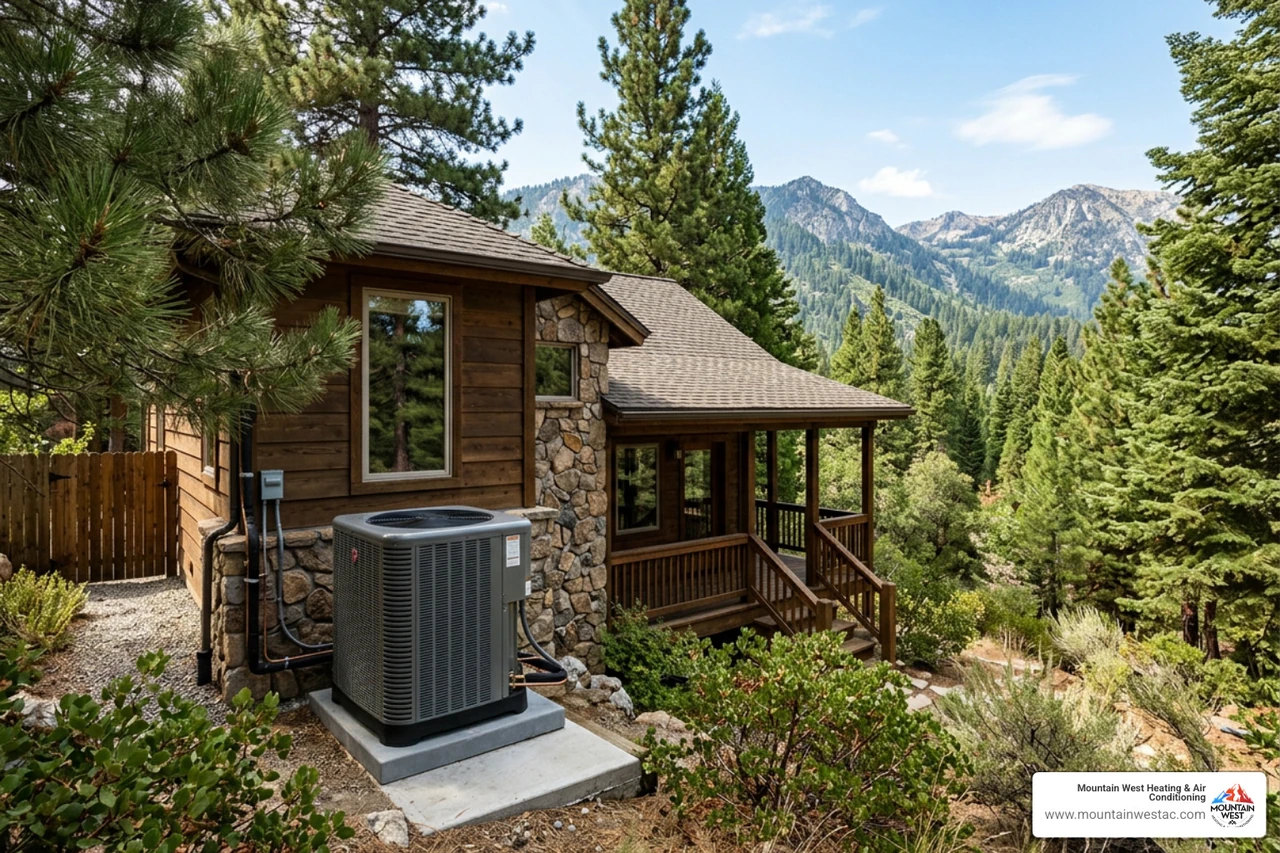
Why HVAC Tips for Homes in the Sierra Foothills Are Different From Anywhere Else
If you're looking for HVAC tips for homes in the Sierra Foothills, here's what matters most:
- Size your system correctly using a Manual J load calculation — not square footage guesses
- Change filters every 1–3 months, and more often during wildfire season
- Schedule maintenance twice a year — once in spring, once in fall
- Use MERV 13 or higher filters during wildfire events to block fine particulate matter
- Choose heat pumps or ductless mini-splits for efficient year-round heating and cooling
- Never close vents to "save energy" — it increases duct pressure and causes problems
- Keep outdoor units clear of pine needles, leaves, and debris year-round
- Switch to recirculate mode on your HVAC when wildfire smoke is in the area
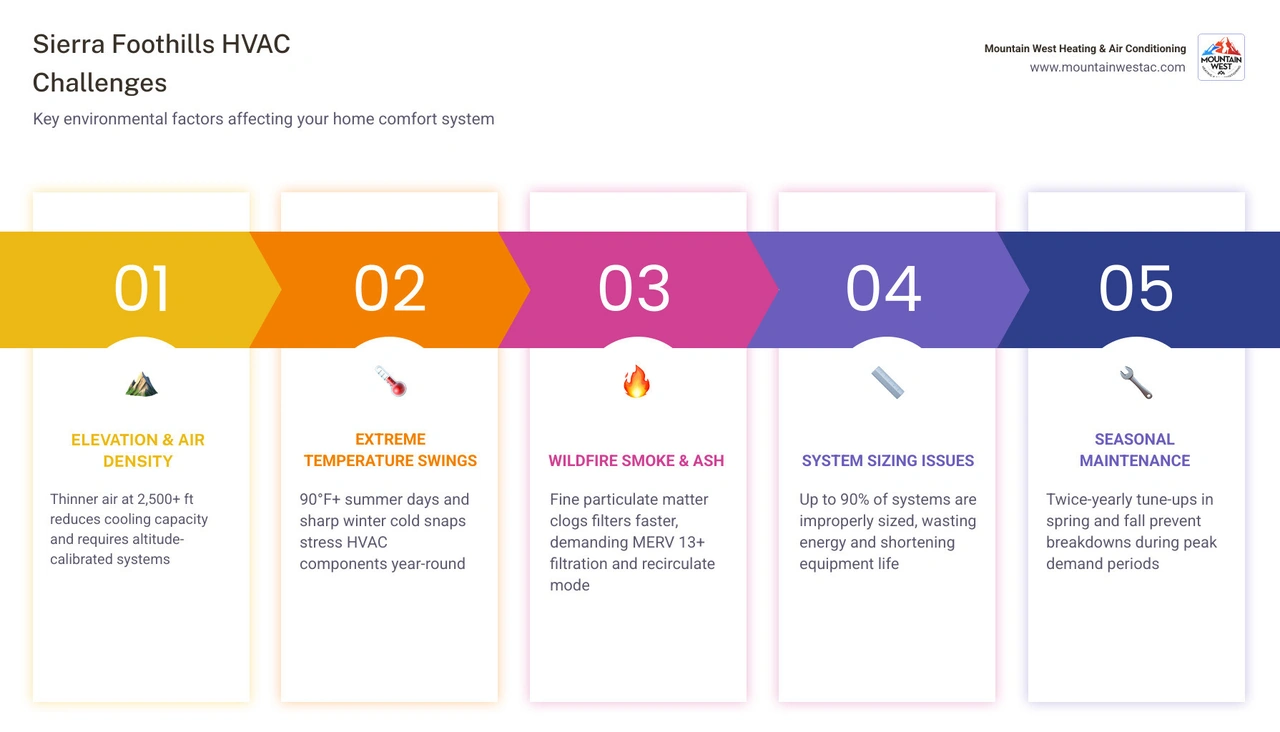
Living in the Sierra Nevada foothills is genuinely beautiful — but it puts real stress on your home's heating and cooling systems. Elevations around 2,500 feet and higher mean thinner air, which reduces HVAC efficiency right out of the box. Summers push temperatures into the 90s and beyond, while winters bring sharp cold snaps. And then there's wildfire season, which can choke filters with fine ash and particulate matter faster than most homeowners expect.
The result? Systems that weren't designed or maintained for these specific conditions end up working too hard, breaking down too soon, or failing on the exact days you need them most. Research suggests that up to 90% of HVAC systems are improperly sized or installed — a problem that's made worse in foothill climates where elevation, sun exposure, and temperature swings all compound the challenge.
I'm Andrew Morrell, owner of Mountain West Heating and Air Conditioning, and with over a decade of hands-on residential HVAC experience in the mountain West region, I've seen how the unique demands of this climate can make or break a home comfort system. In this guide, I'll walk you through the most important HVAC tips for homes in the Sierra Foothills so you can protect your investment, stay comfortable year-round, and avoid the costly surprises that come from neglect or a poorly matched system.
Climate Challenges and HVAC Tips for Homes in the Sierra Foothills
The Sierra Nevada foothills present a gorgeous backdrop, but from an engineering perspective, this region is one of the most demanding environments for heating and air conditioning. When we design and maintain systems in areas like Washoe Valley, Reno, Incline Village, and Verdi, we have to account for several distinct environmental hurdles that standard sea-level HVAC guidelines completely ignore.
First and foremost is elevation. As altitude increases, the air becomes less dense. This thinner air has a lower capacity to carry heat away from your home in the summer and deliver warm air in the winter. If you want to dive deeper into the physics of this, check out our guide on How Does Altitude Affect Your HVAC System. Because the air is thinner, standard systems designed for flatland, sea-level cities will underperform here unless they are carefully calibrated and sized with altitude derating factors in mind.
Second, the dry mountain air has its own set of consequences. Low humidity levels mean your system doesn't have to work as hard to dehumidify the air, but dry air can dry out seals, accelerate wear on electrical components, and make the indoor air feel cooler than it actually is. To learn more about how this dryness impacts your system's hardware, read our article on How Dry Desert Air Affects HVAC Components.
Finally, we experience extreme diurnal temperature swings. It is not uncommon in locations like Dayton or VC Highlands to see a 40-degree temperature difference between a scorching afternoon and a crisp, cold night. This rapid transition forces your HVAC system to pivot quickly from heavy cooling to heating, which places thermal stress on heat exchangers, compressors, and ductwork.
Wildfire Smoke and Air Quality HVAC Tips for Homes in the Sierra Foothills
Wildfire season is an unfortunate reality of living in the Sierra foothills. When smoke blankets our valleys, your HVAC system becomes your home’s primary defense line. However, running your system during a smoke event requires a strategic approach to avoid pulling hazardous outdoor air inside.
Standard fiberglass filters (usually rated MERV 1 to 4) are designed to catch large dust bunnies and protect the system's blower motor, but they do absolutely nothing to stop microscopic smoke particles. To protect your family's lungs, you should upgrade to a MERV 13 filter. MERV 13 filters are dense enough to capture fine particulate matter (PM2.5) found in wildfire smoke.
However, because these filters are thicker, they restrict airflow. You must ensure your system's fan is strong enough to handle a MERV 13 filter without overheating the blower motor. For homes requiring even higher protection, installing a dedicated whole-home HEPA filtration system or an air purifier integrated into your existing ductwork is the gold standard.
During active smoke events, always set your thermostat's fan setting to "On" rather than "Auto" to ensure continuous filtration, and make sure your system is set to recirculate indoor air rather than drawing in fresh, smoky air from outside.
Seasonal Temperature Swings and HVAC Tips for Homes in the Sierra Foothills
Because our climate transitions rapidly between freezing winters and baking summers, your heating and cooling systems never get a true "off-season." This makes biannual preventative maintenance non-negotiable.
In the spring, your focus should be on preparing the air conditioning system for summer heatwaves. This involves cleaning the outdoor condenser coils of accumulated pine needles, dirt, and pollen, checking refrigerant levels, and testing the system's start-up capacitors. You can follow our comprehensive HVAC Maintenance: Essential Spring Checklist for Peak Performance to make sure your AC is ready before the first triple-digit day hits.
In the fall, the priority shifts to winter safety and heating reliability. If you have a furnace, we inspect the heat exchanger for cracks that could leak dangerous carbon monoxide, clean the burners, and test the igniter. For heat pumps, we verify the defrost cycle operates correctly so the outdoor unit doesn't turn into a block of ice when temperatures drop below freezing in high-elevation spots like Incline Village or Glenbrook.
Proper HVAC Sizing and Home Efficiency Factors
One of the most expensive mistakes a foothill homeowner can make is relying on "rule-of-thumb" sizing when buying a new HVAC system. Many contractors will simply look at your square footage and declare, "You need a 4-ton system." In the Sierra foothills, this approach is a recipe for high energy bills and premature system failure.
To get the right size, a professional must perform a Manual J load calculation. This industry-standard calculation models the exact heat gain and loss of your home by analyzing building materials, insulation levels, window orientations, ceiling heights, and local climate data.
If a system is oversized, it will experience "short cycling." This means the unit turns on, quickly blasts the home with cold or hot air, and shuts off before completing a full, efficient cycle. Short cycling prevents proper air filtration, creates drafty hot and cold spots, and subjects the compressor to constant starting and stopping, which dramatically shortens its lifespan. Conversely, an undersized system will run constantly, driving up your utility bills and wearing itself out trying to keep up.
To optimize your system's performance during our hottest months, take a look at our Summer Energy Efficiency Tips for the Sierra Region.
| System Metric | Oversized HVAC System | Correctly Sized HVAC System (Manual J) |
|---|---|---|
| Cycle Length | Short, frequent cycles (short cycling) | Long, steady cycles |
| Energy Efficiency | Low (uses maximum power to start up frequently) | High (runs at optimal, steady-state efficiency) |
| Humidity Control | Poor (shuts off before moisture can be removed) | Excellent (effectively pulls moisture from the air) |
| Component Wear | High (frequent starting damages the compressor) | Low (gradual wear over a longer lifespan) |
| Temperature Balance | Hot and cold spots throughout the house | Consistent, even comfort in all rooms |
Insulation, Air Sealing, and Sun Exposure
Your HVAC system does not operate in a vacuum; its performance is entirely dependent on your home's thermal envelope. If your home has poor insulation or leaky windows, even the most advanced HVAC system will struggle.
Upgrading your attic insulation is one of the most cost-effective ways to support your HVAC. Many older homes in the foothills have outdated fiberglass insulation with low R-values. Upgrading to modern blow-in or spray-foam insulation keeps summer attic heat (which can reach 150°F) from radiating down into your living space. To understand how insulation directly affects your monthly utility expenses, read our detailed breakdown on How Proper Insulation Can Save on Your Heating and Cooling Bill: A Cost-Effective Energy Solution.
Additionally, sealing physical gaps around doors, windows, and pipes prevents conditioned air from escaping. You can learn how to identify and seal these problem areas in our guide on The Benefits of Sealing Air Leaks: How to Improve Energy Efficiency in Your Home.
Finally, consider your home's sun exposure. Foothill homes built on hillsides often have massive south- or west-facing windows to capture beautiful Sierra views. While gorgeous, this solar gain adds an immense heat load in the summer. Installing reflective window films, cellular shades, or outdoor awnings can dramatically lower the cooling load on your air conditioner.
Selecting the Best HVAC System Types for Foothill Homes
When it comes to choosing a heating and cooling system for a foothill home, there is no one-size-fits-all solution. The architectural style of your home, access to natural gas, and elevation should dictate your choice.
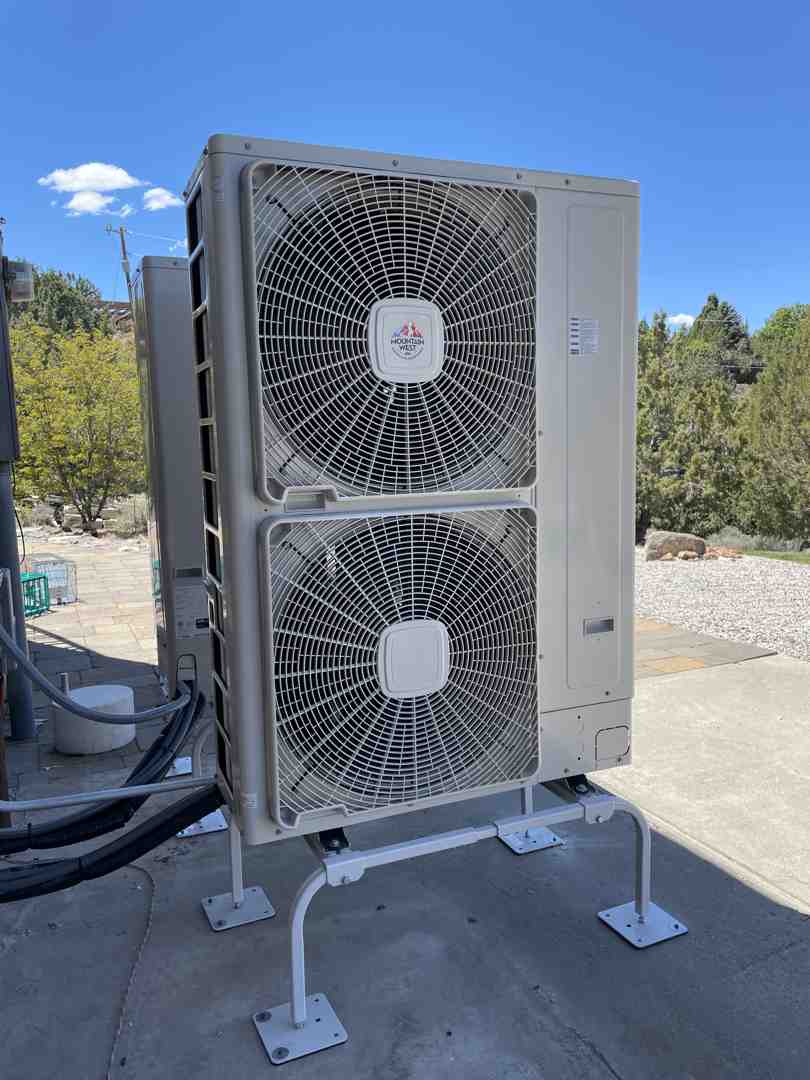
- Ductless Mini-Splits: These systems are incredibly popular in the foothills, especially for older or historic homes that lack the space for traditional ductwork (such as older properties in Verdi or Virginia City). Mini-splits use individual indoor air handlers connected to an outdoor compressor, allowing you to create custom comfort zones. If you have rooms that are rarely used, you can simply turn off those zones to save energy. Furthermore, a dirty or neglected mini-split system can consume up to 30% more energy, making routine cleaning vital, but when properly maintained, they are exceptionally efficient.
- Air-Source Heat Pumps: Modern variable-speed heat pumps are an excellent choice for our Mediterranean-style climate. Instead of generating heat by burning fuel, they transfer heat between the indoors and outdoors. Today's cold-climate heat pumps can operate efficiently even when outdoor temperatures drop below freezing, making them a highly viable year-round option for Northern Nevada homes.
- Central Air Conditioning with Variable-Speed Compressors: If your home already has high-quality ductwork, a traditional split system remains a reliable choice. However, we highly recommend upgrading to a variable-speed compressor. Unlike traditional single-stage compressors that run at either 100% capacity or 0%, variable-speed systems run continuously at lower speeds, matching the exact heating or cooling needs of your home. This is particularly beneficial during our "shoulder seasons" (spring and fall) when the weather fluctuates constantly.
Essential Maintenance and Longevity Strategies
A high-performance HVAC system is a significant investment. To protect that investment and ensure it lasts its full expected lifespan of 15 years or more, you must prioritize proactive care. Neglected systems, on the other hand, frequently fail in under 10 years due to preventable mechanical stress.
What does proper care look like? It starts with the basics you can handle yourself, like changing your air filters every 1 to 3 months. If you have pets, allergies, or if we are dealing with a dusty summer wind event, you should check your filters every few weeks.
Beyond that, professional preventative maintenance is essential. When our technicians service your system, we don't just look to see if it's running; we perform deep diagnostic checks. This includes measuring electrical draw, checking safety controls, flushing condensate drain lines to prevent water damage, and cleaning the indoor and outdoor coils. For a complete look at what our professional tune-ups cover, read our article What Does HVAC Maintenance Include? Essential Services for System Longevity.
By keeping your system clean and calibrated to current June 2026 standards, you can prevent up to 30% efficiency loss and catch minor wear-and-tear issues before they turn into expensive, mid-winter emergency repairs.
Frequently Asked Questions about Sierra Foothills HVAC Systems
How does altitude affect HVAC performance in the Sierra Foothills?
Because the air is thinner at higher elevations (such as Incline Village, Glenbrook, or VC Highlands), there is less air density to carry heat. This reduces both the cooling capacity of your air conditioner and the heating capacity of your furnace or heat pump. To compensate, HVAC systems installed at high altitudes must be derated according to manufacturer guidelines, and airflow rates must be adjusted to ensure the system doesn't overheat or freeze up.
What MERV rating is best for wildfire season?
We recommend using a MERV 13 filter during wildfire season. This rating is high enough to capture the microscopic ash and smoke particles (PM2.5) that threaten your respiratory health, without causing excessive airflow restriction in most modern residential HVAC systems. Always monitor your system when first installing a MERV 13 filter to ensure it does not cause the system to short cycle due to restricted airflow.
How often should I service my heat pump or mini-split?
Because heat pumps and ductless mini-splits handle both heating and cooling duties year-round, they work twice as hard as stand-alone air conditioners. You should schedule professional maintenance twice a year — once in the spring before the cooling season, and once in the fall before the freezing winter temperatures arrive. This ensures peak efficiency and protects your system's warranty.
Conclusion
Managing your home's climate in the Sierra Nevada foothills doesn't have to be a constant struggle against the elements. By understanding how elevation, dry air, and temperature swings affect your system, and by taking proactive steps to maintain your equipment, you can enjoy reliable, energy-efficient comfort all year long.
At Mountain West Heating and Air Conditioning, we are proud to serve Washoe Valley, Reno, Sparks, Carson City, Dayton, Incline Village, Verdi, and the surrounding Northern Nevada communities. Our team of highly trained, local technicians understands the unique demands of foothill living and is ready to help you optimize your home's performance.
If you want to ensure your system is running at peak efficiency, Schedule your professional HVAC service today and let us keep your home comfortable, no matter what the Sierra weather throws your way.