

Wildfire Season Is Here — And Northern Nevada's Power Grid Is Vulnerable
Do you need a standby generator for wildfire season? If you live in Northern Nevada, the short answer is: yes, especially if your home depends on electricity for medical devices, well water, or climate control during multi-day outages.
Here's a quick breakdown of who needs one most:
- Medical equipment users — CPAP machines, oxygen concentrators, and powered wheelchairs cannot wait for power to return
- Well pump households — No grid power means no running water
- Remote or rural residents — Farther from crews, longer restoration times
- Work-from-home households — Extended outages directly affect income
- Homes with elderly or vulnerable occupants — Heat, cooling, and safety systems must stay on
When utilities like NV Energy issue a Public Safety Power Shutoff (PSPS) during a Red Flag Warning, outages can stretch from a few hours to several days. According to utility guidance across the West, customers should prepare for at least 48 hours without power — and in extreme cases, up to a week. That is not a gap a flashlight and a cooler full of ice can bridge.
Wildfires are no longer a distant seasonal threat in Northern Nevada. Dry vegetation, high winds, and low humidity create the exact conditions that push utilities to proactively cut power before a spark becomes a catastrophe. Utilities across the region now have the authority — and the responsibility — to de-energize vulnerable lines during these conditions, leaving tens of thousands of households without electricity through no fault of their own. For homeowners caught unprepared, that means spoiled food, failed medical equipment, no air filtration in smoke-filled air, and in the worst cases, genuine danger.
I'm Andrew Morrell, owner of Mountain West Heating & Air Conditioning, and after more than a decade serving Northern Nevada homeowners through some of the region's harshest weather events, I've seen how the question of do you need a standby generator for wildfire season goes from theoretical to urgent the moment the lights go out. This guide will walk you through everything you need to make a confident, informed decision for your home.

Understanding the Role of Backup Power in Wildfire Zones
When we talk about protecting a home in Northern Nevada, we aren't just talking about defensible space and fire-resistant roofing. True protection includes maintaining the systems that keep your family safe when the grid goes dark. This is where a standby generator becomes a literal lifesaver.
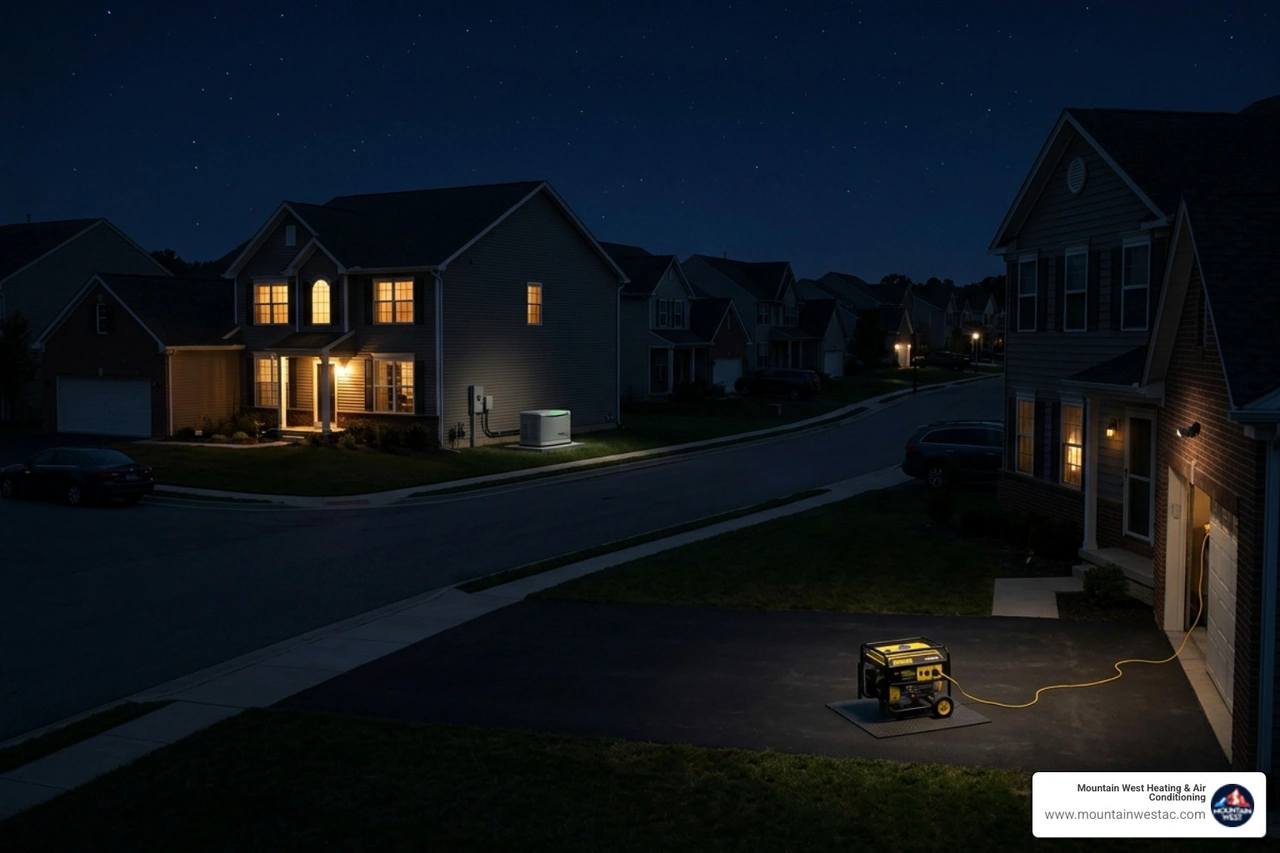
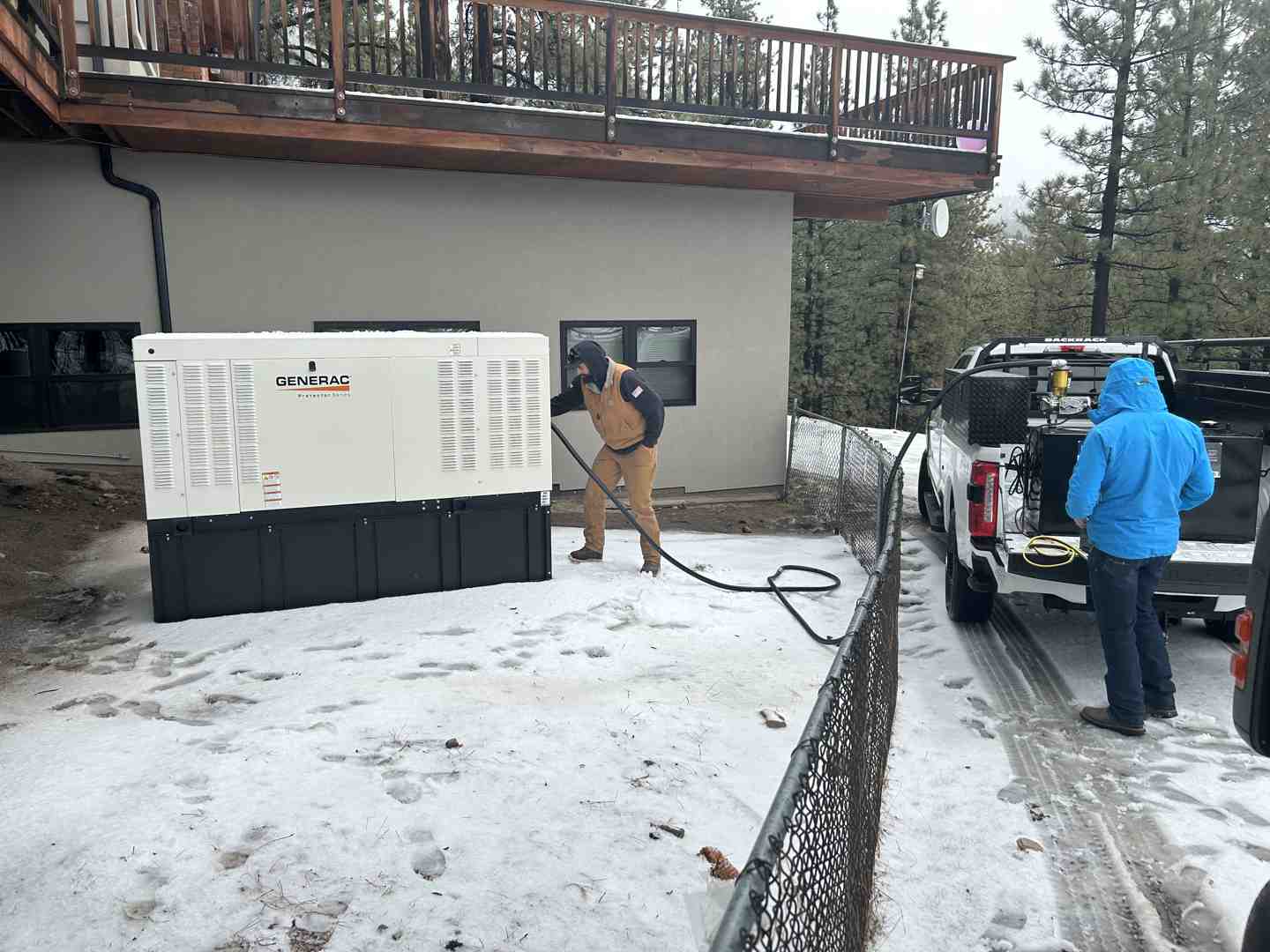
Unlike the small units you might see at a construction site, a standby generator is a permanent fixture installed outside your home, much like an air conditioning unit. It is connected directly to your home's electrical panel and fueled by your existing natural gas or liquid propane supply.
The "magic" happens via the Automatic Transfer Switch (ATS). The moment the utility power fails—whether due to a transformer blow-out or a planned PSPS event—the ATS senses the loss. Within 10 to 20 seconds, it disconnects your home from the grid and engages the generator. This seamless transition ensures that your clocks barely blink and your life continues without a hitch.
For many homeowners, what is a whole house generator is best described as an "insurance policy for your lifestyle." When the power is restored, the system automatically switches back to the grid and shuts itself down, ready for the next emergency.
Standby vs. Portable: Why the distinction matters for wildfire safety
It is tempting to think a portable generator from a big-box store is "good enough." However, in the context of wildfire season, the differences are stark and potentially dangerous.
- Manual Setup vs. Automation: During a wildfire emergency or a sudden PSPS, you might have very little warning. A portable unit requires you to drag it out of the garage, find fresh fuel, and manually plug in extension cords. A standby unit requires zero physical effort.
- Carbon Monoxide Risks: Portable units are frequently operated too close to windows or doors, leading to tragic CO poisoning cases. Standby units are professionally installed at safe distances with permanent exhaust systems.
- Fueling Hazards: Refueling a hot portable engine with gasoline in a dry, high-wind environment (typical Red Flag conditions) is a massive fire risk. Standby units use enclosed, pressurized fuel lines.
- Spark Prevention: Standby generators are housed in weather-protective, fire-resistant enclosures designed to contain internal heat and prevent external sparks from igniting nearby dry brush.
For a deeper dive into these differences, check out our guide on portable vs standby generator factors.
Do you need a standby generator for wildfire season?
Living in Northern Nevada—from the hills of Caughlin Ranch to the pines of Incline Village—means living with the reality of High Fire-Threat Districts. If you are asking yourself if you truly need one, consider these 2026 realities:
- Red Flag Warnings: These are no longer rare. When humidity drops and winds pick up, utilities are increasingly likely to cut power to prevent equipment from sparking a fire.
- Medical Necessity: If anyone in your home relies on an oxygen concentrator, a CPAP machine, or refrigerated medication (like insulin), a power outage isn't just an inconvenience; it's a medical emergency.
- Well Water Dependency: Many homes in Washoe Valley and the Virginia Foothills rely on electric well pumps. No power means no water for drinking, sanitation, or—crucially—hosing down hotspots if embers land on your property.
- Food Preservation: A multi-day PSPS event can easily lead to hundreds of dollars in spoiled groceries. A standby generator pays for itself over time simply by keeping your freezer frozen.
We’ve compiled more reasons why reliable backup power solutions are becoming standard for Nevada residents.
Critical systems powered when you need a standby generator for wildfire season
When the sky turns orange and the air smells like smoke, your home needs to be a sanctuary. A standby generator ensures that the following critical systems remain operational:
- HVAC Air Filtration: During wildfire season, indoor air quality is paramount. You need your HVAC system running to filter out dangerous particulates and smoke.
- Security Systems: Cameras, smart locks, and alarms often fail during extended outages, leaving your property vulnerable if you have to evacuate.
- Refrigeration: Keeping food and medicine safe for days at a time.
- Communication: Keeping your internet, routers, and phone chargers powered so you can receive emergency alerts and stay in touch with family.
For residents in Nevada, protecting against power outages often means the difference between staying comfortable and being forced to relocate to a hotel.
Safety and Compliance for Generators in High-Risk Areas
Safety is our number one priority at Mountain West. In a wildfire zone, you cannot simply "set it and forget it." There are strict codes—such as NFPA 37 and NFPA 110—that govern how close a generator can be to your home and what kind of enclosure it must have.
Fuel Sources: Natural Gas vs. Propane
Choosing the right fuel is a major part of the "do you need a standby generator for wildfire season" equation.
| Feature | Natural Gas | Liquid Propane (LP) |
|---|---|---|
| Availability | Continuous supply via utility lines | Stored in on-site tanks |
| Wildfire Risk | Reliable unless gas lines are shut off | Extremely reliable; independent of grid |
| Maintenance | Minimal fuel maintenance | Requires tank level monitoring |
| Best For | Urban/Suburban areas (Reno/Sparks) | Rural or off-grid areas (Washoe Valley) |
Enclosures and Defensible Space
Standby generators in fire-prone areas should feature aluminum or steel enclosures. These are non-combustible and provide the best protection against flying embers. Furthermore, we ensure that the unit is placed on a non-combustible pad (usually concrete) and that a 5-foot radius of "defensible space" is maintained around the unit—meaning no dry grass, wood piles, or overhanging branches.
Before you buy, understand what to know before investing in residential generators to ensure your system meets local Nevada fire codes.
Risks of using portable units when you need a standby generator for wildfire season
We cannot stress this enough: using a portable generator during an active Red Flag Warning is risky. The "spark hazard" from a portable unit’s exhaust can ignite dry vegetation in seconds. Furthermore, "backfeeding"—the practice of plugging a generator into a wall outlet—is illegal and incredibly dangerous. It can send electricity back into the utility lines, potentially electrocuting line workers who are trying to restore power.
Our electrical services team always recommends a permanent, code-compliant installation to eliminate these risks.
Installation, Maintenance, and Alternatives
Installing a standby generator is not a DIY project. It involves high-voltage electrical work, gas line plumbing, and navigating local building permits in cities like Reno and Sparks.
The Permitting Process
In Northern Nevada, a standby generator requires a building permit. This ensures that the electrical connections are safe and that the gas lines are sized correctly to handle the load. When you work with a professional, they handle the paperwork, ensuring that your installation is legal and won't cause issues with your homeowner's insurance later. Choosing the right standby generator installer ensures that these steps aren't skipped.
Battery Storage: Is it an alternative?
Some homeowners consider battery backups (like large lithium-ion systems). While these are quiet and eco-friendly, they have limitations during wildfire season. A battery can typically only power a home for a few hours or a day. If a PSPS event lasts for five days, a battery will run out unless you have a massive solar array to recharge it—and even then, smoke-filled skies can significantly reduce solar efficiency. For true multi-day resilience, a generator remains the "workhorse."
Ensuring reliability for your standby generator for wildfire season
A generator that won't start when the power goes out is just a very expensive lawn ornament. Reliability comes down to two things: self-testing and professional maintenance.
- Monthly Self-Tests: Most modern units are programmed to run for 10-20 minutes every week or month to circulate oil and check the battery.
- Load Testing: This ensures the generator can actually handle the "kick" of your AC unit or well pump starting up. You can read more about why load testing matters.
- Professional Inspections: Once a year, a technician should check the spark plugs, oil filters, and fuel line integrity.
For peace of mind, many of our neighbors sign up for regular generator maintenance to ensure they are never left in the dark.
Frequently Asked Questions
Can I run a generator during an active wildfire evacuation?
If you are under a mandatory evacuation order, your priority is to leave immediately. While standby generators are designed to run unattended, local fire authorities may occasionally mandate a total utility and gas shutoff in the path of an active fire. In most cases, the generator will continue to run, providing power to your security cameras and smart home systems until you return or the fuel runs out, but you should always follow the directives of first responders first.
Are permits required for generator installation in Northern Nevada?
Yes. Whether you are in Reno, Sparks, or Washoe County, a permit is required for the electrical and gas connections. This is for your safety. An unpermitted installation could lead to insurance claim denials if a fire or electrical issue occurs. We handle the generator installation and permitting process from start to finish.
How do I choose the right size generator for my home?
Sizing is based on "wattage." We look at your "essential loads"—the things you must have running, like your fridge, well pump, and lights—and your "convenience loads," like your oven or dryer. Most Northern Nevada homes find that a unit in the 20kW to 26kW range provides full-home coverage, allowing you to live as if the power never went out.
Conclusion: Don't Wait for the Next Red Flag Warning
In 2026, the question isn't whether the power will go out, but when. Wildfire season and PSPS events are now a predictable part of life in Northern Nevada. By investing in a standby generator, you are taking control of your home's safety and your family's comfort.
At Mountain West Heating & Air Conditioning, we pride ourselves on providing code-compliant, reliable electrical solutions for our neighbors in Carson City, Reno, Sparks, and throughout the region. From initial sizing to the final permit inspection, our team is here to ensure that when the grid goes dark, your home stays bright.
Ready to protect your home? Contact us today for a professional generator installation consultation.