

Standby or Portable? Your Quick Guide to Choosing the Right Home Generator
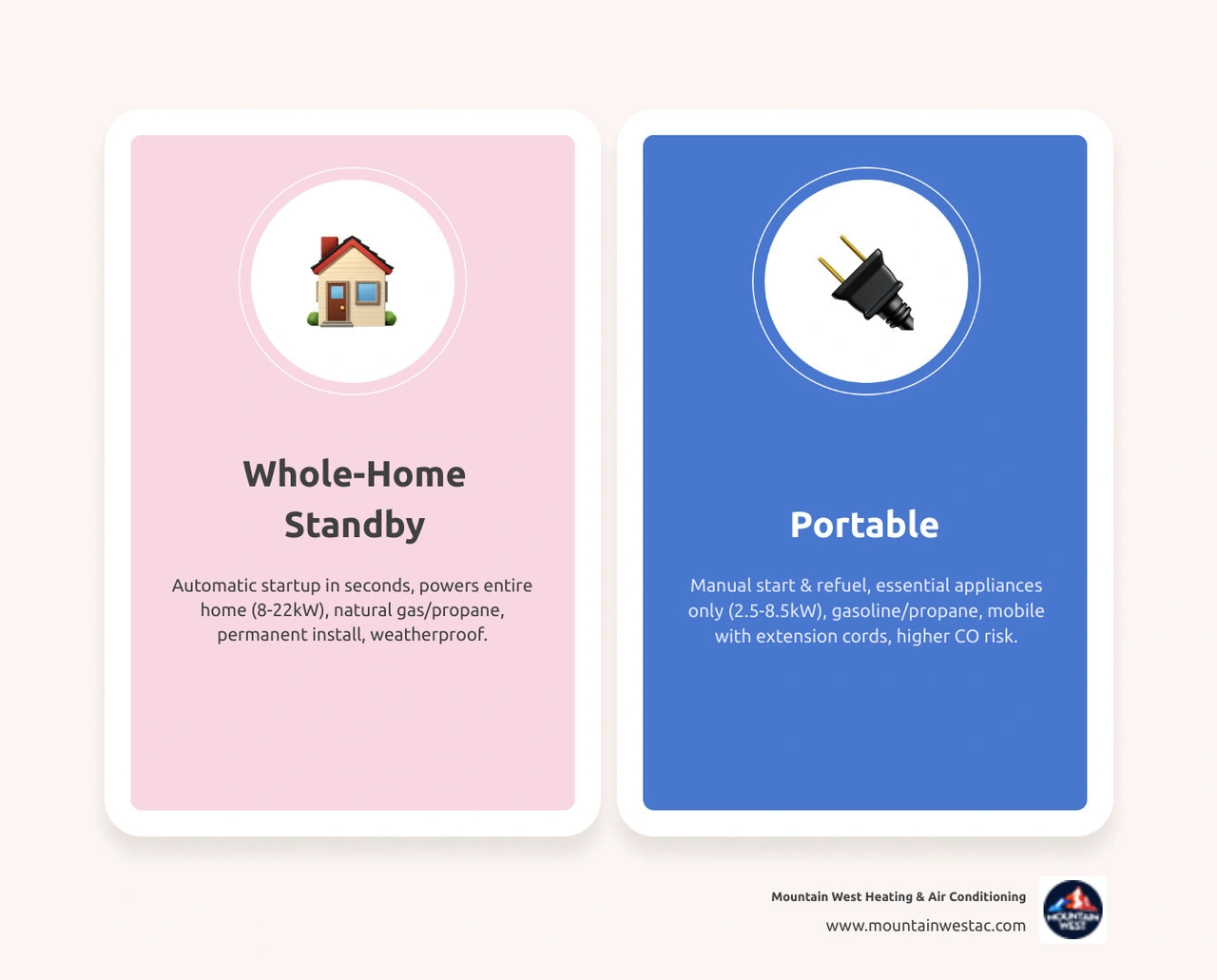
The whole home generator vs portable generator comparison comes down to three things: how much power you need, how much convenience you want, and what you're willing to spend. Here's a fast breakdown:
| Factor | Whole-Home (Standby) | Portable |
|---|---|---|
| Power Output | 8,000–22,000 watts | 2,500–8,500 watts |
| Operation | Automatic, starts in seconds | Manual startup required |
| Fuel Source | Natural gas or propane (no refueling) | Gasoline or propane (manual refueling) |
| Installation | Permanent, professional required | Minimal; use extension cords or transfer switch |
| Best For | Full-home power, frequent outages | Essential appliances, occasional outages |
| Safety Notes | Weather-protected, low CO risk | Must run outdoors, CO risk if misused |
When the power goes out in Northern Nevada — whether from a winter storm, a wildfire-related grid disruption, or unexpected equipment failure — the difference between a minor inconvenience and a serious problem often comes down to one thing: what kind of backup power you have ready. Standby generators kick on automatically within seconds. Portable generators need you to roll them out, fuel them up, and get them running yourself. Neither option is wrong — but one may be a much better fit for your home and lifestyle than the other.
I'm Andrew Morrell, owner of Mountain West Heating and Air Conditioning, and with over a decade of hands-on experience helping Northern Nevada homeowners navigate complex residential systems — including backup power decisions — I bring a practical, no-nonsense perspective to the whole home generator vs portable generator comparison. Let's walk through everything you need to know to make a confident choice.
Understanding the Whole Home Generator vs Portable Generator Comparison
Choosing between these two "power heroes" is less about which machine is "better" and more about which one fits your specific survival plan. In Northern Nevada, our weather ranges from heavy Sierra snow to high-desert heat. This means your generator might need to run a furnace in January or an AC unit in July.
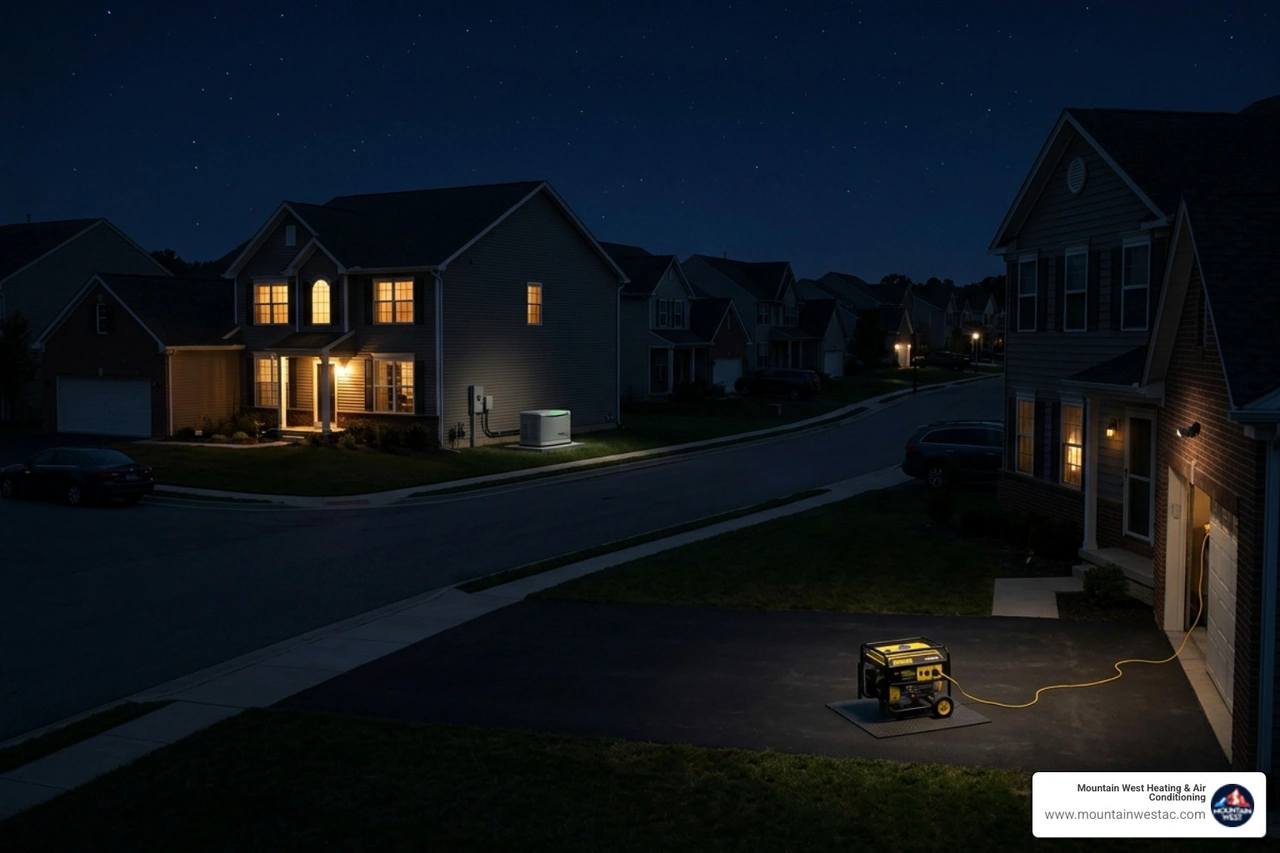
A whole home generator vs portable generator comparison highlights a fundamental difference in philosophy. A standby unit is a permanent appliance, much like your HVAC system. It sits outside on a concrete pad, waiting for the grid to fail. A portable generator is a tool you keep in the garage, ready to be deployed when the lights flicker.
While both provide electricity, the way they deliver that power varies wildly. Standby units offer high capacity and automatic operation, while portables offer flexibility and a lower entry point for those who only experience occasional outages. To dig deeper into these differences, check out our guide on Portable vs Standby Generator: Essential Factors to Consider for Reliable Home Backup Power.
What is a Whole-Home Standby Generator?
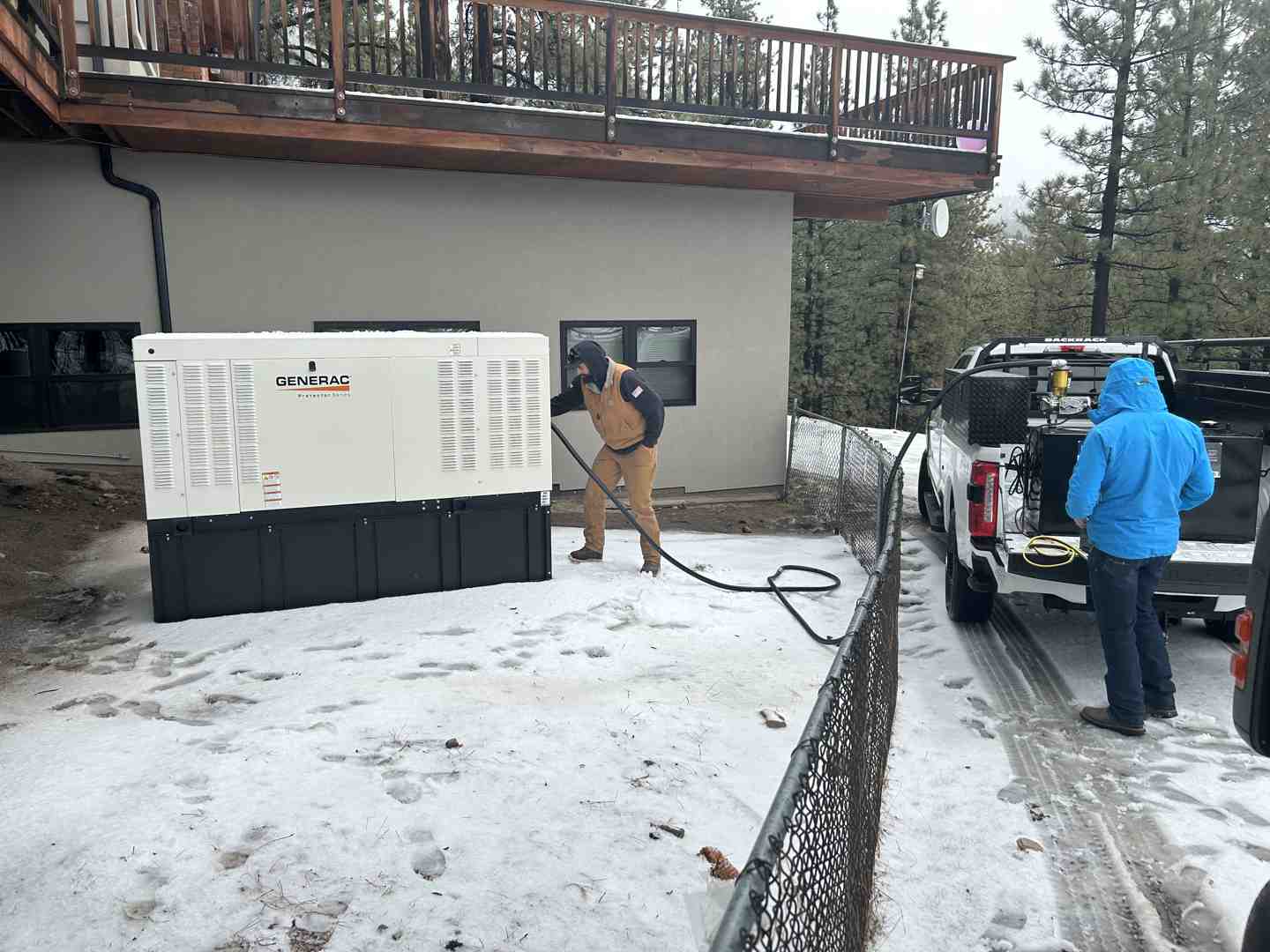
Think of a whole-home standby generator as your home's personal power plant. It is permanently installed outside and connected directly to your home's electrical panel via an Automatic Transfer Switch (ATS).
When the ATS senses a loss of utility power, it commands the generator to start. Within 10 to 15 seconds, the switch disconnects your home from the grid and connects it to the generator. Because these units typically run on your home’s existing natural gas lines or a large on-site liquid propane tank, there is no need for manual refueling. This seamless transition is why many consider it the Essential Backup Power Solution for Homeowners.
What is a Portable Generator?
A portable generator is a movable engine-driven device. Most models in 2026 are "dual-fuel," meaning they can run on gasoline or propane. Unlike standby units, these require "elbow grease." You have to wheel the unit out of storage, position it at least 20 feet away from your home, fill it with fuel, and pull a cord or press a start button.
To get power into your house, you either run heavy-duty extension cords to specific appliances or plug the unit into a pre-installed manual transfer switch. While they require more effort, their mobility makes them useful for more than just home backup—you can take them to a job site or use them for a remote camping trip in the Washoe Valley.
Key Differences in Power Output and Capacity
Power is measured in watts, and the gap between these two types is significant. Portable generators generally offer between 2,500 and 8,500 watts. While that sounds like a lot, a single electric clothes dryer or a large AC compressor can easily gobble up half of that capacity.
Standby generators start where portables leave off, ranging from 8,000 to 22,000 watts (and sometimes much higher for large estates). This extra "oomph" allows you to run high-load items like your HVAC system, well pump, and electric water heater simultaneously without tripping a breaker.
| Appliance | Estimated Starting Watts | Estimated Running Watts |
|---|---|---|
| Refrigerator/Freezer | 1,200 | 700 |
| Sump Pump (1/2 HP) | 2,150 | 1,050 |
| Central AC (3-ton) | 6,000 | 3,500 |
| Microwave | 1,500 | 1,500 |
| Desktop Computer | 0 | 300 |
When making a whole home generator vs portable generator comparison, you must distinguish between "starting watts" (the surge needed to turn a motor on) and "running watts" (the power needed to keep it going). For a detailed look at how to calculate these numbers for your Reno or Sparks home, see our Simple Guide to Generator kW Sizing for Your Home.
Sizing for a Whole Home Generator vs Portable Generator Comparison
Sizing isn't just about adding up every lightbulb in the house. It’s about choosing a "load plan."
- Essential Circuits Plan: You only power the "must-haves"—fridge, furnace fan, some lights, and Wi-Fi. A large portable or small standby works here.
- Full-Home Power: You want life to feel normal. You want to cook on the electric range and keep the AC at 72 degrees. This requires a large standby Generator.
In Northern Nevada, we often deal with well pumps. If you live in a rural area like VC Highlands or Washoe Valley, your water depends on electricity. A well pump requires a massive surge of power to start, which often pushes homeowners toward a standby unit.
Installation, Setup, and Safety Considerations
This is where the DIY path and the professional path diverge. A standby generator is not a weekend project. It requires a concrete pad, a line from your gas utility, and complex electrical wiring that involves permits and inspections. Because we are dealing with high-voltage electricity and flammable fuels, Generator Installation must be handled by licensed professionals to ensure code compliance and safety.
Portable generators seem simpler, but they still require a safe setup. If you want to power your home’s hardwired lights or furnace through a portable unit, you must have an electrician install a manual transfer switch. This prevents "backfeeding," a deadly situation where your generator sends power back into the utility lines, potentially electrocuting line workers trying to restore power in your neighborhood. For more on the process, read Essential Steps for Reliable Backup Power.
Safety Features in a Whole Home Generator vs Portable Generator Comparison
Safety is the most critical part of this comparison. Portable generators emit high levels of Carbon Monoxide (CO). In 2026, many new portable models include automatic CO shutoff sensors, but these are not a substitute for proper placement. You should never run a portable generator in a garage, even with the door open. It must be 20 feet away from any window or door.
Standby generators are inherently safer because they are permanently fixed in a safe location and housed in weather-protected, vented enclosures. They also provide "clean power." Standard portables can produce "dirty power" with voltage fluctuations that can fry sensitive electronics like your 4K TV or high-end laptop. Standby units (and portable inverter models) use voltage regulation to keep the power stable. Understanding these Residential Generator Systems is key to protecting your expensive appliances.
Maintenance, Lifespan, and Convenience
Maintenance is the "hidden" part of owning a generator. If a generator sits untouched for two years, it probably won't start when you need it most.
- Standby Maintenance: These units are designed to be "set and forget." They perform a weekly "exercise cycle" where they run for 20 minutes to lubricate the engine and charge the battery. However, they still need annual professional Generator Maintenance (oil and filter changes).
- Portable Maintenance: You are the maintenance crew. You must manage fuel stability (gasoline goes bad in months), check the battery, and run the unit every few months to ensure the carburetor isn't gummed up.
A well-maintained standby generator can last 15 to 25 years. Portable units typically have a shorter lifespan, especially if they aren't exercised regularly. Choosing the right partner for this long-term relationship is vital, so learn How to Choose the Right Standby Generator Installer for Your Home.
Frequently Asked Questions about Home Generators
Can I connect a portable generator to my home's electrical panel safely?
Yes, but only through a transfer switch or an interlock kit installed by a licensed electrician. Never use a "suction cord" (male-to-male) to plug a generator into a wall outlet. This is illegal, dangerous, and a massive fire hazard. A proper transfer switch allows you to safely toggle between grid power and generator power without risk to your home or utility workers.
How do noise levels compare between standby and portable models?
Standby generators are generally quieter. They are housed in sound-dampening enclosures and use larger, more efficient mufflers. A typical standby unit sounds like a central AC running. Portable generators, especially budget-friendly models, can be quite loud—similar to a lawnmower. If you have close neighbors in Northwest Reno or Somersett, noise levels and local ordinances are important factors to consider.
Which fuel type is best for long-term outages in 2026?
Natural gas is the "gold standard" because the supply is rarely interrupted during a power outage. If you don't have natural gas, a large on-site propane tank is the next best thing. Gasoline is the most difficult for long-term outages because you have to store it, stabilize it, and potentially wait in long lines at the few gas stations that still have power during a regional blackout.
Conclusion
At Mountain West Heating & Air Conditioning, we’ve seen how a reliable backup plan changes the experience of a Nevada winter. Whether you’re in the high winds of Arrowcreek or the deep snows of Incline Village, having power means staying warm, keeping your food safe, and maintaining your connection to the world.
The whole home generator vs portable generator comparison isn't about finding a winner; it's about finding your home's hero. If you want the ultimate peace of mind and the ability to live life normally during an outage, a standby unit is the way to go. If you need a budget-friendly way to keep the lights on and the fridge cold, a properly installed portable system is a fantastic choice.
Protecting your home against extreme weather is what we do best. If you're ready to stop worrying about the next grid failure, Why Residents in Nevada Might Need a Whole House Generator is a great place to start your research.
Don't wait until the clouds roll in and the lights go dark. Schedule your professional generator consultation today and let us help you build a power plan that fits your Northern Nevada lifestyle.