

Why Dry, Cold Winters Put Your Furnace Under Serious Strain
How dry cold winters stress your furnace is something every Northern Nevada homeowner should understand before the season's worst weather arrives. When temperatures drop and outdoor air loses almost all its moisture, your furnace doesn't just work harder — it faces a compounding set of pressures that can quietly wear down critical components, drive up energy bills, and leave your home feeling colder than the thermostat suggests.
Here is a quick summary of how cold, dry winters strain your furnace:
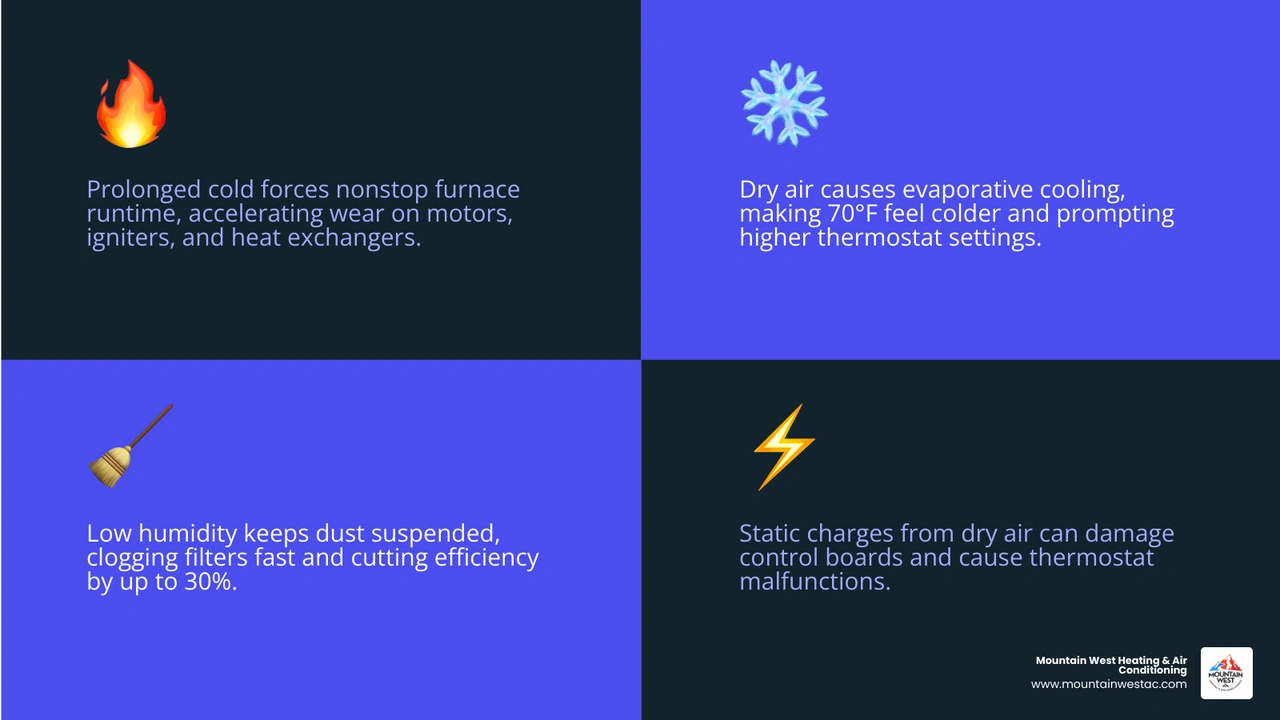
- Continuous runtime — Prolonged cold forces furnaces to run almost nonstop, accelerating wear on blower motors, igniters, and heat exchangers
- Dry air makes your home feel colder — Low humidity causes evaporative cooling on skin, so 70°F feels colder than it should, prompting homeowners to push thermostats higher
- Faster filter clogging — Dry air keeps dust suspended longer, loading filters quickly and restricting airflow, which can reduce system efficiency by up to 30%
- Static electricity damage — Very low humidity generates static charges that can damage sensitive furnace control boards and cause thermostat malfunctions
- Thermal cycling fatigue — Repeated heating and cooling of metal components during long cold stretches causes micro-stress in heat exchangers and other parts
- Blocked vents and safety risks — Snow and ice can obstruct exhaust flues, creating carbon monoxide hazards inside the home
Most homeowners only notice a problem when the furnace stops working entirely — often on the coldest night of the year. Understanding what is happening inside your system before that point makes all the difference.
I'm Andrew Morrell, owner of Mountain West Heating & Air Conditioning, and with over a decade of hands-on residential HVAC experience in Northern Nevada, I've seen exactly how dry cold winters stress your furnace in ways that mild-climate guides simply don't cover. In the sections below, I'll walk you through what's really happening to your system and what you can do about it.
How Dry Cold Winters Stress Your Furnace
In places like Reno, Sparks, Washoe Valley, Carson City, Dayton, and surrounding Northern Nevada communities, winter does not just mean "a little chilly." It often means cold mornings, sharp overnight drops, and long stretches where your heating system barely gets a break.
That creates a perfect storm for furnace strain:
- The furnace runs longer to keep up with heat loss
- Dry air makes the house feel cooler, so the thermostat gets bumped up
- Dust stays airborne longer and loads the filter faster
- Airflow restrictions make the system work even harder
- Repeated expansion and contraction stress metal parts over time
A furnace is built for seasonal use, but it is not thrilled about marathon sessions. The longer and harder it runs, the more every small issue matters.
Why how dry cold winters stress your furnace gets worse during long cold snaps
During a cold snap, your furnace may run almost continuously. That extended heating load puts the most stress on the parts responsible for starting, moving, and safely containing heat.
Common effects of long cold snaps include:
- More wear on the blower motor from nonstop airflow
- Faster igniter wear from repeated starts
- Greater heat exchanger fatigue from constant heating cycles
- Increased chance of short cycling if filters are dirty or airflow is poor
- More opportunities for minor electrical issues to turn into shutdowns
If your system already has a weak capacitor, dirty flame sensor, aging igniter, or borderline airflow problem, extreme cold will expose it quickly.
Why dry air makes your home feel colder at the same temperature
This is one of the most overlooked parts of how dry cold winters stress your furnace.
Cold outdoor air holds very little moisture. Once that air comes inside and gets heated, the relative humidity drops even more. Dry indoor air increases evaporative cooling on your skin, so the house feels cooler even when the thermostat says 68°F to 70°F.
That often leads to "thermostat creep":
- 68°F becomes 70°F
- 70°F becomes 72°F
- The furnace runs longer, but comfort still feels disappointing
Humidity will not replace heat, but balanced humidity can make the same temperature feel more comfortable. That means less unnecessary runtime.
Which furnace parts take the biggest hit in winter
Some components really earn their paycheck in winter.
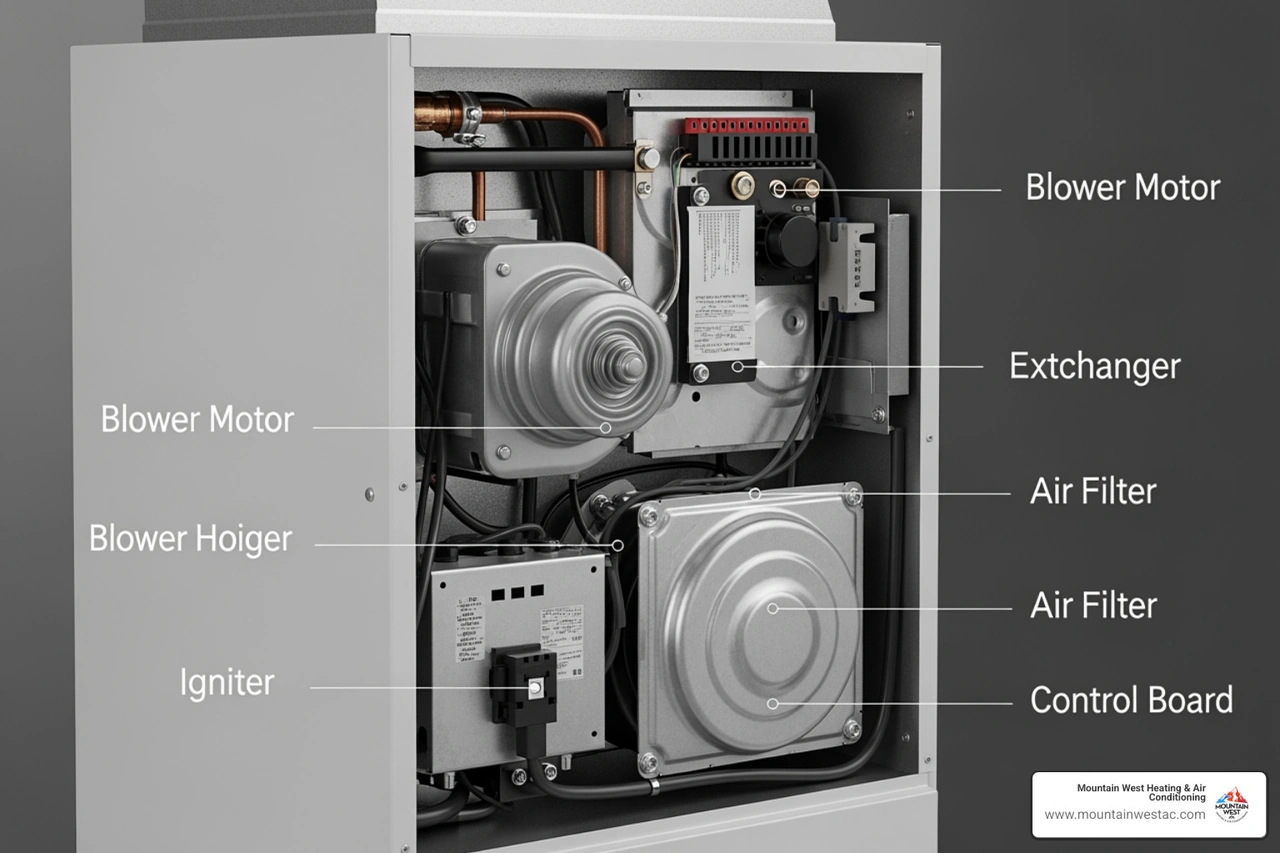
The parts most affected by cold weather and low humidity are:
- Blower motor
- Flame sensor
- Igniter
- Heat exchanger
- Control board
- Air filter
- Condensate drain on high-efficiency furnaces
The blower motor moves heated air through the ductwork for long periods, so restricted airflow can push it harder than normal. Flame sensors and igniters handle repeated starts. Heat exchangers go through repeated heating and cooling, which can create fatigue over time. Control boards can be vulnerable to static-related issues in very dry conditions. And if the filter is clogged, everything downstream suffers.
Common Furnace Problems Homeowners Notice in Extreme Cold
The first signs of winter furnace stress are often subtle. Homeowners usually notice symptoms before they know the cause.
Common winter furnace complaints include:
- Weak airflow from vents
- Rising utility bills
- Uneven heating between rooms
- Furnace running constantly
- Frequent system shutdowns
- Strange noises
- More dust around registers
- Trouble reaching the thermostat setting
These are not just annoyances. They are often warnings that your furnace is under strain.
How dry cold winters stress your furnace by clogging filters and restricting airflow
Dry winter air keeps fine particles circulating longer. Add pets, closed windows, and months of indoor living, and your furnace filter can load up quickly.
When airflow is restricted:
- The blower has to work harder
- Heated air does not move properly through the system
- The furnace can overheat
- Safety limit switches may shut the unit down
- Efficiency can drop significantly
Research consistently shows restricted airflow and clogged filters can reduce heating efficiency by up to 30% during extended cold periods. That is a huge penalty for something as simple as a neglected filter.
We recommend checking your filter at least monthly in winter, and more often if you have pets, recent remodeling dust, or frequent furnace use. If you want a more complete seasonal checklist, our heating maintenance Reno guide is a good place to start.
Warning signs your furnace is struggling in winter
A struggling furnace rarely fails without warning. It usually gives clues first.
Watch for these signs:
- Frequent cycling on and off
- Rooms that stay colder than the rest of the house
- Delayed ignition or a hard start
- Burning or dusty smells that do not go away
- Rattling, humming, or squealing noises
- Weak airflow at supply vents
- Unusually high utility bills
- Thermostat setting not being reached
- Yellow burner flame instead of a steady blue flame
- More static shocks around the home
- Dust collecting quickly around vents
A yellow flame, gas odor, or repeated shutdowns should never be ignored. Those are safety issues, not just comfort issues.
Safety issues to watch for during severe winter weather
Cold weather can create real furnace safety hazards, especially for gas systems.
The biggest concerns are:
- Blocked exhaust vents from snow or ice
- Blocked intake pipes on high-efficiency systems
- Carbon monoxide risk from venting problems or heat exchanger issues
- Gas odors near the furnace
- Soot, scorch marks, or unusual burner flame appearance
- System lockouts that happen repeatedly
Test your carbon monoxide detectors before and during heating season. Keep exterior vent terminations clear. If you smell gas, leave the area and follow emergency safety procedures right away. If your furnace shuts down and you suspect a venting issue, do not keep resetting it and hoping for the best. Hope is not a repair strategy.
How Dry Winter Air Affects Humidity, Comfort, and Health
Dry winter air does not just affect the furnace. It affects the people and materials inside the home too.
As indoor humidity drops, many homeowners notice:
- Dry skin and chapped lips
- Scratchy throat and dry sinuses
- Nosebleeds
- Dry eyes
- Static electricity
- More dust in the air
- Wood floors or trim separating slightly
- Increased irritation from allergens and pet dander
A furnace does not create moisture when it heats air. So if outdoor air is already dry, heating it indoors can make the home feel even drier.
The best indoor humidity range for winter homes
For most homes in winter, the target indoor humidity range is about 30% to 40%.
That range helps balance:
- Comfort
- Static reduction
- Respiratory comfort
- Protection for wood furnishings and floors
- Condensation control
A simple hygrometer can tell you where your humidity stands. In some homes, especially during very cold stretches, humidity may need to stay on the lower end of that range to avoid window condensation. But if you are routinely below 30%, your home will likely feel noticeably drier and less comfortable.
Comfort and health problems caused by overly dry indoor air
When humidity gets too low, your body notices fast.
Common problems include:
- Itchy skin
- Chapped lips
- Dry eyes
- Scratchy throat
- Dry nasal passages
- More coughing at night
- Static shocks when touching switches or doorknobs
Dry air can also keep dust and irritants suspended longer, which may bother people with allergies or asthma. It can even affect the house itself, causing hardwood gaps, trim shrinkage, and creaky floors.
How humidity control can reduce furnace strain
This is where comfort and efficiency finally start cooperating.
When indoor humidity is balanced, the air often feels warmer at the same temperature. That can help you stay comfortable without pushing the thermostat higher than needed. In practical terms, that may mean:
- Fewer unnecessary furnace cycles
- Less thermostat adjustment
- Better comfort in dry rooms
- Reduced static and airborne dust
- More even indoor conditions
A whole-home humidifier can help distribute controlled moisture through the duct system rather than only affecting one room at a time. If you want more winter comfort strategies, take a look at these heating maintenance tips for Reno.
How to Protect Your Furnace During Dry, Cold Winters
The good news is that most winter furnace stress can be reduced with a few practical steps. You do not need to baby your furnace. You just need to stop making it fight winter with one hand tied behind its back.
Replace filters and protect airflow before efficiency drops
Start with the easiest win: airflow.
Check the filter every month during winter and replace it when dirty. Also make sure:
- Return vents are not blocked by furniture
- Supply registers are open and unobstructed
- Dust is not building up heavily around grilles
- Interior doors are not disrupting airflow in key areas
- The filter size and type match the system's needs
This one maintenance step protects efficiency, comfort, and equipment life all at once. For more local maintenance guidance, see our heating maintenance guide for Washoe Valley.
Set your thermostat to reduce wear without losing comfort
In winter, steady thermostat settings are usually better than constant adjustments.
A good general target is:
- 68°F to 70°F when home and awake
- Lower at night or when away, if your home and schedule allow
The U.S. Department of Energy guidance commonly cited in HVAC best practices shows that turning the thermostat down 7°F to 10°F for about 8 hours a day can save as much as 10% a year on heating and cooling. The key is to use setbacks wisely, not wildly.
Try to avoid huge temperature swings that force the system to recover aggressively. Smart or programmable thermostats can help keep things consistent without turning your living room into a science experiment.
Seal leaks and manage humidity so heated air stays inside
If warm air is leaking out of the house, your furnace has to keep replacing it. That means longer runtime and more wear.
Focus on:
- Weatherstripping around doors
- Caulking around windows
- Attic insulation
- Duct leaks
- Drafts near baseboards or attic hatches
- Humidity control if indoor air is extremely dry
Leaky ducts alone can waste up to 30% of heated air in some homes. That is heated air you already paid to move.
Here is a simple way to connect comfort issues with furnace stress:
| Dry air symptom | What it may mean for your furnace |
|---|---|
| House feels cold at 70°F | Thermostat gets raised, causing longer cycles |
| Static shocks | Indoor air may be extremely dry, increasing stress on electronics |
| Dusty vents | Filter may be loading faster, reducing airflow |
| Dry throat and skin | Humidity may be too low, reducing perceived warmth |
| Uneven room comfort | Air leaks or duct issues may be increasing system workload |
Keep outdoor and exhaust vents clear in stormy weather
For high-efficiency furnaces, exterior intake and exhaust pipes need to stay open. In winter storms, snow, ice, and drifting debris can block them.
Check that:
- Vent terminations stay clear
- Snow is not piled against exterior pipes
- Ice is not forming around vent openings
- Nothing is obstructing airflow near the vent outlet
Only clear what is safely accessible. If you suspect a blockage or your furnace locks out repeatedly, call for service rather than forcing the system to run.
When to Call for Professional Heating Maintenance
Homeowners can do a lot, but some winter furnace issues need trained eyes and proper tools.
Annual maintenance helps identify small problems before they become mid-season emergencies. It also supports safer operation, better efficiency, and longer system life. Furnaces that are serviced regularly tend to perform more reliably and last longer than neglected systems.
What a professional winter furnace inspection should include
A professional heating inspection should go beyond "it turns on."
A thorough visit may include:
- Combustion testing
- Heat exchanger inspection
- Burner inspection and cleaning
- Flame sensor cleaning
- Ignition system check
- Blower motor and amperage check
- Thermostat calibration
- Filter and airflow review
- Safety control testing
- Condensate drain inspection on high-efficiency furnaces
- Venting and exhaust review
- Carbon monoxide safety checks
That kind of inspection helps catch wear that homeowners cannot easily see, especially after long stretches of heavy winter use.
How regular maintenance helps furnaces last longer and avoid breakdowns
Routine service does more than improve today's performance. It helps protect the system over time.
Benefits include:
- Catching small issues before they become major repairs
- Reducing the risk of emergency breakdowns during peak winter demand
- Improving airflow and efficiency
- Reducing unnecessary runtime
- Supporting safer combustion and venting
- Extending equipment lifespan
If you want a location-specific maintenance resource, our heating maintenance Sparks guide covers more ways to stay ahead of winter wear.
Best times to schedule service in Northern Nevada
In our area, the smartest times to schedule service are:
- Early fall, before hard freezes arrive
- Mid-winter, if your system has been running heavily
- Right after a major cold snap if performance changed
- Before holiday travel or hosting season
- In spring, to assess wear after a long heating season
Northern Nevada winters can be dry, windy, and demanding. If your furnace has just pushed through weeks of nonstop operation, a post-cold-snap inspection can be especially helpful.
Frequently Asked Questions about How Dry Cold Winters Stress Your Furnace
Can low humidity actually make my furnace run more?
Yes. Low humidity makes the air feel cooler on your skin, even when the thermostat reading stays the same. That often leads homeowners to turn up the heat, which increases furnace runtime. Humidity control can improve comfort without relying only on higher temperature settings.
How often should I check my furnace filter during winter?
At least once a month. Check it more often if you have pets, live in a dusty area, or your system is running heavily during cold weather. Winter conditions can load filters faster than many homeowners expect.
Is a whole-home humidifier worth considering for winter comfort?
For many homes, yes. A whole-home humidifier can help maintain more consistent humidity throughout the house, reduce static, improve comfort, and support better perceived warmth at normal thermostat settings. It can also be easier to manage than moving portable units from room to room.
Conclusion
Dry, cold winters do more than make your home uncomfortable. They increase runtime, magnify airflow problems, lower indoor humidity, and put extra wear on critical furnace parts. The result can be higher energy use, reduced comfort, and a greater risk of breakdowns when you need heat most.
The best approach is proactive care:
- Check filters regularly
- Keep vents and airflow paths clear
- Use steady thermostat settings
- Manage humidity
- Watch for warning signs
- Schedule professional maintenance before small issues grow
At Mountain West Heating & Air Conditioning, we help homeowners across Northern Nevada keep their heating systems safe, efficient, and ready for real winter weather. If your furnace is showing signs of stress or you want to stay ahead of the next cold snap, explore our HVAC services.